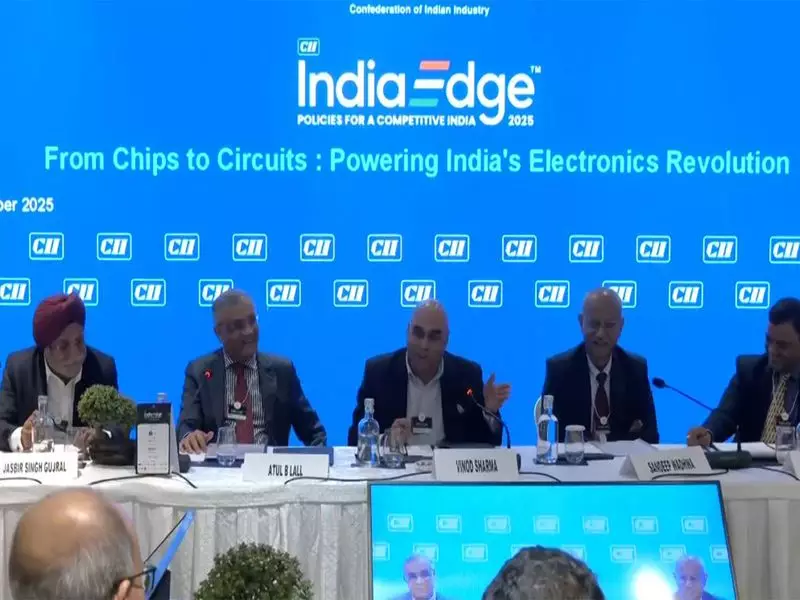
Prominent figures from India's technology and manufacturing sectors have issued a strong call for unified action. They are urging for deeper collaboration to fully capitalize on the nation's ambitious semiconductor and intellectual property (IP) initiatives. This collective push aims to position India as a significant player in the global electronics value chain.
A Confluence of Voices at the SEMICON India 2024
The consensus emerged during a pivotal session titled 'Leveraging India's Semiconductor and IP Initiatives' at the ongoing SEMICON India 2024 event. The discussion brought together key stakeholders to chart a path forward for the country's strategic ambitions in this critical sector.
Ashwini Vaishnaw, India's Minister for Railways, Communications, and Electronics & Information Technology, set the tone. He emphasized the government's unwavering commitment, stating that the India Semiconductor Mission (ISM) is designed for long-term success. "We are in this for the long haul," Vaishnaw asserted, highlighting the comprehensive support framework being built.

The Tripartite Model for Success: Government, Industry, Academia
A central theme from the leaders was the critical need for a synergistic approach. Dr. A. K. Garg, Senior Director at the Ministry of Electronics and Information Technology (MeitY), pointed out a historical gap. He noted that while India has produced strong engineering talent and design capabilities, it has previously missed opportunities in manufacturing and securing IP rights.
"The government is actively working to change this narrative," Dr. Garg explained. He detailed efforts to create a supportive policy environment that encourages both chip fabrication and the generation of proprietary intellectual property. The goal is to move beyond service provision to owning core technologies.
Echoing this sentiment, Nitin Kunkolienker, former President of MAIT (Manufacturers' Association for Information Technology), stressed that collaboration is non-negotiable. "The government cannot do it alone, industry cannot do it alone, and academia cannot do it alone," he stated. He called for a robust partnership model where industry identifies market needs, academia focuses on research and talent development, and the government facilitates through policy and infrastructure.
Building a Sustainable Ecosystem Beyond Subsidies
The leaders agreed that the focus must extend beyond initial financial incentives. Rajeev Khushu, Chair of the IP Committee at IESA (India Electronics and Semiconductor Association), highlighted the importance of a self-sustaining ecosystem. While production-linked incentive (PLI) schemes are crucial for kickstarting the sector, the ultimate objective is to create a viable commercial environment that attracts continuous investment.
Khushu also underscored the strategic importance of intellectual property. "In the semiconductor world, IP is the crown jewel," he remarked. Protecting and commercializing IP developed within India is vital for achieving high-value addition and global competitiveness, rather than merely being a contract manufacturer.
Shankar Trivedi, Senior Vice President at NVIDIA, provided a global perspective. He commended India's software prowess and urged the nation to now harness its data and talent to build sovereignty in AI and computing hardware. This aligns with the broader semiconductor mission, as AI advancements are deeply intertwined with cutting-edge chip design and performance.
The collective message from SEMICON India 2024 is clear. India's journey to becoming a semiconductor hub hinges on a collaborative, tripartite model that integrates policy, industry execution, and academic innovation. By focusing on long-term ecosystem development and intellectual property creation, the nation aims to secure a prominent position in the rapidly evolving global technology landscape.