India's aviation sector is facing severe turbulence as its largest carrier, IndiGo, grapples with one of its worst operational crises in years. The airline has been forced to cancel hundreds of flights, stranding passengers and triggering a sharp spike in airfares across the country during the peak winter travel season.
The Root of the Chaos: Pilot Shortage and Planning Gaps
The crisis began unfolding from 1 December 2025, placing immense stress on IndiGo's network. A combination of a severe pilot shortage, a sudden surge in leave requests, and critical planning lapses in implementing India's new Flight Duty Time Limitations (FDTL) rules has brought operations to a near-standstill at major hubs like Delhi, Mumbai, and Bengaluru.
The Directorate General of Civil Aviation (DGCA) revealed that the airline has been cancelling approximately 170 to 200 flights daily, a figure substantially higher than normal. This implies close to 800 cancellations between 1 and 4 December alone. The airline's on-time performance, which was a healthy 85% in October, collapsed to a shocking 8.5% on 5 December.

In an official statement, IndiGo acknowledged "mis-judgment and planning gaps" in rolling out the second phase of the new FDTL regulations, which are designed to prevent pilot fatigue. The airline has committed to corrective measures, targeting full operational stability only by 10 February 2026.
Immediate Fallout: Stranded Passengers and Soaring Fares
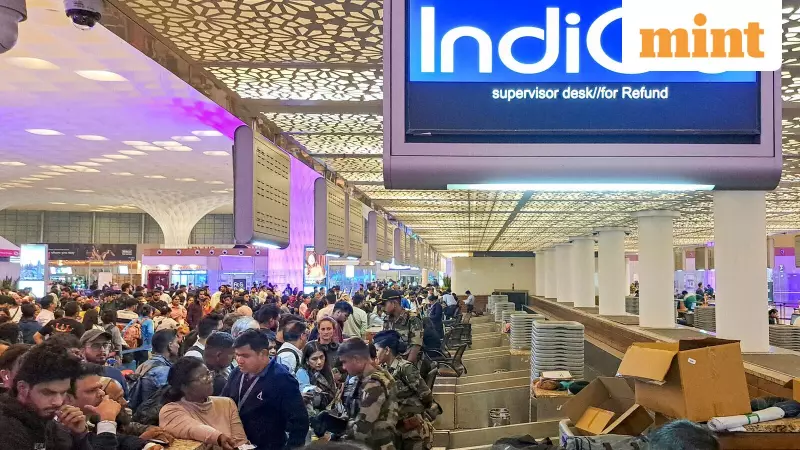
The immediate impact has been chaotic for travellers. Airports like Mumbai's Chhatrapati Shivaji Maharaj International Airport (CSMIA) and Delhi's Indira Gandhi International Airport saw long queues and confusion. On Friday, all IndiGo domestic flights from Delhi were cancelled until midnight, as confirmed by airport operator GMR. Chennai International Airport also reported 20 cancelled departures and 11 cancelled arrivals.
More critically, the drastic reduction in capacity is pushing airfares upward. Analysts warn of a broad-based increase in ticket prices of at least 5% to 8%, which could persist through January's peak season.
Gagan Dixit, Senior Vice President at Elara Securities, noted that fares on busy routes like Mumbai-Bengaluru have "already jumped 40-100%" for advance bookings. He warned that routes where IndiGo holds a monopoly—about 30% of its domestic network—could see even steeper hikes.
Aviation expert Sanjay Lazar echoed this, stating, "Demand will remain, but supply will fall so fares will inevitably go up." He highlighted that IndiGo's decision to scale back its expanded winter schedule of over 115,000 weekly departures is creating immediate upward pressure on prices.
Long-Term Implications and Market Impact
IndiGo, which commands nearly 57% of all domestic departures this winter, is in one of its most challenging phases since its 2015 IPO. The airline had aggressively expanded its winter schedule by 10% year-on-year to 15,014 weekly flights, adding new connections to East and Northeast India.
The current reversal is sending shockwaves through the market. Mark D Martin of Martin Consulting stated that the impact will be severe due to IndiGo's vast network reach. While passengers may shift to competitors on some routes, the overall capacity crunch will affect the entire aviation ecosystem.
The financial markets have reacted negatively. IndiGo's share price fell 6.2% between 1 and 4 December, reflecting investor concern over the operational breakdown and its financial implications.
As IndiGo works to stabilize its schedule over the next 2-3 days, Indian travellers are left to navigate higher costs and uncertainty, paying the price for an unprecedented operational failure in the country's skies.