

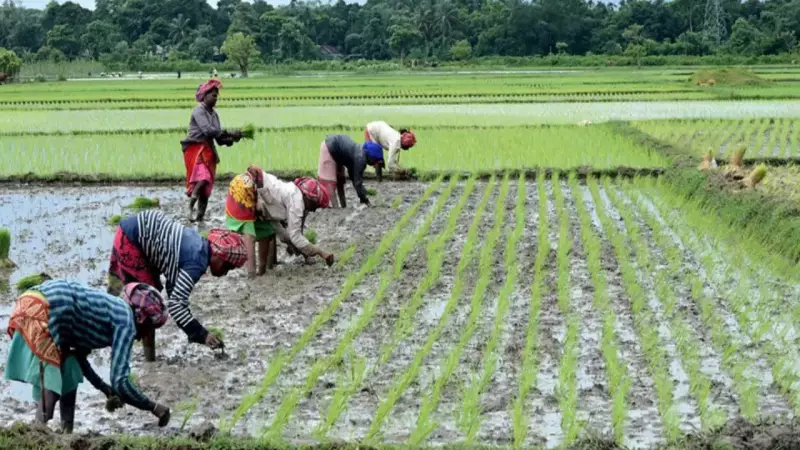
India has achieved a significant milestone in agricultural production with kharif rice output reaching an all-time high during the 2025-26 season that concluded in October. According to official data released by the agriculture ministry on Wednesday, the country produced 124.5 million tonnes of kharif rice, marking a substantial increase from previous years.
Record-Breaking Agricultural Performance
The latest figures show that rice production during the recent kharif season exceeded last year's output by 1.7 million tonnes, representing a growth of over 1%. This remarkable achievement comes despite challenges faced by some crop sectors and demonstrates the resilience of India's agricultural ecosystem.
The agriculture ministry's first advance estimates reveal that total foodgrain production for the 2025-26 kharif season reached approximately 173 million tonnes, showing significant improvement from the 169 million tonnes recorded in the previous year. These preliminary calculations are based on comprehensive data analysis including yield patterns from previous seasons, ground-level assessments, regional monitoring, and information provided by state governments.

Mixed Results Across Crop Categories
While rice production soared to unprecedented levels, several other important crops experienced slight declines. The output of pulses decreased marginally to 7.4 million tonnes compared to 7.7 million tonnes in the 2024-25 season. Similarly, oilseeds production dropped to 27.5 million tonnes from the previous year's 28 million tonnes.
The cotton sector also saw a reduction in output, with production estimated at 29.2 million bales (each weighing 170 kg) versus 29.7 million bales a year earlier. Jute and mesta production followed this trend, declining to 8.3 million bales (180 kg each) from 8.4 million bales previously.
Monsoon Impact and Government Perspective
Agriculture Minister Shivraj Singh Chouhan commented on the seasonal conditions, noting that "excessive rainfall in some areas of the country affected crops, but most areas have benefited significantly from a good monsoon, leading to overall good crop growth." This statement highlights the mixed impact of monsoon patterns across different regions while acknowledging the generally positive outcome.
Maize emerged as another success story with production estimated at 28 million tonnes for 2025-26, showing substantial growth from nearly 25 million tonnes in the previous season. This performance underscores the varying fortunes of different crop types within the same agricultural season.
The ministry's estimation methodology involves multiple stages of assessment, with initial figures being refined through subsequent estimates as actual crop-cutting experiment yield data becomes available. Typically, four advance estimates are published before final production numbers are established for a complete crop year.
The kharif cropping cycle begins with the arrival of monsoon rains in June, with harvesting activities generally commencing in October. This seasonal pattern remains fundamental to India's agricultural calendar and continues to shape the nation's food production landscape.






