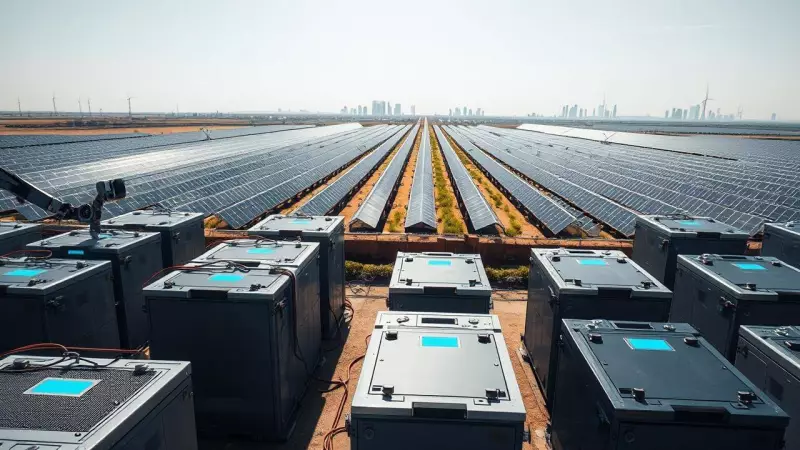
India is on the cusp of a monumental leap in its energy storage capabilities, with projections indicating a nearly tenfold increase in battery energy storage capacity additions for the year 2026. The sector is shifting gears from a phase of intense planning and tendering to one of large-scale execution, marking a critical inflection point for the country's clean energy transition.
From Tenders to Transformative Growth
According to a pivotal study by the India Energy Storage Alliance (IESA), the nation is expected to add around 5 GWh of battery energy storage capacity in 2026. This represents a staggering surge from the estimated 507 MWh anticipated for 2025. The driving force behind this explosive growth is a massive pipeline of projects that are now moving from the drawing board into the construction and commissioning stage.
The report highlights that 2025 was a landmark year for tendering activity, with a record 69 tenders floated for 102 GWh of capacity. This figure alone nearly equals the total tenders issued in the six-year period between 2018 and 2024. Consequently, the cumulative capacity under execution skyrocketed by 84% to reach 224 GWh, setting the foundation for the anticipated commissioning boom in the coming year.

Performance and Financing: The Twin Challenges
While the outlook is overwhelmingly positive, industry leaders caution that the path ahead is not without significant hurdles. IESA President Debmalya Sen emphasized that performance and financing will be key challenges as the sector evolves. "All eyes will remain on whether the performance of these projects is in line with what was committed," Sen stated. He further noted that securing funding, particularly for projects awarded at aggressively low tariffs, will be a major test as they enter the operational phase.
The report underscores a striking trend of sharply falling tariffs in 2025. For instance, tariffs for standalone two-hour battery energy storage systems plummeted from Rs 2.21 lakh per MW per month in early 2025 to Rs 1.48 lakh by year-end in an APTRANSCO tender. This competitive pressure was fueled by the entry of more than 50 new bidders into the market.
Flagship Projects and Policy Support Set the Stage
The year 2026 will be shaped by several high-profile projects that promise to redefine the sector's landscape:
- March 2026: Adani is scheduled to commission a colossal 1,126 MW/3,530 MWh battery storage project in Gujarat, poised to be one of the world's largest single-location BESS installations.
- January 2026: Rajasthan is set to float a tender for India's largest solar-plus-BESS project at the Pugal Solar Park.
- The commercial and industrial segment is also gaining momentum, exemplified by Juniper Green Energy's 60 MWh merchant BESS installation in December 2025.
Vinayak Walimbe, Managing Director of Customized Energy Solutions, aptly summarized this shift, calling it "a watershed moment for India’s energy storage sector."
Strong policy tailwinds are further accelerating this growth. Key government initiatives include:
- A second tranche of Viability Gap Funding worth Rs 5,400 crore for 30 GWh of standalone BESS.
- A mandate for 20% domestic value addition in projects.
- An extension of interstate transmission system charge waivers for pumped storage and solar-plus-BESS projects until 2028.
This confluence of project execution, evolving market dynamics, and sustained policy support positions India's energy storage sector for a truly transformative breakout in 2026 and beyond.