The year 2025 unfolded as a dramatic paradox for the Indian aviation sector. It began with unprecedented optimism, fueled by record-breaking domestic traffic and the spiritual mega-event of the Maha Kumbh, only to be derailed by a series of tragic accidents, geopolitical tensions, and financial headwinds. This narrative captures the stark contrasts that defined the year for airlines, regulators, and millions of passengers.
A Promising Takeoff: Kumbh Mela and Legislative Boost
The year commenced on an exceptionally positive note. The domestic market had just concluded its best-ever traffic performance, setting a buoyant mood. The anticipation for the Maha Kumbh Mela in Prayagraj, a once-in-144-years gathering, spurred airlines into action. Carriers added flights from across the country to the city, with even those not typically serving Prayagraj launching special schedules. This surge in spiritual travel was instrumental in turning the typically challenging January-March quarter profitable for many.
Adding to the positive momentum, the Indian government passed the Bharatiya Vayuyan Adhiniyam 2024 in 2025. This landmark legislation aimed to align India with the global Cape Town Convention, offering enhanced protection to aircraft lessors while also supporting the operational needs of airlines. It was seen as a crucial reform for a market with over 1,500 planes on order from Airbus and Boeing.

The sector's global stature was further elevated when the 81st Annual General Meeting (AGM) of the International Air Transport Association (IATA) returned to India after four decades. Held at New Delhi's Bharat Mandapam and graced by Prime Minister Narendra Modi, the event was a moment of pride, showcasing India's rapid aviation growth. Sponsor carrier IndiGo used the platform to announce a mega expansion plan and sign an MoU for additional Airbus A350 aircraft.
Mid-Air Turbulence: Crashes and Geopolitical Closure
The optimistic trajectory was violently interrupted in late April. A terrorist attack in Pahalgam triggered India's Operation Sindoor, a military retaliation against bases in Pakistan. This led to the closure of over 20 airports in North and West India for civil operations for several days. In a continuing repercussion, Pakistan closed its airspace to all Indian carriers, forcing airlines like IndiGo to cancel numerous flights to Central Asia, though it later resumed connections to Almaty and Tashkent from Mumbai.
Just as traffic began recovering in June, tragedy struck. An Air India Dreamliner flying from Ahmedabad to London Gatwick crashed shortly after take-off, resulting in a catastrophic loss of life, with only one survivor from the aircraft and casualties on the ground. This incident, occurring days after the successful IATA AGM, dealt a severe blow to the Tata group's efforts to turnaround the national carrier. The investigation remains ongoing.
Concurrently, the pilgrimage season to Kedarnath was marred by a spate of incidents and accidents involving helicopters. The regularity of these events prompted the aviation regulator to suspend operations temporarily and intensify safety inspections for such services.
Financial and Operational Headwinds
Parallel to these safety and security challenges, the sector grappled with significant economic pressures. The Indian Rupee depreciated by approximately 5% against the US Dollar, sliding from around 85.79 at the year's start to nearly 90. This weakness exponentially increased the cost of dollar-denominated operational leases and Pre-Delivery Payments (PDPs) for new aircraft, squeezing airline finances.
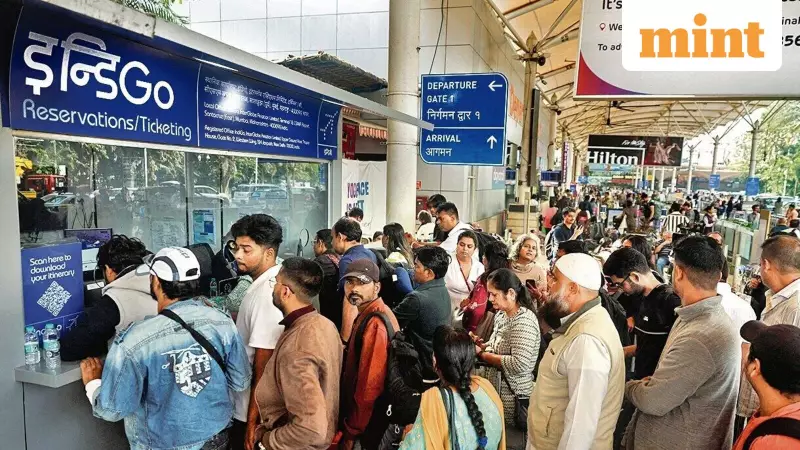
The year's end brought another crisis, this time operational. In early December, a catastrophic operational meltdown hit IndiGo, affecting lakhs of passengers. The disruption, which coincided with Russian President Vladimir Putin's visit to India, was attributed to a domino effect stemming from changes to Flight Duty Time Limitation (FDTL) rules in November. The event prompted intense scrutiny from the regulator and the ministry.

Amidst the turmoil, there were pockets of progress. Air India completed the long-pending revamp of its A320neo fleet, converting all 27 aircraft to a three-class configuration. As the year drew to a close, there was anticipation that Air India might induct a new Boeing 787-9 and IndiGo could add the Airbus A321XLR to its fleet.
A Narrow Margin for Growth
The final question for 2025 was whether it could surpass the domestic traffic records set in 2024. The answer, reflecting the year's tumultuous nature, was a tentative yes—but only by a very thin margin. The high hopes born from the Kumbh Mela and legislative reforms were ultimately tempered by a succession of crises, making 2025 a year the Indian aviation industry would prefer to remember for its resilience in the face of adversity rather than for smooth sailing.