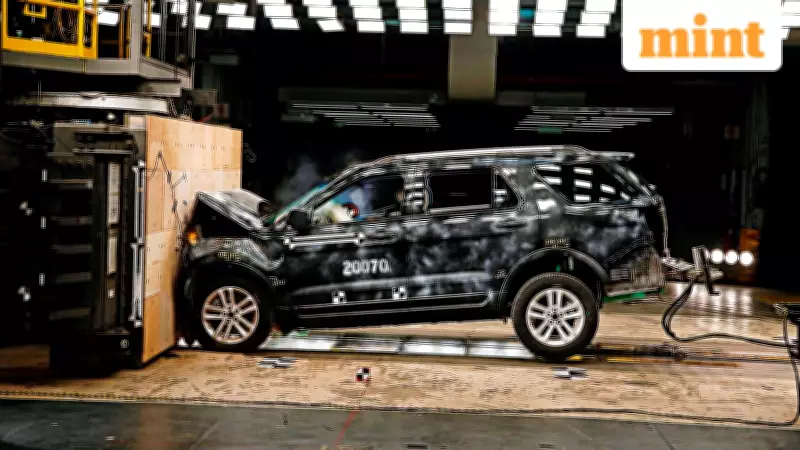
India's Major Investment in Automotive Testing Infrastructure
The Indian government is making a significant investment of ₹776.29 crore to upgrade four crucial automotive testing agencies. This strategic move aims to enhance vehicle certification processes and build expertise in emerging automotive technologies.
The Four Pillars of Indian Automotive Testing
The initiative targets four key testing facilities across the country:
- Automotive Research Association of India (ARAI) in Pune
- International Centre for Automotive Technology (ICAT) in Manesar
- Global Automotive Research Centre (GARC) in Chennai
- National Automotive Test Tracks (NATRAX) in Chennai
These agencies play a vital role in ensuring vehicle safety, environmental compliance, and performance standards through rigorous testing and certification procedures.

Addressing Certification Delays and Technology Gaps
Currently, automakers face significant waiting periods of 6-8 months for vehicle testing and approval. The upgrades aim to reduce this waiting time substantially, potentially bringing it down to near-zero levels. This acceleration is crucial as automakers risk losing margins and market share with each day of delay.
The initiative comes under the ₹10,900 crore PM E-Drive scheme launched in October 2024. State-run Bharat Heavy Electricals Ltd (BHEL) has already issued 65 tenders for the upgrade work, indicating the project is already in motion.
Funding Allocation and Strategic Importance
The funding distribution among the agencies is substantial:
- ARAI: ₹79 crore
- ICAT: ₹217 crore
- GARC: ₹221 crore
- NATRAX: ₹257 crore
These upgrades are particularly important given India's growing electric vehicle market. In 2025, India sold over 2 million EVs, representing about 8% of the 27.4 million new vehicles sold that year. This marks an increase from 1.9 million EVs sold in 2024, which accounted for 7.4% of total vehicle sales.
Supporting Government Schemes and Industry Growth
The testing agencies' work determines vehicle eligibility for incentives under both the PM E-Drive scheme and the PLI-Auto scheme. In FY25, ARAI approved 80 localization applications under the PLI-Auto scheme—more than double the 39 approvals in FY24. Additionally, ARAI provided approvals for over 350 vehicle models under the PM E-Drive scheme during its first year of implementation.
The upgrades aim to match testing capabilities with advanced automotive technologies incentivized under the ₹25,938-crore production-linked incentive scheme for automobiles and auto parts. This alignment is crucial as the industry moves toward vehicle connectivity and software-driven vehicles.
Addressing Infrastructure Gaps and Future Technologies
Experts highlight the importance of these upgrades. Sharif Qamar, associate director of Transport and Urban Mobility at The Energy and Resources Institute (TERI), noted that research and development in enhancing Indian testing agencies' capabilities requires greater focus to bridge the gap with international standards.
The NITI Aayog emphasized in an April 2025 report that inadequate testing centers could adversely impact India's competitiveness. The report noted that without proper infrastructure, Indian manufacturers often outsource R&D to foreign labs, increasing both costs and lead times.
Financial Implications and Market Impact
Improved testing facilities can significantly impact financing for EV adoption. Kunal Mundra, founder and CEO of Astranova Mobility, explained that a clearer testing framework reduces technical uncertainty around vehicle performance, battery durability, and software reliability—all critical factors in underwriting decisions.
This investment comes at a time when India's automobile market recorded 26.8 million units in sales in 2025, valued at approximately $137.06 billion. The EV market was valued at $54 billion, with projections suggesting it could double in value by 2029.

Technological Advancements and Future Mobility
The upgrades will support emerging technologies including Advanced Driver Assistance Systems (ADAS) and prepare for future autonomous vehicle development. While driverless vehicles aren't yet permitted in India, driver-assistance technology is legal, and the infrastructure upgrades will support these advancements.
As India prepares for large-scale long-haul electric mobility, the effort focuses on creating common communication protocols that will allow electric vehicles to integrate with third-generation mobility networks, including charging infrastructure and V2X platforms.
The government is also developing a Connected Commercial Vehicle (CCV) protocol that would allow different vehicle types and infrastructure to communicate using a single standard, facilitating seamless operation across the transportation ecosystem.
This comprehensive upgrade of India's automotive testing infrastructure represents a strategic investment in the country's automotive future, supporting both current industry needs and emerging technological requirements in the rapidly evolving mobility sector.