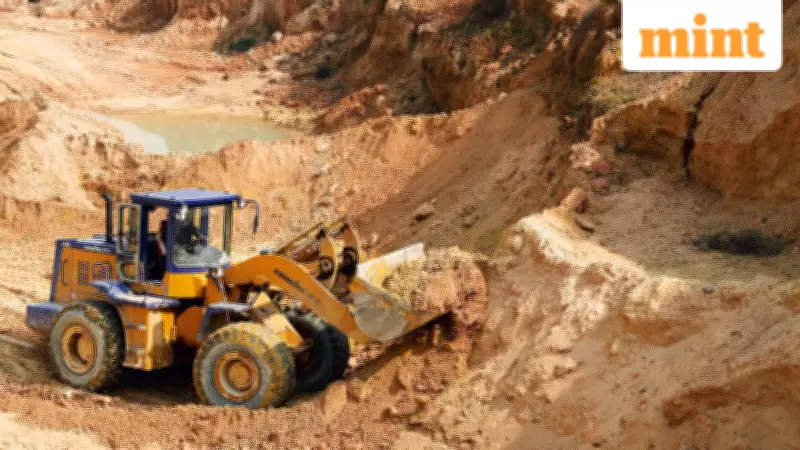
In a significant move to bolster domestic manufacturing capabilities, Union Finance Minister Nirmala Sitharaman has unveiled plans to establish four rare-earth mineral corridors across key Indian states. This announcement was made during her Budget 2026 speech, marking a strategic expansion of the government's efforts to secure India's position in the global rare-earth supply chain.
Building on a Robust Incentive Package
The initiative builds upon a substantial ₹7,280-crore incentive package previously approved by the Union cabinet. This fund is specifically designed to support the domestic production of rare-earth magnets, which are critical components in various high-tech industries. The financial backing will facilitate the establishment of five manufacturing plants and provide sales-linked incentives for every kilogramme of magnets sold, encouraging both production and market penetration.
Strategic Locations for Mineral Corridors
The four rare-earth mineral corridors will be strategically located in Odisha, Kerala, Andhra Pradesh, and Tamil Nadu. These regions have been selected due to their potential for mineral extraction and processing, aligning with India's broader industrial and economic goals. The corridors aim to streamline the supply chain from mining to manufacturing, reducing logistical bottlenecks and enhancing efficiency.

Addressing Global Supply Chain Vulnerabilities
This government push comes in response to recent disruptions in the global rare-earth magnet supply chain. In April 2025, China, which controls over 90% of the global supply, imposed export restrictions on rare-earth magnets. This move led to shortages in India's automobile sector, highlighting the nation's dependence on foreign sources and underscoring the urgent need for indigenization.
India's Vast Rare-Earth Resources
India possesses one of the world's largest rare-earth deposits, estimated at approximately 6.9 million tonnes. Despite this abundance, the manufacturing of rare-earth magnets remains a challenging process. It is energy-intensive and generates toxic waste, involving multiple stages from mining rare-earth oxides to processing them into alloys and finally converting them into magnets.
Indigenizing the Supply Chain
To counter dependence on imports, India is actively seeking to indigenize the rare-earth magnet supply chain. The effort begins with the mineral monazite, a key source of rare-earth elements. State-run Indian Rare Earths Ltd (IREL), the sole producer of rare-earth oxides and magnets in the country, will play a pivotal role in this initiative. Under the ₹7,280-crore scheme, IREL is set to supply 500 tonnes of rare-earth oxides to manufacturers, ensuring a steady domestic supply for production.
Future Implications and Economic Impact
The establishment of these mineral corridors is expected to have far-reaching implications for India's economy and industrial sector. By reducing reliance on imports, India can enhance its self-sufficiency, create jobs, and stimulate growth in related industries. Moreover, this move aligns with global trends towards securing critical mineral supplies, positioning India as a competitive player in the international market.
Overall, the announcement reflects a proactive approach by the Indian government to address supply chain vulnerabilities, leverage domestic resources, and foster innovation in the rare-earth magnet industry. As implementation progresses, it will be crucial to monitor environmental impacts and ensure sustainable practices in this energy-intensive sector.