Government Hardens Stance on Electronics Manufacturing Subsidies
In a significant policy shift, the Indian government has drawn a firm line under its ambitious electronics manufacturing push. Union IT Minister Ashwini Vaishnaw delivered a blunt warning on Monday: companies seeking subsidies under the Electronics Components Manufacturing Scheme (ECMS) must embed genuine design, quality, and engineering capabilities within India, or risk losing financial support entirely.
From Scale to Strategic Value: A New Mandate
The minister's statement signals a clear strategic pivot from merely chasing manufacturing scale to demanding deeper technological value creation. "Real value gets captured only if design is done in India," Vaishnaw emphasized, making it unequivocal that future incentives will be directly tied to the development of indigenous technological capabilities.
This warning comes alongside a fresh set of approvals that simultaneously underscore the scheme's massive scale. The ministry has cleared 29 new projects involving an investment of Rs 7,104 crore. This latest round takes the total approved investment under ECMS to Rs 61,671 crore, surpassing the scheme's initial target of Rs 59,350 crore.

Approvals Do Not Guarantee Funding
Minister Vaishnaw issued a direct and unprecedented caution to the industry, stating that project approvals alone do not guarantee the disbursement of subsidies. "We are willing to stop any further disbursements or approvals if the industry doesn't come up with the commensurate efforts," he declared. He added with firm clarity, "On applications that have been approved, we won't even disburse if the asks aren't met."
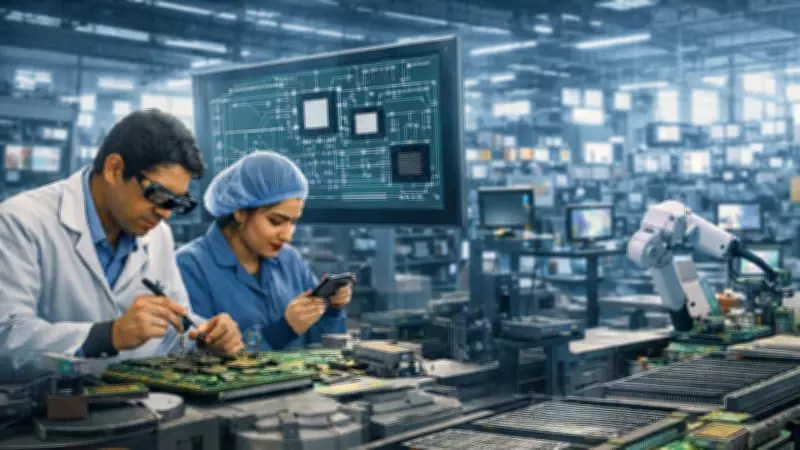
The government has identified critical gaps in the industry's response, noting that the pace of strengthening domestic design and quality capabilities has fallen short of expectations. To address this, compliance has been tightened significantly.
Strict Compliance and 15-Day Ultimatum
Companies under the scheme have now been given a strict 15-day deadline to submit detailed plans addressing four key requirements:
- Product Design: Establishing and enhancing indigenous design capabilities.
- Six Sigma Quality Standards: Implementing globally recognized quality processes.
- Talent Development: Building a skilled workforce within India.
- Local Sourcing: Increasing the procurement of components from domestic suppliers.
Vaishnaw stressed the complexity of this transition, noting, "Manufacturing is easier; translating design into a reliable product is far more complex." He described Six Sigma processes as "essential" for ensuring that Indian electronics manufacturing meets global quality benchmarks.
Project Scope and Strategic Investments
According to official data, the ECMS scheme now encompasses 75 applications across 23 diverse product categories and 12 states. The projected production value exceeds Rs 4.5 lakh crore, with an employment potential of over 65,000 jobs.
The latest approvals include strategically important projects, such as India's first rare earth permanent magnet manufacturing unit. This project, backed by a Rs 700 crore investment, is based on indigenous intellectual property. Other approved ventures focus on high-end printed circuit boards (PCBs), capacitors, and connectors—all critical segments aimed at building core electronics capabilities and reducing import dependency.
Integrated Approach and Risk of Being "Weeded Out"
In a pointed message to the industry, Minister Vaishnaw stated that firms failing to align with the government's new integrated approach—which marries manufacturing with design and innovation—risk being "weeded out" from the scheme. He indicated that he might even skip the next review meeting if adequate progress is not demonstrated by participating companies.
The ministry has also signaled a move towards stricter, outcome-based monitoring. Future incentives will be explicitly linked to measurable milestones in design capability enhancement, localization of the supply chain, and adherence to stringent quality benchmarks across the entire electronics value chain.

This policy evolution represents a decisive move by the government to ensure that its substantial financial support translates into long-term, high-value technological sovereignty for India's electronics sector, rather than merely subsidizing low-value assembly operations.