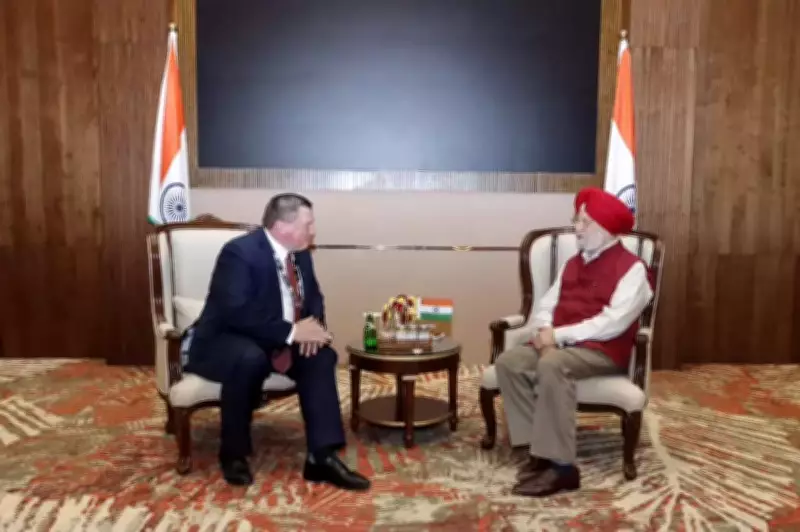
India has skillfully transformed multiple geopolitical challenges into strategic opportunities by broadening its energy sources and speeding up the transition to green fuels, according to petroleum minister Hardeep Singh Puri. Speaking on Friday at the closing fireside chat of India Energy Week in Betul, Goa, Puri emphasized the nation's proactive response to global uncertainties over the past five years.
From Crisis to Opportunity: India's Energy Strategy
Minister Puri pointed out that from pirate attacks off Somalia to the Red Sea crisis, and from the Russia-Ukraine conflict to Middle East tensions, India has consistently turned adversities into advantages. "Each challenge has been converted into an opportunity both in terms of diversification of sources of supply," Puri stated. He revealed that India now imports energy from over 40 countries, a significant increase from just 27 previously, showcasing a robust diversification strategy.
India's Growing Global Energy Stature
Highlighting India's rising prominence on the world stage, Puri noted that the country is now the third-largest energy consumer globally, the fourth-largest refiner, and the fifth-largest exporter. This positions India at the centrestage of global energy discussions, he said, while also protecting its vast consumer base from international market volatility. Puri expressed confidence in India's capabilities, stating, "And I think we're very well equipped both in terms of ensuring availability, affordability, and sustainability."

Despite unprecedented global turmoil, India has managed to maintain some of the lowest energy prices worldwide, a testament to its effective policies and strategic planning. This achievement underscores the government's commitment to shielding citizens from economic shocks while advancing energy security.
Two-Pillar Approach to Energy Self-Reliance
During the same event, Neeraj Mittal, secretary for the ministry of petroleum and natural gas, outlined the government's comprehensive strategy built on two main pillars. The first pillar focuses on strengthening domestic exploration and production. Mittal explained that ambitious drilling targets have been set by the Prime Minister to achieve self-reliance through major discoveries. He added, "We are working towards making India an efficient supplier of finished products globally while integrating our refineries to produce petrochemicals for value addition."
Leveraging Technology for Sector Optimization
The second pillar of the strategy emphasizes the use of advanced technologies, including digitalisation and artificial intelligence, to optimize operations and reduce costs across the energy sector. This technological push aims to enhance efficiency and competitiveness, ensuring that India remains at the forefront of innovation in energy management.
Biofuels and Green Energy Targets
On the topic of sustainable energy, Mittal highlighted India's commitment to biofuels, with a target of achieving 5% compressed biogas (CBG) blending in city gas distribution networks by 2030. This initiative is part of a broader effort to accelerate the green fuel transition, aligning with global environmental goals and reducing dependence on fossil fuels.
In summary, India's energy policy, as articulated by Minister Puri and Secretary Mittal, demonstrates a resilient and forward-thinking approach. By diversifying sources, embracing technology, and promoting green fuels, India is not only navigating global crises but also positioning itself as a leader in the evolving energy landscape.