Hyundai Union Warns Against Humanoid Robots, Fears Job Losses in South Korea
Hyundai Motor is facing potential union resistance in South Korea over its ambitious plans to introduce humanoid robots in manufacturing. The automaker's labor union has issued a stern warning against deploying these advanced robots without its explicit approval, expressing concerns that such automation could lead to significant employment shocks for workers.
Union's Strong Opposition to Robotic Deployment
The union's warning comes just weeks after Hyundai publicly announced its strategy to begin deploying humanoid robots starting in 2028. This announcement had initially sent the company's shares rallying to record highs, reflecting investor optimism about increased efficiency and productivity. However, for the workforce, this technological advancement was not welcome news.
According to reports from Reuters, which cited an internal union letter, the labor organization has accused Hyundai of seeking to boost profits by implementing robots to reduce its human workforce. The union made its position unequivocally clear in the letter, stating: "Remember that without labour–management agreement, not a single robot using new technology will be allowed to enter the workplace."

Criticism of US Expansion and Domestic Impact
In addition to opposing the robotic automation plans, the union has also voiced criticism regarding Hyundai's efforts to shift production capacity to the United States. The labor representatives argue that the automaker's new factory in Georgia is already making a noticeable dent in domestic production within South Korea.
This expansion is seen as threatening job security at two of Hyundai's factories in its home country. Hyundai Motor, together with its affiliate Kia, ranks as the world's third-biggest automaker by sales. Last year, the company revealed that its Georgia facility is projected to reach an annual production capacity of 500,000 vehicles by 2028, a strategic move to navigate US tariffs effectively.
Hyundai's Robotic Vision and Production Plans
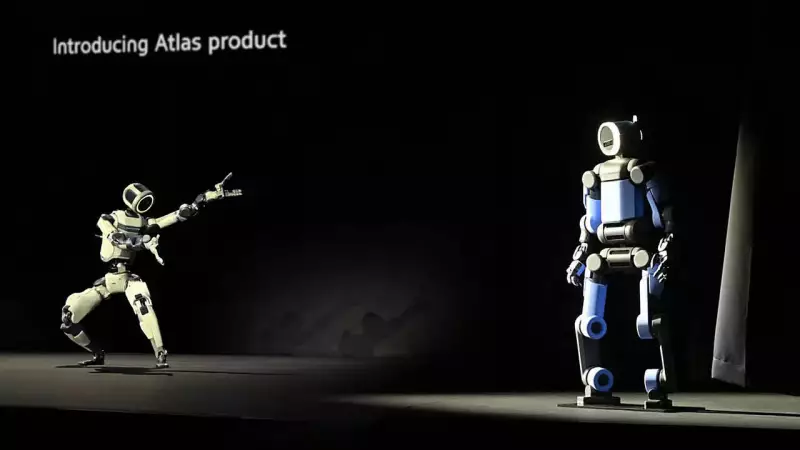
At the Consumer Electronics Show (CES) earlier this year, Hyundai unveiled the production version of the Atlas humanoid robot, developed by its subsidiary Boston Dynamics. The company has outlined ambitious goals to establish a factory capable of manufacturing 30,000 robot units annually by 2028.
Hyundai plans to initiate the deployment of these humanoid robots at its US plant in Georgia starting in 2028. While the company has not disclosed the specific costs associated with these robots, it stated in an official announcement that it aims to roll out adoption across all its manufacturing sites as part of a strategic push into physical AI.
Initially, these robots will be tasked with carrying out parts sequencing operations from 2028 onward. The applications are expected to expand gradually as the safety and quality benefits are thoroughly validated through practical implementation.
Management's Perspective on Workforce Concerns
Addressing concerns about potential job losses, Hyundai Motor's Vice Chair Jaehoon Chang acknowledged that the company understands these apprehensions. However, he emphasized that human workers will still be essential for maintaining and training the robots, and additional personnel will likely be required to support these new technological systems.
This ongoing tension between technological advancement and workforce protection highlights the complex challenges facing traditional manufacturing industries as they transition toward greater automation and artificial intelligence integration.