Himachal Horticulture Department Issues Scientific Advisory for Apple Orchards After Heavy Snowfall
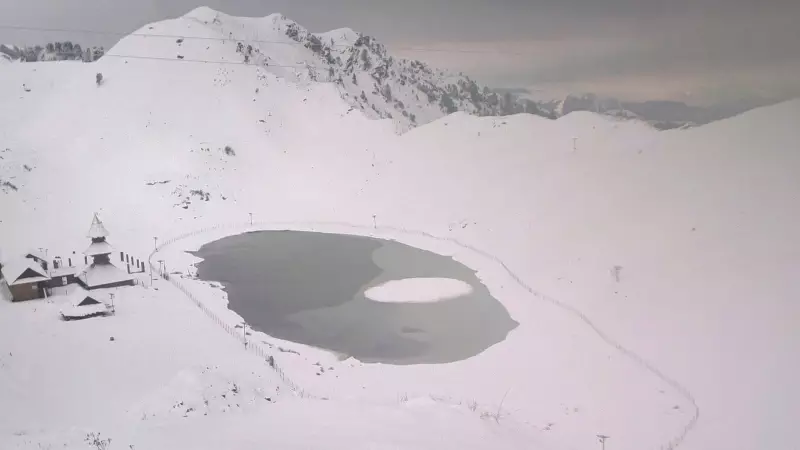
In the wake of substantial snowfall across Shimla and elevated hilly regions, the Department of Horticulture in Himachal Pradesh has released a comprehensive advisory for apple orchardists. This guidance emphasizes scientific orchard management to enhance root health and fortify forthcoming crops during this critical period.
Essential Soil Management Practices
The advisory specifically instructs orchardists to create a basin, locally known as tauliya, around each tree trunk. Crucially, digging must be avoided within at least one foot of the trunk to prevent water seepage or injuries that could harm the primary root system.
Vinay Singh, Director of the Department of Horticulture, Himachal Pradesh, explained that recent rainfall and snowfall have created favorable soil moisture conditions in orchards. He detailed the following recommendations:

- Apply approximately 100 kilograms of well-decomposed farmyard manure per plant, or whatever quantity is available to the grower, uniformly spreading it away from the trunk and incorporating it into the soil.
- Alternatively, use 5 kilograms of vermicompost following the same method.
- If soil test results recommend Single Super Phosphate (SSP), apply it by creating a circular trench about 1.5 feet from the trunk and then covering it with soil.
- For areas situated between 5,000 and 7,000 feet above mean sea level, if potash is recommended in soil tests, apply it at 1.5 feet from the trunk and mix it thoroughly into the soil.
Singh stressed that all fertilizers must be applied strictly according to soil test recommendations. This approach helps avoid unnecessary expenses while ensuring balanced nutrition for the plants.
Expert Recommendations for New Orchards
Kushal Mehta, an orchardist and horticulture expert, highlighted essential practices for establishing new orchards after precipitation events. He emphasized that proper field layout is fundamental before planting begins.
Mehta provided specific spacing guidelines based on rootstock types:
- For MM111, M7, and MM106 rootstocks, maintain 2 metres between plants and 3 metres between rows.
- For M9 rootstock, use 1 metre between plants and 3 metres between rows.
Following layout preparation, pit or trench digging should commence. Mehta advised:
- In areas with good soil conditions free from stones, prepare pits or trenches measuring 3 feet in depth and 3 feet in width.
- Keep topsoil and subsoil separate during excavation to ensure correct refilling order.
- In stony regions, continue digging until stones are removed or until reaching a minimum depth of 4 feet.
Procurement and Subsidy Information
The department urged orchardists to obtain high-quality, low-chilling apple varieties suitable for changing climatic conditions. These should be sourced from the nearest progeny-cum-demonstration orchards (PCDOs), which function as departmental nurseries, or by contacting local horticulture officers.
Officials specifically recommended that growers secure purchase bills when buying planting material. This documentation enables them to avail benefits under the Mission for Integrated Development of Horticulture (MIDH), which offers subsidies of up to ₹3,75,000 per hectare for establishing orchards using high-density planting systems.
This advisory represents a proactive response to recent weather patterns, aiming to equip Himachal Pradesh's apple growers with scientifically validated techniques to optimize orchard health and productivity in the challenging mountainous terrain.