Haryana Farmer Pioneers High-Value Floriculture with Exotic Crop Trial
In a remarkable agricultural breakthrough, a veteran farmer from Haryana has successfully turned an experimental cultivation of an exotic crop into a lucrative enterprise, claiming returns of up to ₹4 lakh from each acre. This achievement blends advanced floriculture practices with international innovation, setting a new benchmark for sustainable farming in the region.
From Traditional Vegetables to a Floral Empire
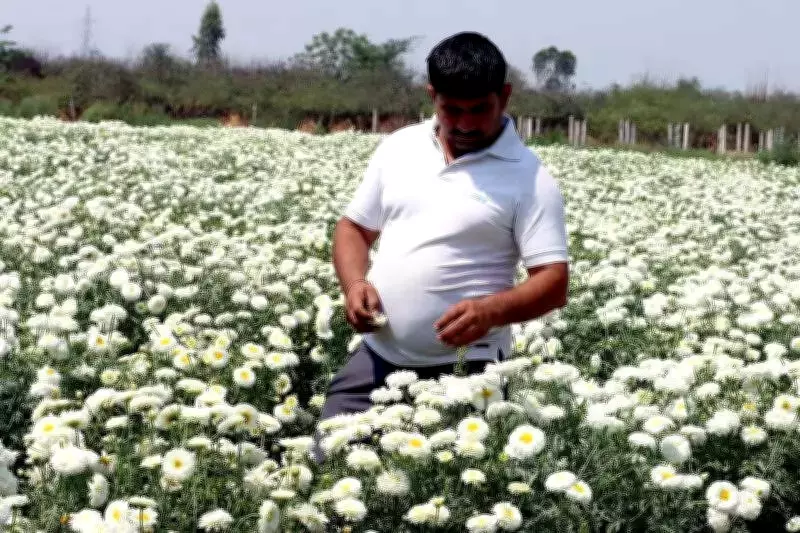
Rajkumar Ahlawat, hailing from Madodi village in the Rohtak district, has dedicated nearly three decades to evolving his farming methods. Initially focused on traditional vegetables, he has now expanded his operations into a sprawling 35-acre floral empire. His journey into high-value agriculture began with formal training provided by state horticulture departments, which equipped him with the skills needed to thrive in competitive markets.
Today, Ahlawat supplies a variety of flowers, including marigolds, roses, and gerberas, to major urban hubs such as Delhi, Chandigarh, and Ayodhya. Notably, his flowers were featured in the prestigious Ram Temple ceremonies, highlighting the quality and demand for his produce. However, his most significant success stems from a recent trial involving the exotic "Global RT Chowk" crop, believed to be the first of its kind in the area.

Digital Discovery Leads to Agricultural Innovation
The inspiration for this trial came from a digital source. Ahlawat first encountered the "Global RT Chowk" crop through online videos and later consulted with agricultural companies, who encouraged him to experiment. They provided the necessary seeds, and he began cultivation on a trial basis, sowing 300 plants between September and October. By February, the crop was ready for harvest, demonstrating its viability and potential for high returns.
The Economics and Sustainability of 'RT Chowk'
The financial profile of the "Global RT Chowk" crop offers a substantial upgrade over traditional staples. The investment required is approximately ₹70,000 to ₹80,000 per acre, with seed costs around ₹4,000 per killa (equivalent to about one acre). Market prices for the harvested crop range between ₹200 and ₹400 per kilogram, leading to total returns of up to ₹4 lakh per acre.
Beyond immediate profitability, this crop provides long-term sustainability benefits. Once planted, it can produce yields for up to four years while requiring minimal water and fertilizer inputs. This makes it an environmentally friendly option that aligns with modern agricultural trends toward resource efficiency.
Independent Effort and Recognition
Despite its success, the initiative remains a private venture. District horticulture officer Madanlal noted that he had no prior information about the specific crop, characterizing it as an independent effort by the farmer. Ahlawat now operates his own nursery and research and development center, where he supplies seeds back to agricultural firms, further contributing to the sector's growth.
His innovative work has earned him several accolades, including a national award in 2025. Ahlawat emphasizes that increasing rural income depends on moving away from conventional practices. He asserts, "Innovation, knowledge, and experimentation are key to ensuring sustainable agriculture," advocating for a proactive approach to farming challenges.
This story underscores the potential of combining traditional farming wisdom with global insights to achieve remarkable economic and environmental outcomes in agriculture.