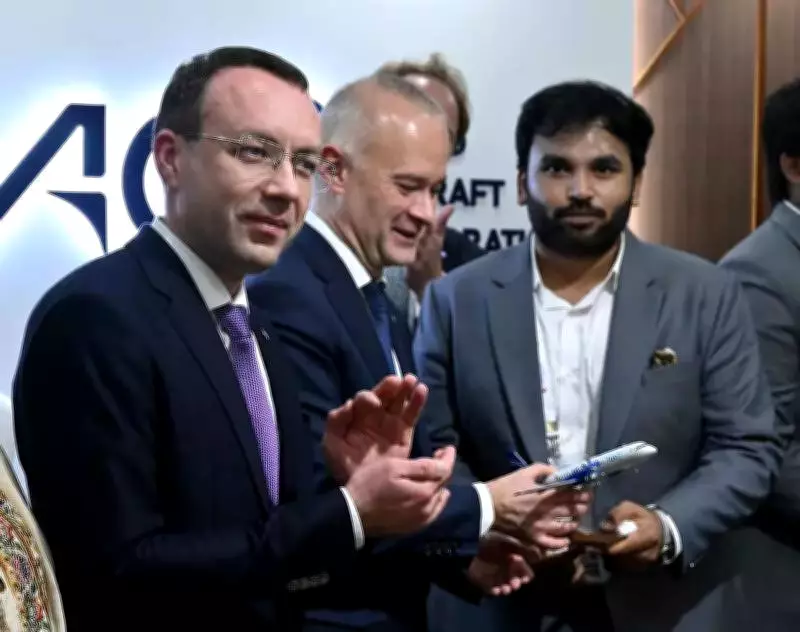
HAL Charts Ambitious Course to Expand Civil Aviation Footprint
In a significant strategic shift, Hyderabad-based aerospace behemoth Hindustan Aeronautics Ltd (HAL) has unveiled ambitious plans to dramatically increase its presence in the civil aviation sector. After decades of being predominantly focused on defence contracts, the state-owned giant now aims to raise the share of its civil aviation business to 25% of overall turnover within the next decade, a substantial jump from the current 4–5% level.
Diversification Drive to Reduce Military Dependence
Chairman and Managing Director DK Sunil outlined this diversification push during his address at the Wings India 2026 exhibition, emphasizing the need to reduce dependence on military programmes that currently account for approximately 95% of HAL's revenues. The company has made what Sunil described as a "conscious decision" to increase the civil component of its revenue streams, marking a pivotal moment in the corporation's evolution.
HAL's three-pronged strategy for civil aviation expansion includes:

- Expanding certified civil products portfolio
- Building a robust civil helicopter pipeline
- Entering the regional jet market through innovative approaches
SuperJet 100 Programme: The Near-Term Catalyst
A key lever in HAL's near-term growth strategy will be the SuperJet 100 (SJ100) programme, for which the company has signed a significant agreement with Russia's United Aircraft Corporation (UAC). This partnership aims to produce the 103-seat, twin-engine regional jet in India, addressing what HAL estimates to be demand for more than 200 aircraft in the 100-seat category.
To accelerate market entry, HAL plans an innovative two-phase approach:
- Phase 1: Lease 10–20 SJ100 aircraft purchased from Russia in flyaway condition over the next 12–18 months, using this initial fleet to gather crucial operational feedback on maintainability, ground support, MRO requirements, and support systems
- Phase 2: Begin rolling out semi knocked down (SKD) SJ100 aircraft from existing facilities within approximately three years, importing major assemblies while completing final assembly domestically
Strategic Advantages of Domestic Production
Sunil highlighted HAL's approach to keeping investments low by leveraging existing industry capacity, its own factories, and established vendor networks. The company plans to utilize facilities including its large Nasik complex and Kanpur factory for sub-assemblies, working alongside private-sector partners to optimize resources.
"Domestic production could significantly improve spare parts availability and reduce lifecycle costs," Sunil explained, citing fuel and maintenance as major cost drivers in civil aviation. He emphasized that this approach would create a more sustainable ecosystem for regional air travel in India.
Civil Helicopter Expansion and Regional Connectivity
On the civil helicopter front, HAL is making substantial progress with state-owned Pawan Hans set to procure 10 India-made Dhruv NG helicopters for ONGC offshore operations. Additional demand is expected from the Border Security Force, indicating growing confidence in domestically manufactured aviation products.
The company is also advancing the Hindustan 228 programme, a recertified version of the Dornier 228 that has recently received civil certification from the Directorate General of Civil Aviation. This aircraft represents another important component of HAL's civil aviation portfolio.
Financial Outlook and Market Potential
HAL reported revenue of approximately ₹31,000 crore last year and expects 7–8% growth in the current fiscal year. The SJ100 and helicopter programmes are projected to become increasingly significant contributors to the company's financial performance over the next three to four years.
The regional connectivity push across India, combined with potential demand from nearby markets, creates a favorable environment for HAL's civil aviation ambitions. The company is actively engaged in discussions with firms in Gujarat's GIFT City regarding leasing structures, demonstrating a comprehensive approach to market entry and financial planning.

This strategic pivot represents not just a business transformation for HAL, but potentially a watershed moment for India's civil aviation manufacturing capabilities, positioning the country as a more significant player in the global aerospace industry while supporting domestic connectivity goals.