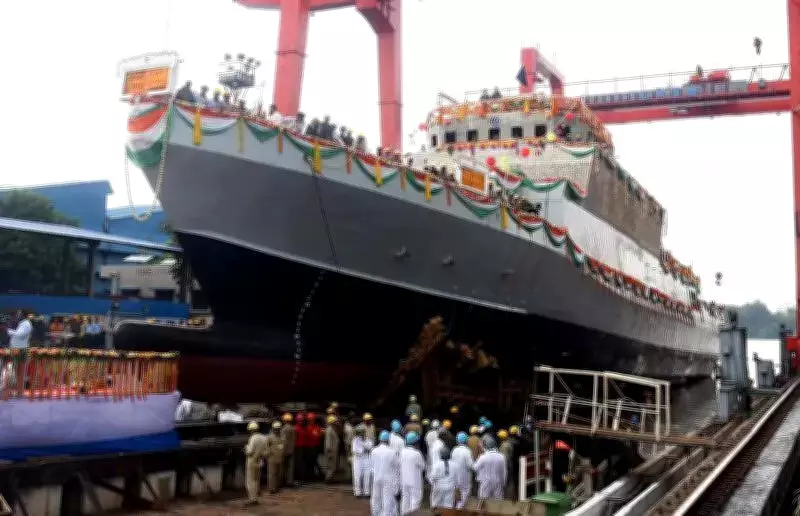
Gujarat Unveils Ambitious Shipbuilding Expansion with New Clusters in Kutch and Porbandar
The Gujarat government is poised to announce a new shipbuilding and repair policy following the upcoming local body elections this month. This policy marks a significant shift, as the state has not updated its shipbuilding framework for the past 16 years, with the last policy introduced in 2010. The new initiative proposes the establishment of two major shipbuilding clusters in Chhachhi, Kutch, and Kuchhadi, Porbandar district, aiming to dramatically enhance the state's maritime capabilities.
Strategic Locations and Infrastructure Details
According to official sources, the Chhachhi shipbuilding cluster is planned to cover an expansive area of 990 hectares, featuring a substantial 6.75-kilometre-long waterfront. Similarly, the Kuchhadi cluster along the Porbandar coastline will span 870 hectares with a waterfront extending 7.06 kilometres. These greenfield projects are part of a broader strategy to identify three additional locations for developing new shipyards, signaling a robust push towards revitalizing Gujarat's shipbuilding sector.
Historical Context and Past Challenges
Despite earlier announcements, progress on previous shipbuilding clusters has been limited. Between 2006 and 2009, the Gujarat government identified six potential sites, including Dahej, Ghogha, Bhavnagar, Pipavav, Veraval, and Mandvi. More recently, plans for a cluster near Kandla in Kutch district were also proposed but faced setbacks. The closure of key players like ABG Shipyard, once India's largest private shipyard, in 2019 due to declining demand, and Alcock Ashdown (Gujarat) Ltd, a state-run firm that shut down in 2013 because of mounting losses, highlights the industry's turbulent past.

Current Operational Facilities and Future Optimism
Presently, Gujarat operates three shipbuilding facilities: in Pipavav (Swan Group), Bhavnagar (Modest Infrastructure), and Kalodara, Bharuch (Shoft). Government officials involved in policy drafting express optimism, citing that global shipbuilding hubs in China, Japan, and Korea are saturated and unable to accept new orders for the next decade. This creates a prime opportunity for private investment in Gujarat. A senior official noted that unlike the 2010 policy, which offered no financial incentives, the new approach may include a plug-and-play model with common infrastructure and various financial supports to attract investors.
Financial Backing and Central Government Support
The central government has allocated Rs 28,000 crore from a nearly Rs 70,000 crore maritime sector fund to promote shipbuilding, aiming to reduce India's dependency on foreign vessels. This financial injection is expected to bolster Gujarat's efforts, though past ambitious plans, such as those for clusters in Dahej and other locations, were often deemed too lofty. For instance, the Deendayal Port Trust in Kandla had to scale down its mega shipbuilding cluster concept after a poor bid response in 2024, with only one company showing interest.
Targets and Long-Term Vision
The state has set an ambitious target to increase its shipbuilding capacity to 3 million gross tonnage (GT) by 2047. This goal underscores a renewed commitment to leveraging Gujarat's coastal advantages and addressing historical shortcomings in policy implementation. As the government finalizes its new policy, stakeholders are watching closely to see if these plans will materialize into tangible growth for the maritime industry.