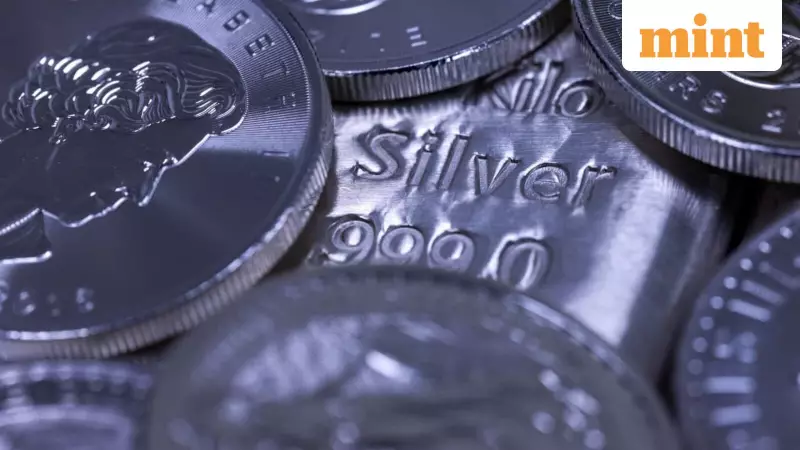
The Indian government is gearing up to introduce mandatory hallmarking for silver jewellery, starting with a pilot project in select districts. This move follows the successful implementation of compulsory gold hallmarking and aims to protect consumers from counterfeit products by verifying purity and authenticity.
Pilot Project and HUID Rollout
Sanjay Garg, Director General of the Bureau of Indian Standards (BIS), stated that the pilot will involve large jewellery manufacturers. The BIS is simultaneously working to strengthen testing and certification infrastructure in the identified districts. While silver hallmarking has been voluntary since September, a significant change is coming in September 2025. From that date, any hallmarked silver article must carry a Hallmark Unique Identification (HUID) code.
The HUID is a six-digit alphanumeric code issued by the BIS. It allows each piece of jewellery to be uniquely identified and traced. Consumers can verify the purity, authenticity, and even the jeweller's details using the BIS Care app or portal. Data shows strong early adoption, with over 23 lakh (2.3 million) silver articles hallmarked with HUID by 31 December 2025.

Addressing Challenges and Phased Implementation
Garg clarified that the government is assessing challenges faced during the gold hallmarking rollout. "We are assessing the challenges faced during the rollout of mandatory gold hallmarking, and once those issues are addressed to our satisfaction, the framework will be taken forward," he told Mint. He did not specify a final timeline, citing infrastructure needs.
"Silver hallmarking is different from gold, and the process is more tedious," Garg explained. The mandatory rollout will therefore be phased, dependent on the readiness of the required infrastructure across the country.
Why Timing is Critical for Silver Hallmarking
Consumer groups emphasize the critical timing of this move, given silver's meteoric price rise and its growing stature as an investment asset. "The move to make silver hallmarking mandatory assumes significance as silver has increasingly emerged as an alternative to gold for investment," said Ashim Sanyal, CEO of Consumer Voice.
Silver prices surged over 150% in 2025, starting the year around ₹81,000 per kg and ending near ₹2,06,000 per kg. As of Tuesday, the price stood at ₹2,37,063 per kg according to the India Bullion and Jewellers Association (IBJA). With rising consumption and investment, mandatory hallmarking is seen as a vital tool to check counterfeit products.
India consumes 5,000–7,000 tonnes of silver annually, with jewellery accounting for about 35% of total use. Only 700–800 tonnes are mined domestically, with the bulk imported from countries like the UK, UAE, Hong Kong, and Russia.
Broader Push for Quality Standards
At the 79th BIS foundation day, Union Minister Pralhad Joshi urged the bureau to fast-track new standards and modernise labs. He stressed that quality is central to India's Make in India and Atmanirbhar Bharat ambitions, and standards should be viewed as a competitive advantage.
Currently, about 23,700 Indian standards are in force, with 94% aligned with global ISO and IEC norms. Manufacturers have obtained thousands of BIS certifications, showing growing acceptance, especially among MSMEs.
In a related tech upgrade, the BIS is enhancing its mobile app with AI features. Soon, consumers will be able to get a brand-wise list of ISI-marked products available in a specific city locality, like Sarojini Nagar in Delhi, before purchase. The BIS is also developing voluntary standards for new segments like lab-grown diamonds.