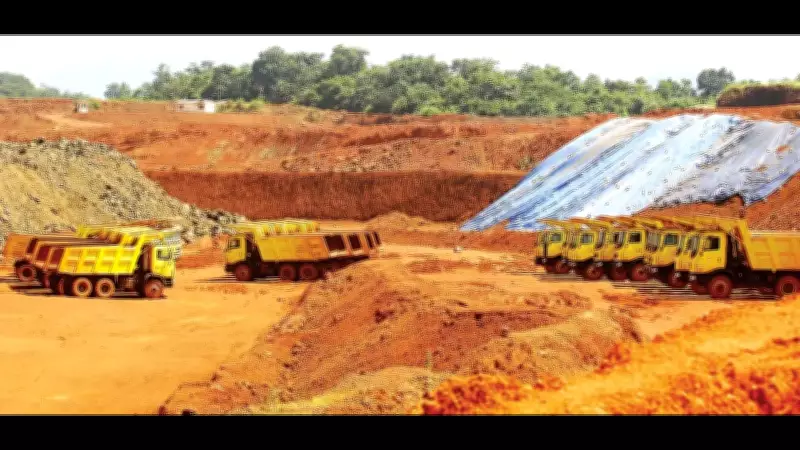
Goa's Directorate of Mines and Geology Announces Second Phase of Dump E-Auction
In response to a lackluster outcome from the initial round, the directorate of mines and geology in Goa has officially launched the second phase of the e-auction for low-grade iron ore dumps. The tender for this new phase went live on Tuesday, marking a significant expansion in the government's efforts to manage and monetize these mineral resources.
First Phase Results and Expanded Second Phase
During the first phase of the e-auction, which targeted five low-grade iron ore dumps identified by the state government, only one dump was successfully auctioned. This underwhelming response has prompted authorities to scale up the initiative. The second phase will involve a much larger exercise, with 24 dumps set to be auctioned across various talukas in Goa, including Sanguem, Dharbandora, Bicholim, and Sattari, with one dump even located in Sirsaim within Bardez.
Most of these dumps are situated in South Goa, and they vary significantly in size. While many are relatively small, ranging from 1 lakh tonnes to 26 lakh tonnes, the largest dump is located in Sonus, Sattari, boasting an impressive 10 million tonnes. In the previous auction, only the largest dump attracted bids, leaving the four smaller ones without any takers.

Reserve Price and Regulatory Framework
The state government has established a reserve price of 22% for the e-auction of low-grade iron ore dumps. This means that if the Indian Bureau of Mines sets a price of, for example, Rs 100 per tonne for low-grade iron ore, mining companies purchasing the ore at auction must pay Rs 22 per tonne to the government. This pricing structure is designed to ensure fair revenue generation while encouraging participation from mining firms.
The legal basis for these dump mining activities stems from a Supreme Court decision that allowed the Goa government to proceed in accordance with an expert committee's report. Following this, the Dump Handling Policy, 2023 was notified on September 14, 2023. This policy aims to address the massive 700 million tonnes of low-grade iron ore accumulated inside and outside mining leases across Goa, with a target to export up to 25 million tonnes per annum from dump handling operations.
Implications for Goa's Mining Industry
The expansion to 24 dumps in the second phase reflects the government's commitment to revitalizing the mining sector and efficiently managing ore resources. By increasing the number of available dumps, authorities hope to attract more bidders and boost economic activity in the region. The policy framework ensures that dump handling is conducted sustainably, aligning with environmental and regulatory standards.
This initiative is crucial for Goa's economy, as it not only generates revenue through auctions but also facilitates the export of significant quantities of iron ore, potentially enhancing the state's trade balance. Stakeholders in the mining industry are closely watching the outcomes of this second phase, which could set a precedent for future dump management strategies in India.