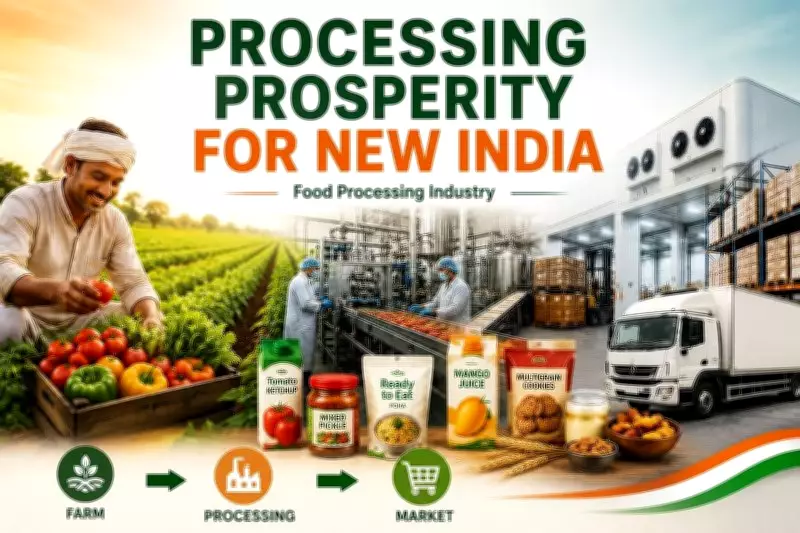
The food processing industry in India is evolving beyond a mere extension of agriculture; it is emerging as a transformative engine of economic development. As one of the world's largest producers of fruits, vegetables, milk, spices, cereals, and livestock products, India has long possessed immense agricultural potential. However, for decades, the country primarily exported raw agricultural produce, capturing only minimal value addition. Significant post-harvest losses, fragmented supply chains, low farmer incomes, and inadequate storage infrastructure prevented Indian agriculture from realizing its full economic potential.
The Shift Towards Value Addition
Today, a revolution is underway. The food processing sector is rapidly expanding, driven by government initiatives, private investment, and changing consumer preferences. Value addition—converting raw commodities into processed foods like juices, canned goods, frozen vegetables, and dairy products—is creating new revenue streams for farmers and entrepreneurs alike. This shift not only reduces post-harvest losses but also stabilizes farmer incomes by providing alternative markets and price premiums.
Rural Enterprise and Agri-Modernization
Rural enterprises are at the heart of this transformation. Small and medium-sized food processing units are sprouting across India, leveraging local produce and traditional knowledge. These enterprises are supported by improved cold chain logistics, better storage facilities, and access to credit. Agri-modernization efforts, including precision farming, digital marketplaces, and farm-to-fork traceability, are further enhancing efficiency and quality. The result is a more resilient agricultural ecosystem that benefits all stakeholders.

Economic Impact
The economic implications are profound. The food processing industry contributes significantly to GDP, employment, and exports. It creates jobs in manufacturing, logistics, and retail, particularly in rural areas where opportunities are scarce. By reducing waste and adding value, the sector helps India compete globally in processed food markets. Moreover, it aligns with national goals of doubling farmer incomes and achieving sustainable development.
Challenges and the Way Forward
Despite progress, challenges remain. Infrastructure gaps, regulatory hurdles, and access to technology and finance still hinder growth. To sustain the momentum, continued investment in cold storage, transportation, and food safety standards is essential. Public-private partnerships, skill development programs, and research into innovative processing techniques will further accelerate the revolution.
India's food processing revolution is more than an economic trend; it is a pathway to prosperity for millions. By bridging the gap between farm and fortune, the country is turning its agricultural bounty into a source of lasting wealth and well-being.