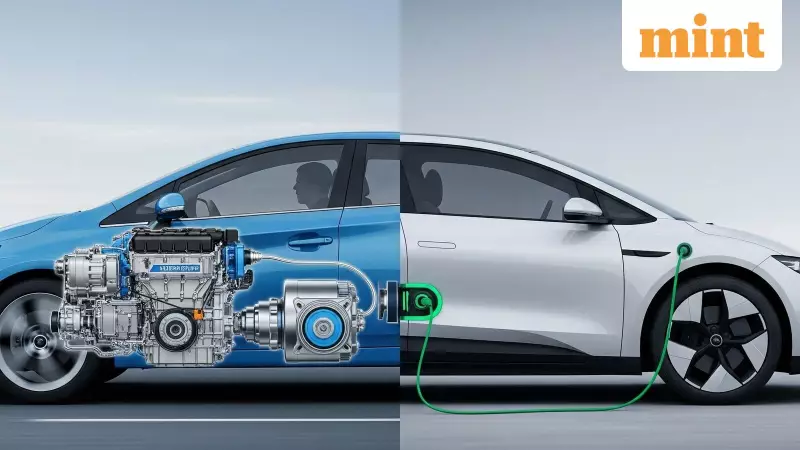
Electric Vehicle Sales Experience Sharp Decline in October
India's automobile market witnessed a surprising trend in October 2024, with electric vehicles losing significant ground to their internal combustion engine counterparts. According to data from the Federation of Automobile Dealers' Associations of India (FADA), electric two-wheeler sales plummeted to 4.56% of overall sales from 8.09% in September, while electric four-wheeler sales dropped to 3.24% from 5.12% during the same period.
GST Changes Tilt Playing Field Against EVs
The recent reduction in GST rates on many ICE vehicles from 28% to 18%, while keeping EV rates unchanged at 5%, has created an affordability gap that's impacting consumer choices. This fiscal policy shift comes at a time when automobile sales showed robust growth overall in October, reducing inventory levels with dealers from nearly two months' stock to 53-55 days.
The regional distribution of sales growth further complicated matters for electric mobility. Rural sales grew three times faster than urban figures for passenger vehicles and nearly double the urban growth rate for two-wheelers. Given the sparse charging infrastructure and limited EV service centers in rural areas compared to abundant conventional fuel outlets, rural buyers naturally leaned toward ICE vehicles.

Infrastructure and Affordability Challenges
The sales data revealed increased consumer preference for smaller cars and entry-level two-wheelers, which benefited from the GST reduction. The lower upfront costs of these conventional vehicles present a significant hurdle for EVs, whose higher initial price takes years to justify through lower running costs.
With limited fiscal room for additional incentives beyond the already low 5% GST on EVs, policymakers and industry leaders face the challenge of making electric vehicles more appealing through other means. The current market environment has clearly turned more attractive for ICE vehicles, creating headwinds for India's EV transition goals.
Critical infrastructure gaps remain a major concern, including inadequate charging stations across the country, unreliable battery supply chains dependent on China, and concerns about the power grid's capacity to handle mass EV charging. Technological advances addressing range anxiety and performance issues, along with strengthening the national grid, have become imperative for sustainable EV adoption.
Ultimately, consumers are demanding longer-driving ranges and more affordable electric vehicles. Unless these fundamental requirements are met, efforts to transition India away from ICE vehicles may continue to face resistance despite the country's broader environmental and energy security objectives.