De Beers Restructures Sightholder Network as Lab-Grown Diamonds Transform Global Market
The global diamond industry is undergoing a profound transformation, with lab-grown diamonds (LGDs) emerging as a disruptive force. In a significant development, diamond giant De Beers is poised to reduce its sightholder count by approximately 25%, with the majority of affected businesses based in Surat, India's diamond polishing hub.
Market Shifts Prompt Strategic Realignment
While the precise number of sightholders to be removed remains unconfirmed, De Beers has announced its intention to collaborate with a more focused group of clients. Industry experts attribute this restructuring to declining demand and diminishing value of natural diamonds, largely driven by the rising popularity of affordable lab-grown alternatives.
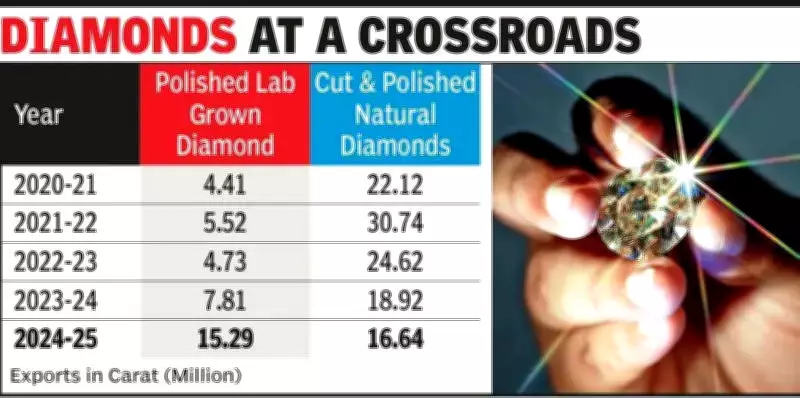
The data reveals a striking contrast: polished LGD exports skyrocketed from approximately 4 million carats in 2020-21 to over 15 million carats in 2024-25. Conversely, cut and polished natural diamond exports dropped to 16.64 million carats in 2024-25 from about 22 million carats during the same period.

Sightholder Reduction and Industry Implications
Industry sources indicate the number of sightholders may decrease from 61 to 41, though one new sightholder from Surat has reportedly been added. Sightholders represent an exclusive group of leading diamantaires, manufacturers, and retailers authorized to purchase rough diamonds directly from De Beers. Selection criteria include financial stability, ethical sourcing practices, and large-volume processing capacity.
Paul Rowley, Executive Vice-President for Diamond Trading at De Beers Group, explained, "The diamond industry has evolved significantly during the current contract period. Working with our government partners in Botswana, Canada, Namibia, and South Africa, we are shaping future sightholder supply agreements to deliver greater strategic value through closer collaboration."
Rowley emphasized that lower anticipated availability for the sightholder supply model necessitates working with a more focused client group to enable deeper, strategic partnerships. He noted that De Beers began exploring new collaborative relationships as part of its rough diamond distribution approach last year.
Lab-Grown Diamonds: The Primary Catalyst
Dinesh Navadiya, Chairman of the Indian Diamond Institute (IDI), highlighted the impact of LGDs: "It is possible that some sightholders have surrendered their contracts considering the current market conditions. The major reason is LGD popularity, which is securing a major share of the natural diamond market."
Navadiya further noted that LGD production and exports are likely to continue growing as technological advancements improve product quality. Research into alternative applications for lab-grown diamonds is also progressing.
Workforce Transition and Manufacturing Shift
The industry transformation extends beyond trade statistics. Many diamond cutting and polishing artisans have transitioned from natural diamond processing to LGD manufacturing, despite previously higher wages in the natural diamond segment. Industry sources describe this shift as unavoidable for survival in current market conditions.
Additionally, LGD jewelry manufacturing is gaining rapid acceptance, further accelerating growth in lab-grown diamond production. This comprehensive shift underscores how consumer preferences and economic factors are reshaping traditional diamond industry structures.
De Beers, which supplies approximately one-third of the global rough diamond market alongside major competitor Alrosa, confirmed that details of the new sightholder list will be published in July at the start of the new supply agreement period. Simultaneously, De Beers has identified India as the world's second-largest diamond market, surpassing China in significance.