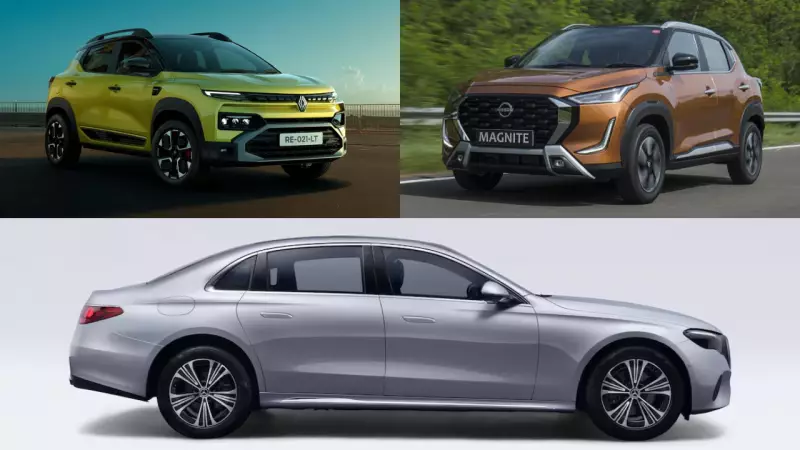
The new year is set to bring heavier price tags for new cars in India. Several major automobile manufacturers have officially confirmed that they will increase the prices of their vehicles starting January 1, 2026. This move is a direct response to the persistent rise in raw material costs, logistics expenses, and broader macroeconomic pressures.
Confirmed Price Revisions: A Segment-Wide Impact
The wave of price increases spans both luxury and mainstream segments, affecting a wide range of buyers. While only a handful of companies have made formal announcements so far, industry experts anticipate more carmakers will follow suit in the coming days. For consumers planning to purchase a new car or SUV, finalising the decision before the year-end could lead to significant savings.
Mercedes-Benz India will implement a price hike of up to 2 per cent across its entire model lineup effective from January 1, 2026. The German luxury carmaker attributed the adjustment to continued currency fluctuations, escalating input costs, inflation, and higher transportation expenses. The company noted it has absorbed a portion of the exchange rate impact to cushion its customers.

JSW MG Motor India has also announced a 2 per cent increase on all its models from the same date. The company cited rising input costs and macroeconomic factors affecting the automotive sector. This revision will notably impact popular models. The bestselling Windsor EV is expected to become costlier by up to Rs 35,000, potentially raising its starting ex-showroom price to around Rs 14.25 lakh. The entry-level Comet EV could see a rise of approximately Rs 20,000, pushing its price near Rs 7.7 lakh (ex-showroom).
Mainstream Brands Adjust Their Pricing
Nissan Motor India plans a steeper increase of up to 3 per cent on its sole model, the Magnite subcompact SUV, from January 1, 2026. Currently priced between Rs 5.62 lakh and Rs 10.90 lakh (ex-showroom), the SUV's new price range is estimated to be approximately Rs 5.79 lakh to Rs 11.23 lakh. This annual revision is also driven by rising input costs and exchange rate volatility. Nissan is simultaneously gearing up for a major product push in India, with plans to launch three new models within about 16 months.
Renault India will increase prices across its model range by up to 2 per cent, blaming rising production costs and the economic environment. The announcement comes as Renault prepares for a major launch: the all-new Duster SUV on January 26, 2026. This next-generation model, which pioneered the compact SUV segment in India in 2012, promises a complete design overhaul inspired by the Bigster concept. It will feature distinctive LED lighting, rugged body cladding, and India-exclusive styling cues, positioning it as a fresh rival in the fiercely competitive mid-size SUV space.
What This Means for Indian Car Buyers
The coordinated price revisions signal a challenging period for the automotive industry, with cost pressures being passed on to the end consumer. The increases, though seemingly modest in percentage terms, translate to substantial amounts in absolute figures, especially for premium and electric vehicles. With more manufacturers likely to join the list, the overall cost of vehicle ownership in India is poised to climb as 2026 begins. For prospective buyers, the window to lock in current prices is closing fast.