Byadagi: The Chilli Capital of Asia
In the heart of Karnataka, the town of Byadagi has earned its reputation as Asia's largest chilli market. Known for its vibrant red chillies, the town processes a significant portion of India's chilli output, with the spice's oleoresin—a natural colouring extract—finding its way into processed foods, sauces, spice blends, pharmaceuticals, and even cosmetics like lipstick and nail polish.
Economic Backbone of the Region
The Byadagi Agricultural Produce Market Committee (APMC) is the epicentre of this trade. Every day, hundreds of farmers and traders gather here to auction chillies, with prices fluctuating based on quality and demand. According to local traders, the market handles over 100,000 tonnes of chillies annually, making it a critical hub for the spice industry in India.
The chillies grown in this region, particularly the Byadagi variety, are renowned for their deep red colour and moderate pungency. They are a key ingredient in many Indian dishes and are also exported to countries like Bangladesh, Malaysia, and the Middle East.

From Farm to Factory: The Oleoresin Industry
One of the most valuable byproducts of Byadagi chillies is oleoresin, a concentrated extract that captures the colour and flavour of the spice. This extract is widely used in the food industry for colouring sauces, snacks, and meat products. Beyond food, oleoresin has applications in pharmaceuticals as a natural dye and in cosmetics, where it adds a vibrant red hue to lipsticks and nail polishes.
Santosh Jigalikoppa, a local journalist, noted, "The chilli's oleoresin is a versatile ingredient that drives demand beyond traditional culinary uses, boosting the local economy." Several extraction units have sprung up in and around Byadagi, providing employment to hundreds of workers.
Labour and Livelihoods in the Chilli Market
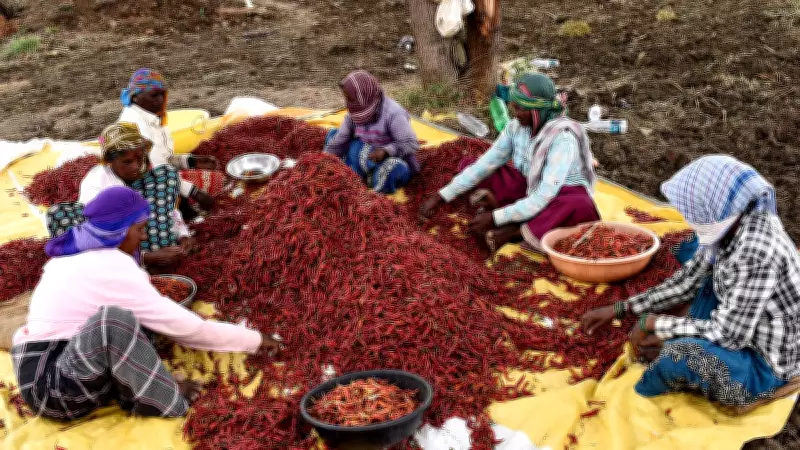
The chilli market is a bustling place, with labourers working tirelessly to sort, grade, and pack the chillies. Photographs by Malatesh Ichangi capture the intensity of this work, showing piles of red chillies being prepared for shipment. Many workers are migrants from neighbouring districts, drawn by the steady income during the harvest season.
The market also supports ancillary businesses, including transport, packaging, and banking. Local banks often provide loans to farmers based on their chilli yields, underscoring the crop's financial significance.
Challenges and Future Outlook
Despite its success, the chilli industry in Byadagi faces challenges such as price volatility, climate change impacts, and competition from other spice-producing regions. Farmers have called for better storage facilities and price support mechanisms to stabilise their incomes.
Nevertheless, the town's identity remains deeply intertwined with the chilli. As one trader put it, "Byadagi is not just a market; it's a way of life." With growing global demand for natural colours and flavours, the town's oleoresin industry is poised for further expansion, ensuring that Byadagi remains a key player in the global spice trade.