The Indian automotive industry stands at a critical juncture, actively transitioning towards new-age technologies and clean mobility solutions. This evolution is occurring amidst a complex landscape marked by global trade policy uncertainties, energy security concerns, and the pursuit of technological sovereignty. Given the sector's substantial contribution to India's economic growth and employment, the upcoming Union Budget for the fiscal year 2026-27 is poised to play a decisive role. It can provide essential policy facilitations to strengthen the industry's resilience and guide it through these multifaceted challenges.
Shielding Against Global Economic Volatility
Recent significant shifts in international trade policies have profoundly impacted the domestic automotive industry, which is deeply integrated into global value chains. Illustrating this vulnerability, data from the first half of fiscal year 2025 reveals a concerning trend. India's auto component imports surged by 12.5% to reach $12.3 billion, outpacing a 9.3% growth in exports, which stood at $12.1 billion. This imbalance resulted in a trade deficit of $180 million, a stark reversal from the $150 million surplus recorded in the corresponding period of the previous year. Consequently, the budget is anticipated to introduce robust mechanisms aimed at enhancing domestic manufacturing capabilities and safeguarding component exporters from sudden, disruptive policy changes in key international markets.
Furthermore, a critical dependency on imports for raw materials poses a strategic risk. India currently imports over 90% of its rare earth requirements, with a heavy reliance on China, making the supply chain susceptible to constraints. While the launch of the Rs 7,280 crore Scheme to Promote Manufacturing of Sintered Rare Earth Permanent Magnets in December 2025 is a positive step, industry stakeholders are advocating for the budget to increase its financial outlay, simplify eligibility criteria, and expedite related Production Linked Incentive (PLI) and research and development (R&D) schemes to accelerate domestic production.

Accelerating the Shift to Clean Mobility
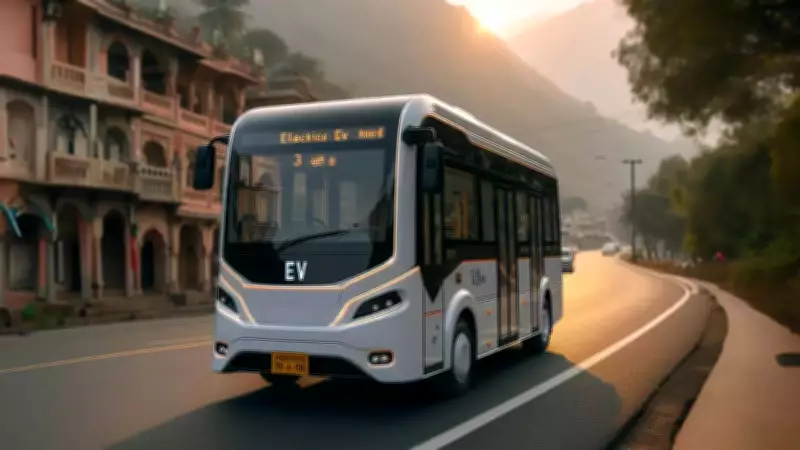
The transition to electric vehicles (EVs) is gaining momentum, powered by government initiatives. The PM E-DRIVE Scheme has been instrumental, having incentivised over 24.79 lakh electric two-wheelers and 3.15 lakh electric three-wheelers as of July 2025. It also marked a milestone by providing a Rs 500 crore incentive for electric trucks. Parallelly, the PM-eBus Sewa scheme aims to deploy 38,000 electric buses by fiscal 2029, with funding already secured for 14,028 buses as of mid-2025.
Addressing Gaps in Passenger Vehicle Electrification
However, the passenger vehicle segment encounters specific hurdles. Many manufacturers have strongly advocated for the inclusion of electric cars used in commercial fleet operations under the ambit of the PM E-DRIVE Scheme. Although fleet vehicles constitute a smaller percentage of total car sales, they contribute disproportionately higher to emissions due to significantly greater annual mileage—typically running four to five times more than private cars. The budget can provide targeted support for this segment and for entry-level electric cars, which face heightened affordability pressures compared to internal combustion engine (ICE) vehicles, especially following recent revisions in the Goods and Services Tax (GST) structure.
To further bolster the EV ecosystem, the budget could introduce attractive incentives to encourage private sector investment in developing charging infrastructure. A crucial reform sought is the reduction of GST on public charging services from the current 18% to 5%, thereby aligning it with the tax rate applicable on the purchase of electric vehicles themselves.
Refining Production Linked Incentive Schemes
Disbursements under the PLI Auto scheme are gradually accelerating, with Rs 322 crore released for fiscal 2024 and nearly Rs 2,000 crore earmarked for fiscal 2025. The Ministry of Heavy Industries has proposed doubling the PLI allocation for the next fiscal to Rs 5,800 crore, with a strategic shift in focus from mere capacity creation to achieving high-volume production. A current limitation of the scheme is its eligibility criteria, which have restricted participation largely to a few established large players.

Industry stakeholders are therefore urging the government to consider introducing a secondary PLI framework or recalibrating the existing norms. This would involve setting lower turnover and investment thresholds to foster innovation and include new-age technology companies and startups. Additionally, given the current scarcity of locally manufactured high-tech components like power semiconductors and rare earth magnets, the government could consider a phased or staggered approach to meeting domestic value addition requirements.
Enhancing Credit Access and Undertaking Structural Tax Reforms
The overall health of the automotive sector is deeply intertwined with the financial viability of its vast network of suppliers, particularly micro, small, and medium enterprises (MSMEs). A persistent fiscal issue plaguing manufacturers is the inverted duty structure within GST. While finished electric vehicles attract a concessional GST rate of 5%, many of the components and raw materials used in their manufacture are taxed at 12% to 18%. This anomaly leads to an accumulation of input tax credit that often cannot be fully utilised, effectively locking up crucial working capital for manufacturers.
A key budget expectation is the expansion of the scope of Section 54(6) of the CGST Act to allow for provisional refunds in cases involving such inverted duty structures. Beyond GST, India Inc. has consistently advocated for simplifying the complex customs duty regime. Recommendations include reducing the number of duty slabs and implementing a streamlined single-window clearance mechanism. A dedicated scheme to expedite the release of funds tied up in protracted legal disputes with customs authorities could also provide significant relief.
Boosting Infrastructure and Vehicle Replacement
Broader economic policies that bolster rural income and spending power—such as increased allocations for rural infrastructure and agriculture—can indirectly support demand in the two-wheeler and tractor segments. Continued focus on developing last-mile connectivity and overall road infrastructure remains vital.
To accelerate the vehicle scrappage and replacement cycle, the budget can introduce stronger fiscal incentives. These could include offering a higher road tax rebate for consumers who purchase a new vehicle against a valid certificate of deposit from a Registered Vehicle Scrapping Facility (RVSF). Alternatively, providing higher scrap value incentives beyond the current 4-6% of the ex-showroom price could stimulate participation. As of July 2025, only about 3.5 lakh vehicles had been scrapped at registered RVSFs, representing less than 3% of the estimated 12 million vehicles eligible for scrappage.
Investing in Future Mobility Technologies
The establishment of the Ausandhan National Research Foundation (ANRF) and the launch of the ambitious Rs 1 lakh crore Research Development and Innovation (RDI) scheme in late 2025 signify a paradigm shift in India's national innovation strategy. The budget presents an opportunity to increase direct fund allocation for specific ANRF programmes. These programmes should focus on supporting the localisation of critical technologies such as automatic transmissions, high-voltage EV powertrains, automotive electronics, and other clean mobility solutions.
Looking ahead, the budget could also consider extending PLI benefits to cutting-edge areas like automotive software development and AI-based risk management systems for vehicle fleets. Such a move would enable India to leverage its formidable existing strengths in IT services to secure a dominant position in the emerging global market for software-defined vehicles, shaping the future architecture of mobility.