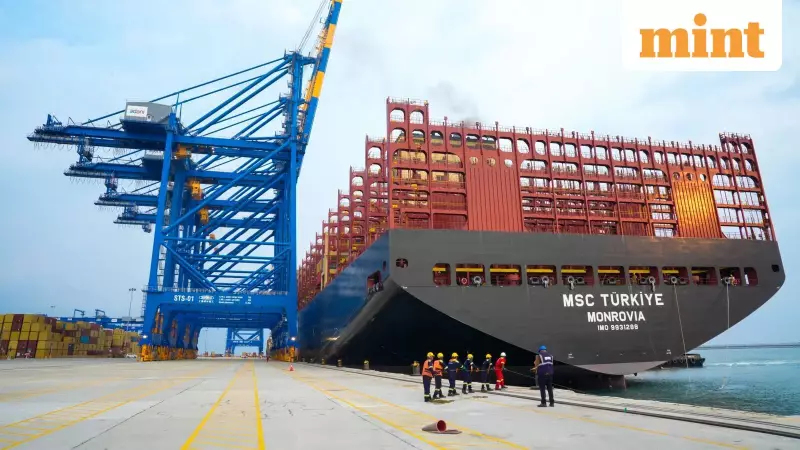
In a significant development for India's maritime sector, state-run Bharat Petroleum Corporation Ltd (BPCL) is actively engaged in discussions with several global shipping majors to source crude oil from the planned liquefied natural gas (Lunkering facility at Kerala's Vizhinjam port. The company is in talks with Danish shipping giant Maersk, Italian major Mediterranean Shipping Company S.A (MSC), and Germany's HAPAG-Lloyd, as revealed by Rahul Tandon, head of BPCL's gas business, in an interview with Mint.
Strategic Partnerships and Customer Engagement
Rahul Tandon emphasized that BPCL is fully prepared for the initiative, stating, "We are all geared up. It's just that now we are interacting with customers and making customers... global liners Maersk, Hapag and MSC, among others." He further noted that global trading major Vitol is facilitating these discussions by engaging with prospective buyers of clean fuels. Typically, refueling at such facilities is conducted through term contracts, highlighting the structured approach being adopted.
Queries sent to Maersk, MSC, HAPAG, and Adani Ports on Wednesday evening had not been answered at the time of the original report's publication, indicating the ongoing nature of these negotiations.

India's First LNG Bunkering Facility
BPCL is also exploring options to charter a vessel to establish this facility, which will mark India's inaugural LNG bunkering setup. Tandon explained that this move aligns with the government's vision to develop India as a maritime hub, offering a clean refueling alternative for ships traversing the Indian Ocean region. Currently, the nearest LNG bunkering facility is located in Singapore, with other major facilities in Europe, such as Rotterdam, which boasts the largest capacity.
Optimistic Demand Outlook
Tandon expressed optimism regarding demand, citing the shipping industry's shift towards cleaner fuels like LNG and green methanol. "These large ship containers have the capacity to take 5,000 to 10,000 cubic meters of LNG. We are currently exploring for chartering either a 12,000 or 18,000 cubic meter vessel," he said. This strategic positioning near the east-west international shipping corridor is expected to elevate Vizhinjam as a key hub for low-carbon shipping across the Indian Ocean.
Formalization and Regulatory Framework
The initiative was formalized in October 2025 through a memorandum of understanding (MoU) signed by Adani Vizhinjam Port Private Limited (AVPPL) and BPCL during India Maritime Week 2025 in Mumbai. Additionally, BPCL has entered into an MoU for LNG bunkering and dual-fuel vessels at Cochin Port in Kerala, underscoring its commitment to expanding clean fuel infrastructure.
Tandon detailed the preparatory work, stating, "We have been working on it for the past one-and-a-half years, working closely with the DG shipping and department of explosives to ensure that the guidelines, SoPs, everything is in place. We received the bunkering license about 2-3 months ago." This highlights the thorough regulatory compliance and planning involved.
Global Shift Towards LNG as Ship Fuel
LNG has garnered increasing attention as a ship fuel not only in Europe but also in Asia and the US. According to DNV, a global independent assurance and risk management provider, using LNG for ships can reduce sulphur oxide emissions by 90% to 95% and cut greenhouse gas emissions by up to 23% with modern engine technology. This environmental benefit is driving its adoption worldwide.
Government Support and Vision
In October, Prime Minister Narendra Modi highlighted India's potential as a major maritime hub, given its coastline exceeding 7,500 km and expanding network of globally competitive ports. He emphasized that India is poised to offer connectivity, value-added services, green shipping initiatives, and industry-friendly policy frameworks, calling on domestic and international investors to invest in the maritime space.
This initiative represents a pivotal step in India's journey towards sustainable maritime operations, leveraging strategic partnerships and clean energy solutions to enhance its global standing in the shipping industry.