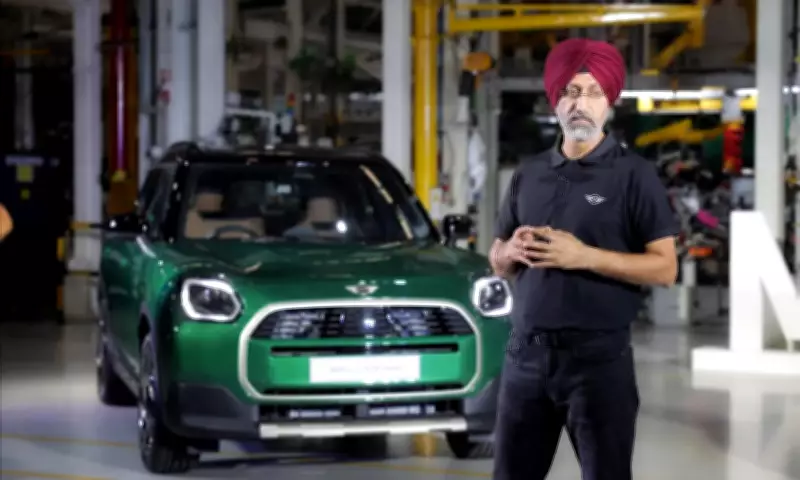
Chennai: Despite a challenging operating environment, 2026 is shaping up to be a landmark year for BMW in India. The German luxury carmaker is targeting a sixth consecutive year of double-digit growth in the post-pandemic period, with annual sales expected to cross the 20,000-unit mark for the first time.
MINI Brand Poised for Breakthrough
Its MINI brand is also poised for a breakthrough year, with volumes likely to double and exceed 1,000 units annually for the first time, driven by an aggressive product offensive and a significant expansion of its retail network. The momentum could propel BMW to the top spot in India’s luxury-car market in 2026, with the company already ahead of the current market leader in retail sales volumes.
“As we speak, we are number one,” Hardeep Singh Brar, president and CEO, BMW Group, India told TOI at the company’s factory in Chennai, referring to BMW’s performance in the Jan-June period. “But frankly, we are not chasing the number one position. This is a by-product of what we are fundamentally doing. Our focus is on the basics—launching better cars, offering a wider portfolio and giving customers what they want,” he said at the launch of locally-assembled MINI Countryman C, priced at Rs 47.5 lakh.

Competitive Landscape
BMW is currently ahead of its closest rival, Mercedes-Benz, by around 300 units, according to Vahan data. Brar said the company is targeting strong double-digit growth for the full year after posting a 17% increase in sales during the first quarter, adding that demand remains robust despite two rounds of price hikes implemented this year. “At this stage, I do not see any negative impact from the price increases,” he said.
MINI's Unique Position
BMW is also betting on a stronger performance from its premium small-car brand MINI, which sold 730 units last year. Despite its niche positioning, the company expects MINI to cross the 1,000-unit mark for the first time and potentially double its 2025 volumes. “The typical MINI customer is a very affluent individual who already owns several luxury cars and wants a MINI as part of that collection,” Brar said. “We want to preserve its uniqueness and exclusivity, but we do expect stronger volumes.”
Expansion Plans
The growth is expected to be aided by new product introductions and a broader retail footprint. The company intends to nearly double the MINI network while adding more than 10 BMW touchpoints. Brar said BMW’s growth strategy is being supported by an aggressive launch calendar. The company has planned a total of 27 new products across brands, including 10 significant new launches, alongside 17 exclusive special editions and fresh variants, in 2026.
SUV and Sedan Demand
Like the broader industry, BMW continues to benefit from strong SUV demand. However, Brar dismissed suggestions that luxury sedans are losing relevance. While sedans account for only around 9% of the mass-market passenger vehicle segment, they still represent approximately 38% of luxury-car sales. “More than one-third of luxury customers continue to prefer sedans. I don’t see sedans disappearing from the luxury market,” he said.
Brar said the proposed India-EU FTA could offer some benefits for imported completely built-up (CBU) models, particularly high-performance M cars, but any meaningful impact is unlikely before 2028.