Bihar Agricultural University Pioneers Nilgai Domestication to Protect Crops
In a groundbreaking development that could transform agricultural practices across India, researchers at Bihar Agricultural University (BAU) have achieved a significant milestone by successfully demonstrating the domestication of the blue bull, commonly known as nilgai. This initiative presents a viable, non-lethal strategy to address the persistent problem of crop damage caused by wildlife, offering hope to countless farmers who face substantial economic losses annually.
The Nilgai Problem: A Major Threat to Agriculture
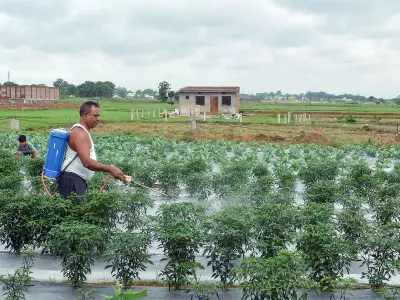
Biologically classified as Boselaphus tragocamelus, the nilgai stands as the largest Asian antelope native to the Indian subcontinent. For decades, this animal has been a source of considerable concern for agricultural communities due to its destructive behavior. Nilgais frequently damage standing crops, particularly during evening and night hours, through various means including foraging, trampling, and even resting in cultivated fields.
According to BAU Vice-Chancellor Duniya Ram Singh, the impact is severe: "Nilgai can cause 30% to 40% crop loss annually, whereas in high-density areas, damage to certain crops can reach up to 70% across the nation." The situation is particularly dire in Bihar, where 21 out of 38 districts are severely affected by nilgai-related crop damage, with the state's nilgai population estimated at approximately 2.96 lakh animals.

The Domestication Experiment: Science Meets Innovation
The pioneering experiment was conducted at Veer Kunwar Singh College of Agriculture (VKSCA), a constituent unit of BAU, under the leadership of scientist Suday Prasad. The research team worked under the guidance of Director (Research) Anil Kumar Singh and received monitoring from Vice-Chancellor Duniya Ram Singh, representing a collaborative effort at the highest levels of agricultural science.
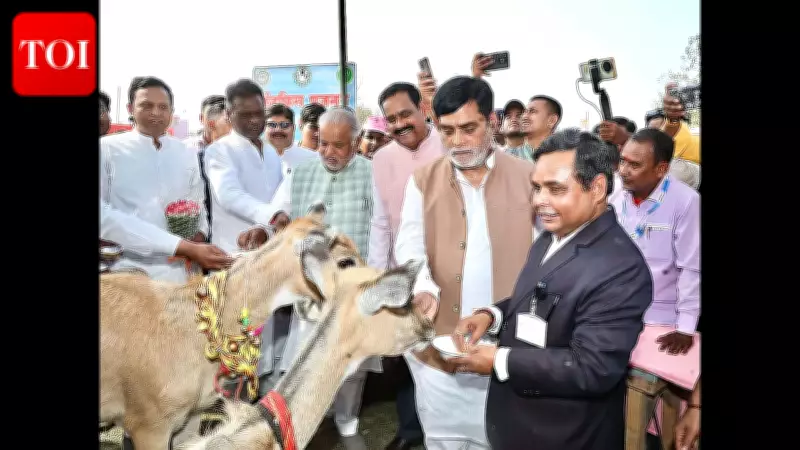
The domestication process employs several integrated methods designed to gradually acclimate nilgais to human-managed environments. A key component is the "taming strategy," where nilgai calves are raised by humans and nourished with cow's milk from an early age. This approach is complemented by behavioral adaptation techniques that encourage nilgais to graze alongside domestic animals such as cattle, goats, and buffaloes in agricultural landscapes.
Additional measures include breeding nilgais within human-managed farms and implementing castration of males to reduce aggression. According to researchers, these comprehensive methods significantly increase docility and may eventually lead to the animals adapting permanently to farm environments, creating a harmonious coexistence between agriculture and wildlife.
A Sustainable Alternative to Traditional Methods
Director (Research) Anil Kumar Singh emphasized the ecological importance of this approach: "Domestication is a non-lethal, science-based strategy to manage crop damage while maintaining ecological balance." This is particularly significant given that nilgais are officially classified as agricultural pests in several regions, where crop losses in severely affected areas typically range between 50% and 58%.
The experiment suggests that domestication could substantially reduce crop damage while providing a sustainable alternative to culling, which has often faced opposition due to religious sentiments associated with the animal in many communities. By offering a solution that respects both agricultural needs and cultural values, the BAU research represents a balanced approach to human-wildlife conflict resolution.
Broader Implications for Indian Agriculture
This successful domestication demonstration has far-reaching implications beyond Bihar's borders. As human-wildlife conflicts intensify across India with expanding agricultural frontiers and shrinking natural habitats, innovative solutions like nilgai domestication could serve as a model for other regions facing similar challenges with different species.

The research not only addresses immediate crop protection concerns but also contributes to broader conversations about sustainable agriculture, wildlife conservation, and rural economic stability. By transforming a perceived pest into a potentially manageable resource, BAU scientists have opened new possibilities for agricultural innovation that could benefit farmers nationwide while preserving India's rich biodiversity.