Bengaluru's Landmark Double-Decker Flyover Approaches Full Commissioning
Bengaluru's pioneering double-decker flyover, stretching from Central Silk Board to Ragigudda, is poised to become fully operational by March 2025, marking a significant milestone in the city's infrastructure development. The Bangalore Metro Rail Corporation Limited (BMRCL) has announced that the remaining construction work on the elevated section from HSR Layout to BTM Layout is progressing ahead of schedule and is targeted for completion by February.
Construction Progress and Timeline
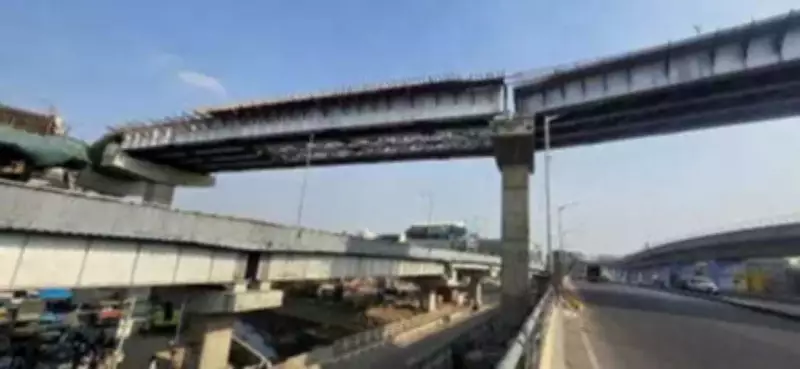
Recent construction milestones include the successful launching of all steel girders across the Silk Board flyover, with deck slab casting and other essential works currently underway. BMRCL Chief Public Relations Officer BL Yeshwanth Chavan confirmed the accelerated progress, stating that the project is moving faster than originally planned.
"The remaining work will be completed by February," Chavan emphasized. "Once the elevated section achieves connectivity readiness, the road will be opened to public use following consultation with traffic police authorities."

The project represents a crucial component of the Yellow Line Metro initiative, which was officially commissioned in August 2024. Construction of the double-decker structure commenced in 2019, though various challenges including design modifications, traffic clearance issues, and girder launching complexities have extended the original timeline.
Phased Opening and Current Status
In July 2024, BMRCL inaugurated the initial 5-kilometer segment from Ragigudda to Silk Board, incorporating a ramp that passes over the existing Central Silk Board flyover. However, the opposing carriageway from Silk Board to Ragigudda remained inaccessible due to ongoing construction delays. While BMRCL had initially projected a December 2025 opening for this stretch, the current accelerated timeline indicates substantial progress.
To facilitate construction of the double-decker structure and establish an interchange Metro station, authorities previously demolished the Jayadeva flyover. During the construction period, local residents creatively utilized the unopened stretch for recreational activities such as jogging and morning walks.
Anticipated Traffic Benefits and Challenges
Once fully operational, the Silk Board-Ragigudda stretch is expected to deliver substantial benefits for motorists traveling from HSR Layout toward BTM Layout via the down ramp, as well as those commuting from HSR Layout to Ragigudda using the elevated roadway. Complete commissioning of the double-decker infrastructure promises to alleviate chronic congestion at the notoriously gridlocked Silk Board junction.
A traffic police officer stationed at the junction reported that congestion beneath the Silk Board flyover has already diminished significantly following the opening of the Ragigudda-Silk Board elevated section. "Traffic originating from HSR Layout and Hosur Road is now utilizing the road flyover, resulting in smoother vehicular movement below," the officer observed. "Opening the opposite carriageway will further reduce congestion, though traffic signals at the junction cannot be entirely eliminated. Vehicles traveling toward HSR Layout from Hosur Road and from HSR Layout toward Madiwala will continue to use the junction."
Potential Traffic Pattern Shifts
With the anticipated full commissioning of the double-decker structure, traffic congestion patterns are expected to undergo significant transformation. Authorities anticipate that congestion may shift from Silk Board to Marenahalli Road near the Ragigudda Metro station. Increased traffic volumes are also projected for Banashankari Road, Kanakapura Road, and roads leading toward JP Nagar.
Following the partial opening of the double-decker, traffic volume has already intensified on Marenahalli Road and at the junction adjacent to Sri Raghavendra Swamy Mutt. Previously, the Bruhat Bengaluru Mahanagara Palike (BBMP) proposed constructing an underpass at this junction to mitigate traffic concerns, responding to elected representatives' apprehensions regarding escalating congestion.

This infrastructure development represents a crucial step forward in Bengaluru's ongoing efforts to enhance urban mobility and address persistent traffic challenges through innovative engineering solutions and strategic transportation planning.