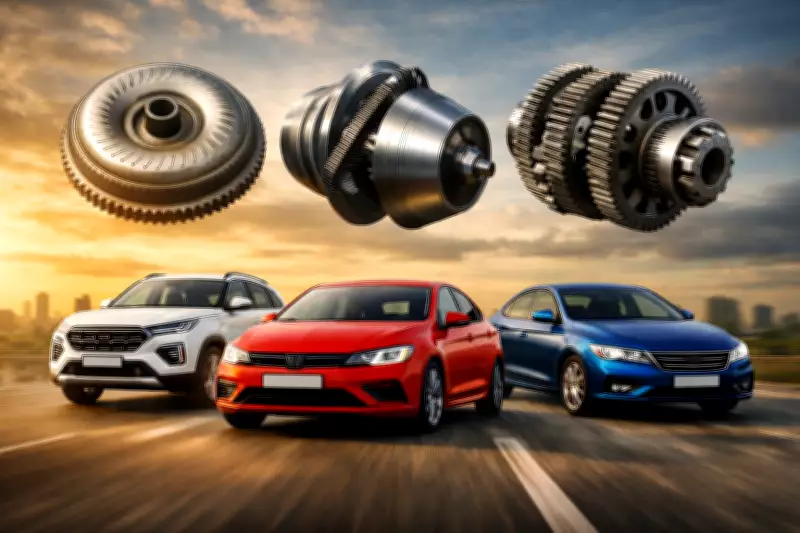
The Evolution of Automatic Transmissions in Modern Driving
For contemporary drivers navigating increasingly congested urban landscapes, the critical decision when purchasing a vehicle has shifted dramatically. The debate is no longer centered on fuel type but rather on transmission technology. As city traffic intensifies and daily commutes extend, manual gearboxes are progressively being replaced by automatic systems. However, the term "automatic" now encompasses multiple sophisticated technologies, each designed with specific engineering philosophies to enhance the driving experience.
Understanding the Three Main Automatic Transmission Types
Today's automotive market presents three primary automatic transmission systems: torque-converter automatics, continuously variable transmissions (CVTs), and dual-clutch transmissions (DCTs). Automakers employ varied terminology across technical specifications and marketing materials, yet all share the fundamental objective of reducing driver effort while simultaneously improving vehicle efficiency and passenger comfort. The essential consideration for everyday users is identifying which system performs optimally under actual driving conditions, including heavy traffic, frequent stop-and-go situations, flyover navigation, and occasional highway travel.
Torque Converter Automatic: The Refined Comfort Specialist
The traditional torque-converter automatic transmission remains one of the most globally prevalent systems, consistently refined by manufacturers like Mercedes-Benz, BMW, Toyota, and Hyundai due to its exceptional smoothness and proven durability. This technology utilizes hydraulic fluid coupling rather than mechanical clutch components to transfer engine power to the wheels. According to detailed engineering explanations from automotive companies, this hydraulic mechanism enables gradual gear shifts that minimize jerking sensations and prevent abrupt power interruptions.

For daily urban commuting, particularly in heavy traffic conditions, this seamless power delivery represents its most significant advantage. Modern iterations of torque-converter systems, especially the multi-speed automatics featured in premium sedans and SUVs, demonstrate substantially improved efficiency compared to earlier versions. The incorporation of additional gear ratios helps maintain lower engine revolutions during cruising speeds, thereby enhancing fuel economy while reducing cabin noise levels. The overall driving experience is characterized by predictability and relaxation, making it ideal for commuters who prioritize comfort over aggressive performance dynamics.
Optimal Applications:
- Heavily congested metropolitan areas
- Drivers preferring relaxed, unhurried driving styles
- Vehicles where long-term reliability is paramount
Continuously Variable Transmission (CVT): The Efficiency Maximizer
Continuously Variable Transmissions operate on fundamentally different mechanical principles compared to traditional gearboxes. Instead of employing fixed gear ratios, CVTs utilize an innovative belt-and-pulley system that continuously adjusts ratios based on real-time acceleration and speed requirements. Automotive manufacturers including Honda, Nissan, and Toyota emphasize CVT efficiency benefits in their official technical documentation, particularly highlighting advantages for urban driving environments.
Since CVTs eliminate stepped gear changes entirely, acceleration feels exceptionally seamless. The engine consistently operates within its most efficient performance range, optimizing fuel consumption—a key reason why CVTs are frequently paired with hybrid powertrain systems. In everyday driving scenarios, this translates to extraordinarily smooth vehicle movement during slow-traffic conditions. The absence of noticeable shift points significantly reduces driver fatigue during constant stop-start driving patterns. Many contemporary CVT designs now incorporate programmed "step shifts" that simulate traditional gear changes, addressing previous criticisms regarding engine noise during vigorous acceleration.

However, CVT engineering prioritizes efficiency and comfort rather than sporty responsiveness. During sudden acceleration demands, the engine may temporarily maintain higher revolutions, a characteristic frequently acknowledged by manufacturers when explaining typical CVT behavior patterns.
Optimal Applications:
- Daily commuting routines with predictable routes
- Situations where fuel efficiency is the primary concern
- Smooth, uninterrupted urban driving experiences
Dual-Clutch Transmission (DCT): The Performance-Oriented Automation
Dual-clutch transmissions represent a more performance-focused approach to automatic driving technology. Widely implemented by automotive groups such as Volkswagen, BMW, and Hyundai's performance divisions, DCT systems employ two separate clutches—one managing odd-numbered gears and the other handling even-numbered gears.
Manufacturer technical explanations detail how this configuration allows the subsequent gear to be pre-selected before the actual shift occurs. The result is exceptionally rapid gear changes with minimal interruption to power delivery. During highway driving or on open roads, this enables brisk acceleration and creates a more engaging, dynamic driving sensation.
For daily usage, however, the DCT experience depends considerably on specific calibration parameters. Since DCTs rely on clutch engagement mechanisms rather than hydraulic fluid coupling, low-speed crawling in heavy traffic may feel slightly less smooth compared to torque-converter or CVT systems. Automakers have made substantial improvements to low-speed behavior through sophisticated software updates and adaptive control systems, yet the fundamental character of DCTs continues to emphasize responsiveness over absolute comfort.
Where dual-clutch transmissions truly excel is in delivering efficiency combined with performance, providing manual-transmission-like efficiency while retaining automatic convenience features.
Optimal Applications:
- Mixed driving conditions combining city and highway travel
- Driving enthusiasts seeking engaging performance
- Highway-focused usage with occasional urban traffic exposure
Selecting the Optimal Transmission for Your Driving Needs
Determining which automatic transmission system proves superior reveals no universal winner, as each technology addresses distinct automotive challenges. Official manufacturer positioning accurately reflects this specialization: torque converters emphasize refinement and comfort, CVTs highlight efficiency optimization, and DCTs focus on responsiveness and performance characteristics.
For most daily urban drivers confronting congestion and frequent braking situations, torque-converter automatics or CVTs typically provide less fatiguing experiences over extended periods due to their smoother low-speed operation. Conversely, drivers who appreciate quicker acceleration and spend substantial time on highway systems may find DCT configurations more rewarding and engaging.
Ultimately, the most suitable transmission is the one aligned with your actual driving patterns and environmental conditions. Modern transmission engineering has advanced to a stage where convenience no longer requires significant compromise; instead, contemporary buyers can select systems that prioritize either calmness, efficiency, or engagement according to their specific requirements. In today's automotive landscape, this transmission choice fundamentally shapes the driving experience as significantly as the vehicle model itself.