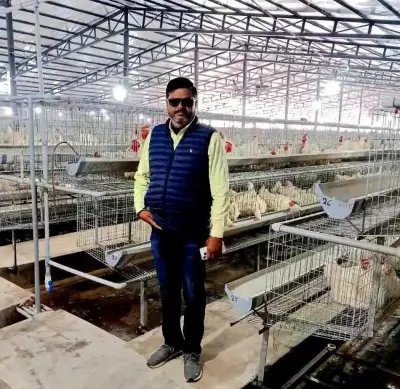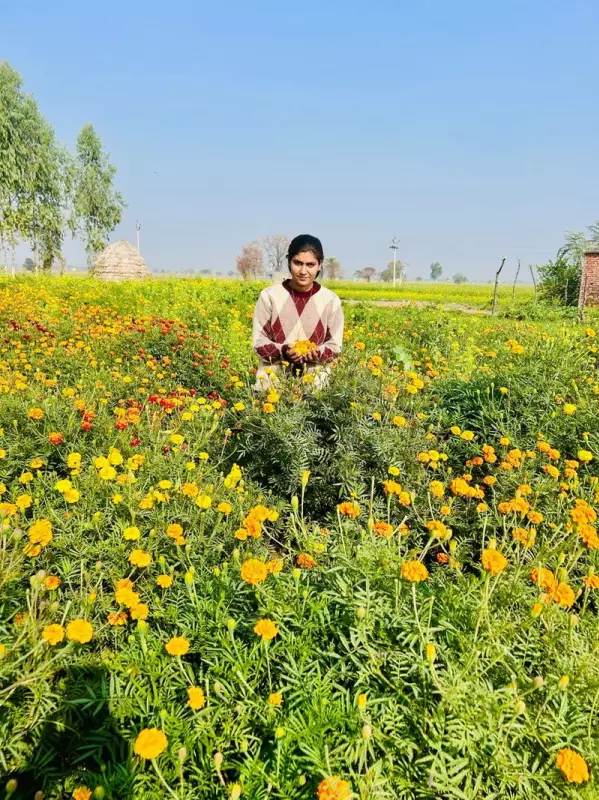
In the heart of Punjab's Mansa district, a remarkable story of entrepreneurial spirit and floral passion is blooming. Amanjit Kaur, a 25-year-old resident of Mansa's Bhikhi town, has cultivated a thriving business from the soil of her family's traditional occupation, earning her the well-deserved title of the 'Flower Queen of Mansa'. Her journey from a small-scale family venture to commanding an annual turnover of nearly ₹1 crore is a testament to modern ambition meeting traditional roots.
The Blossoming of a Floral Empire
Amanjit's story is deeply rooted in family. Her father, Gurmeet Singh, has been a flower farmer for over three decades, supplying his harvest to the local Phulkari flower market. While many might see this as a conventional path, Amanjit envisioned a grander bouquet. After completing her education, she didn't look beyond her hometown for opportunity; instead, she looked at the very land her family tended. She made the pivotal decision to join and radically expand the family business, injecting it with fresh ideas and a bold vision.
Her strategy was twofold: scale up cultivation and master the art of supply chain management. Under her leadership, the family's flower farming operations expanded significantly. But Amanjit's real genius lay in becoming a commission agent (arhtiya) at the same Phulkari market where her father was once just a seller. This move allowed her to control a larger part of the value chain. Today, she doesn't just sell her own produce; she aggregates flowers from numerous local farmers and supplies them to major demand centers across North India.

Overcoming Thorns: Challenges and Triumphs
The path to becoming the Flower Queen was not without its thorns. Entering a male-dominated space as a young woman presented its own set of challenges. Amanjit recalls facing initial skepticism and resistance in the marketplace. However, her deep knowledge of the trade, inherited from her father, and her unwavering determination helped her win the respect of farmers and buyers alike. Her credibility and fair dealings became her strongest tools to break barriers and build a robust network.
Her business acumen transformed the family's fortunes. From the modest earnings of a primary producer, Amanjit has steered the enterprise to dizzying heights. The business now handles a massive volume of flowers, especially during peak seasons like weddings and festivals. This operational scale is what fuels the impressive annual turnover of approximately ₹1 crore, a figure that crowns her success in the region's floral industry.
A Fragrant Future: Inspiration and Legacy
Amanjit Kaur's success is a powerful narrative in the rural entrepreneurial landscape of Punjab. She stands as a role model, particularly for young women, proving that geographic location or traditional family businesses are not limitations but can be the very foundation for extraordinary achievement. Her story challenges stereotypes and showcases how innovation, hard work, and leveraging traditional knowledge can create a flourishing modern enterprise.
The title 'Flower Queen of Mansa' is not merely symbolic; it is a recognition of her market influence and the economic ecosystem she supports. By acting as a key commission agent, she ensures a steady and profitable market for the flowers grown by local farmers in Mansa and surrounding areas, thereby contributing to the local agrarian economy. Amanjit's vision for the future is as bright as a marigold field. She aims to explore direct supply chains to larger metropolitan markets and is even considering the potential of export and value-added products like dried flowers or essences.
In essence, Amanjit Kaur has not just built a business; she has nurtured a legacy. From the fields of Bhikhi to the bustling *mandis*, her journey embodies the spirit of a new generation of Indian entrepreneurs who are rooted in tradition yet branching out to create empires of their own, one petal at a time.