The Punjab government is moving to fast-track amendments that cap annual fee increases in unaided private schools at 5 percent. Official data reveals that since 2022, parents have lodged only 166 complaints under the Punjab Regulation of Fee of Unaided Educational Institutions Act, 2016, as amended in 2019. This averages about 40 complaints per year across the state.
Officials report that nearly 80 percent of these complaints have been resolved, while the rest are under review. Most grievances involve alleged violations of fee regulations, such as hikes beyond the prescribed limit and collection of extra charges.
District-wise Complaint Data
Ludhiana recorded the highest number of complaints at 40, followed by Mohali with 22, Ferozepur and Amritsar with 11 each, and Ropar with 10. Barnala and Sangrur reported just one complaint each, while Fatehgarh Sahib had none.

Government's Stance
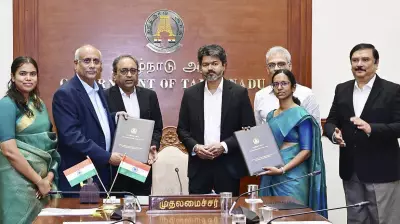
On Thursday, School Education Minister Harjot Singh Bains directed Education Secretary Sonali Giri to draft amendments limiting annual fee increases to 5 percent. The amendments also mandate refunds for schools that raised fees by more than 15 percent cumulatively over the past three years.
“Providing accessible and affordable education is our top priority,” Bains said. “Over 32 lakh students in nearly 7,800 private schools need robust protection from unjustified financial burden and greater transparency.” He criticized the previous Congress government for the 2019 amendments, which he claimed allowed fee revisions with minimal oversight.
Private Schools' Opposition
The Federation of Private Schools and Associations of Punjab (FAP) has urged the government to reconsider the proposal. FAP President Dr. Jagjit Singh Dhuri argued that unaided schools receive no government funding and rely solely on fee revenue to cover operational costs. With inflation around 5-6 percent, a 5 percent cap would leave little room for quality enhancement, technological upgrades, and implementation of the National Education Policy (NEP) 2020.
The association proposed retaining the existing 8 percent cap for schools charging up to Rs 6,000, while recommending a flexible 5 percent cap for schools charging above Rs 6,000. It also sought waivers on special road tax for school buses, exemption from property tax on school buildings, and subsidized electricity at agricultural rates.