Hyderabad Resident Associations Demand GST Relief on Maintenance Fees
In a significant move, multiple resident welfare associations (RWAs) based in Hyderabad have formally appealed to the GST Council in New Delhi, seeking an exemption from the 18% Goods and Services Tax currently levied on maintenance charges. This collective action includes prominent groups such as the Federation of Gated Communities Cyberabad, the Tellapur Neighbourhood Association, and the United Federation of RWAs (UFRWAs), who argue that the tax imposes an undue financial strain on homeowners.
Rising Costs Push Societies into GST Bracket
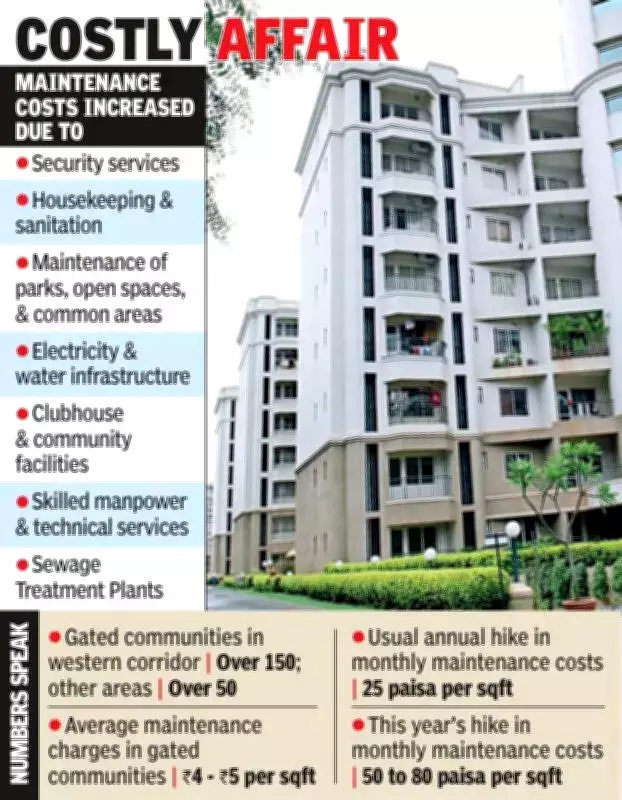
The RWAs have highlighted in their representation that escalating living expenses and increasing operational costs for maintenance have forced numerous housing societies to surpass the annual turnover threshold of 20 lakh rupees, thereby bringing them under the GST ambit. This development adds a substantial financial burden to residents who are already grappling with high property taxes and various statutory levies.
They emphasized that RWAs operate on a strictly non-profit, community-driven model, managing essential services like security, housekeeping, and infrastructure upkeep without any commercial intent. The imposition of GST on these services is viewed as a form of double taxation, since the funds collected are merely pooled contributions from residents for shared community expenses, not revenue generated for profit.

Arguments Against Commercial Treatment
Sai Ravi Shankar, president of the Federation of Gated Communities Cyberabad, articulated the core issue: "When residents pool their own money for services like security or cleaning, it cannot be treated as a commercial transaction. It is simply collective spending for common needs. Exempting RWAs will not significantly impact government revenue but will provide much-needed relief to citizens."
The associations stress that maintenance collections should be recognized as cost-sharing arrangements devoid of any profit element. They contend that most housing societies, due to their size and rising operational costs, easily cross the turnover threshold, making the GST levy unfair and burdensome.
Strategic Efforts to Amplify Their Demand
To bolster their case, the RWAs plan to engage directly with officials from the Union Ministry of Finance and GST authorities, pressing for the exemption. In regions such as Tellapur and Osmansagar, approximately 30 gated communities housing nearly 25,000 units exist, with around 40% already subject to GST payments.
In a parallel initiative, several RWAs have launched a signature campaign opposing the GST levy. To date, they have gathered around 10,000 signatures and are aiming for 50,000 to strengthen their appeal and demonstrate widespread public support for their cause.
This concerted effort underscores the growing frustration among residential communities in Hyderabad, who view the GST on maintenance charges as an additional financial hurdle in an already challenging economic landscape.