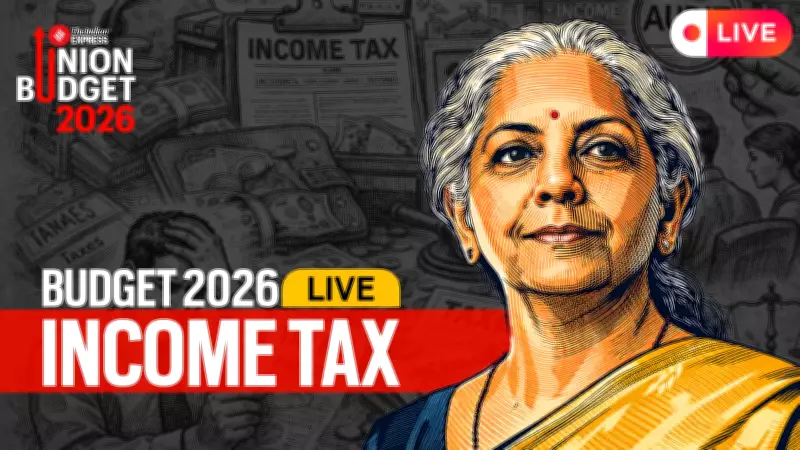
Budget 2026 LIVE: All Eyes on Finance Minister Nirmala Sitharaman's Tax Announcements
As Union Finance Minister Nirmala Sitharaman prepares to present her ninth consecutive Budget today, the nation awaits with bated breath for potential announcements that could ease the tax burden on millions of Indians. This historic presentation marks a significant milestone in India's fiscal policy landscape, with particular attention focused on Part-B of the speech, which deals exclusively with taxation matters.
Recap of Last Year's Tax Reforms
In the previous Budget for 2025-26, the government implemented substantial relief measures for income-tax payers by revising the slab rates under the new tax regime. This strategic move, combined with standard deduction benefits, meant that salaried individuals with annual incomes up to Rs 12.75 lakh effectively paid no income tax. Additionally, the government rationalized Goods and Services Tax (GST) rates, creating a dual impact of reducing tax burdens on both direct and indirect taxation fronts.
These measures were specifically designed to boost disposable incomes and stimulate consumption across various economic segments. The coordinated approach to tax policy demonstrated the government's commitment to creating a more favorable fiscal environment for both individuals and businesses.

Current Expectations and Industry Wish List
As Budget 2026 unfolds, several key expectations have emerged from various stakeholders:
- Increased Standard Deduction: Many anticipate a further enhancement of the standard deduction limit to provide additional relief to salaried taxpayers
- Tax Parity for Capital Gains: Industry bodies are advocating for equalization of long-term capital gains tax rates between equity and debt market earnings
- Policy Simplification: Expectations include further easing of tax compliance procedures and policy frameworks
- Continued Tax Rationalization: Building on last year's success, additional rationalization of both direct and indirect tax structures
The business community and individual taxpayers alike are hoping for measures that will further enhance economic growth and personal financial stability. The government's approach to taxation in this budget will be closely watched as an indicator of its economic priorities for the coming fiscal year.
Historical Context and Economic Implications
Finance Minister Nirmala Sitharaman's unprecedented ninth consecutive budget presentation places her in a unique position to implement long-term structural reforms in India's taxation system. The continuity in fiscal leadership allows for consistent policy implementation and gradual refinement of tax mechanisms.
The government's previous actions have demonstrated a clear pattern of using tax policy as a tool for economic management. By simultaneously addressing both direct taxes (through income tax reforms) and indirect taxes (via GST rationalization), policymakers have shown a comprehensive approach to fiscal management that considers multiple aspects of the economy.
As live updates continue to flow from Parliament, the nation remains focused on potential announcements that could shape personal finances and business operations for the fiscal year 2026-27. The balance between revenue generation and taxpayer relief will be a crucial aspect of today's budget presentation, with implications that will resonate throughout the Indian economy.