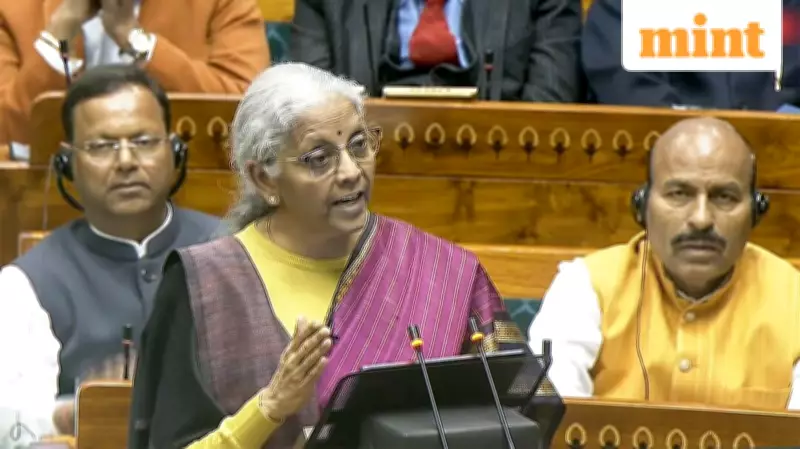
Union Finance Minister Nirmala Sitharaman presented several significant proposals concerning direct taxes during her Union Budget 2026-27 speech on Sunday. These announcements aim to simplify tax compliance, provide relief to taxpayers, and modernize the tax framework. Below is a detailed overview of the key points from her address.
Extended Deadline for Income Tax Returns
One of the notable changes proposed is the extension of the deadline for filing Income Tax Returns (ITR). The Finance Minister has suggested moving the deadline from 31 December to 31 March, allowing taxpayers more time to complete their filings without rushing.
Introduction of New Income Tax Act
In a historic move, Sitharaman announced that a new Income Tax Act will come into effect from 1 April 2026. This legislation will replace the six-decade-old tax law, marking a significant overhaul of the tax system. During her Budget speech, she stated, "This (direct tax code) was completed in record time and the Income Tax Act 2025 will come into effect from first April 2026. The simplified income tax rules and forms will be notified shortly, giving adequate time to taxpayers to acquaint themselves with its requirements."

Revisions in Securities Transaction Tax
The Finance Minister has proposed an increase in the Securities Transaction Tax (STT) on both futures and options. For futures, the tax rate is set to rise from 0.02% to 0.05%, while for options, it will increase from 0.01% to 0.15%. This adjustment aims to align tax rates with market dynamics and generate additional revenue.
Reduction in Tax Collected at Source Rates
Several reductions in Tax Collected at Source (TCS) rates have been proposed to ease financial burdens on taxpayers:
- The TCS rate on overseas tour packages will be lowered from the current rates of 5% and 20% to a flat 2%, without any stipulation on the amount.
- For education and medical purposes under the Liberalized Remittance Scheme (LRS), the TCS rate will be reduced from 5% to 2%.
Exemptions and Simplifications for Taxpayers
The Budget includes various measures to provide relief and simplify processes:
- Interest awarded by the Motor Accident Claims Tribunal to natural persons will be exempt from Income Tax, and any Tax Deducted at Source (TDS) on such interest will be eliminated.
- A new scheme for small taxpayers will introduce a rule-based automated process to obtain lower or nil deduction certificates, replacing the need to file applications with assessing officers.
- For non-residents selling immovable property, TDS will be deducted and deposited through the resident buyer's PAN-based challan, eliminating the requirement for a Tax Deduction and Collection Account Number (TAN).
- Depositories will be enabled to accept Form 15G or Form 15H from investors holding securities in multiple companies and provide them directly to the relevant companies, streamlining the process.
Staggered Timeline for Filing Tax Returns
To manage the workload and ensure smoother compliance, Sitharaman has proposed a staggered timeline for filing tax returns:
- Individuals filing ITR 1 and ITR 2 returns will continue to have a deadline of 31 July.
- Non-audit business cases or trusts will be allowed time until 31 August to file their returns.
One-Time Foreign Asset Disclosure Scheme
A one-time, six-month foreign asset disclosure scheme has been proposed for small taxpayers, including students, young professionals, tech employees, and relocated Non-Resident Indians (NRIs). This scheme will allow them to disclose income or assets below a certain size without facing penalties, promoting transparency and compliance.
Exemption from Minimum Alternate Tax
Non-residents who pay tax on a presumptive basis will be exempt from Minimum Alternate Tax (MAT). This exemption aims to reduce the tax burden on such taxpayers and encourage compliance with the new tax regime.
These proposals reflect the government's commitment to reforming the direct tax system, making it more taxpayer-friendly, and adapting to contemporary economic needs. The changes are expected to have a broad impact on individuals and businesses across India.