
FMCG Stock Rises in Green Despite Market Crash
Amid a broader stock market crash, an FMCG stock opened in green following a key update. Check details on the resilient performer and market trends.


Amid a broader stock market crash, an FMCG stock opened in green following a key update. Check details on the resilient performer and market trends.

Businesses in co-working spaces in Gujarat face GST registration scrutiny, with officials suspecting shell companies. Experts call for clearer guidelines as startups and SMEs rely on flexible workspaces.

Noida district administration has issued notices to 45 private schools for allegedly violating the fee hike cap of 7.23% set by the Fee Regulatory Committee for the 2026-27 session.

Following Rahul Arunoday Banerjee's on-set death, Tollywood producers and artistes agree to new SOPs including mandatory insurance linked to film budgets.

Shared lists with real-time sync. No signup needed — just open and shop together.
Recommended
Small manufacturers in Ludhiana face liquidity crisis due to inverted GST duty structure, with 13% working capital locked in refund delays, forcing periodic shutdowns.

Manufacturers in Ludhiana's bicycle and sewing machine sectors face severe working capital stress due to delayed GST refunds under inverted duty structure, risking closures and informal trade.

The Uttar Pradesh excise department has slashed the licence fee for leftover retail liquor vends by an additional 5%, marking the third reduction, to make operations financially viable.

The long-delayed Chilla elevated road in Noida is now 47% complete and expected to open by June 2027, ahead of its December 2027 deadline, providing relief from chronic traffic congestion.

Fertiliser, seed and pesticide dealers in Abohar observed a one-day strike on Thursday, protesting GST on agri-inputs and e-way bill requirements, affecting supply.
Shared lists with real-time sync. No signup needed — just open and shop together.
Recommended
Tamil Nadu launches its first toy manufacturing policy to tap the $180 billion global toy market, aiming to attract anchor players, set up a toy park, and boost traditional toy clusters.

Pune and Pimpri-Chinchwad report a sharp rise in piped natural gas (PNG) applications after a state drive targeting housing societies, with daily registrations jumping from 50 to 400.

Chandigarh administration is considering abolishing the change of land use (CLU) requirement for non-agricultural purposes to ease development and boost real estate.

Navi Mumbai Municipal Corporation approves amnesty scheme to recover Rs 64 crore water tax arrears, waiving 90% of penalties to encourage payment and boost revenue.

India has approved a Rs 30 billion currency swap for Maldives under the SAARC framework, aiming to boost economic stability and bilateral ties in the region.
Shared lists with real-time sync. No signup needed — just open and shop together.
Recommended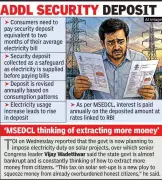
Nagpur electricity consumers will receive separate bills for regular consumption and additional security deposit in April and May due to increased usage and MERC regulations.

Andhra Pradesh has 68,488 active PNG connections, far below the 2.52 lakh potential, due to low awareness despite government subsidies and infrastructure.

Jharkhand faces a backlog of over 4 lakh LPG refills, with Ranchi accounting for 60,000. Oil companies assure clearance in five days, but consumers continue to face delays.

Ranchi's GST Appellate Tribunal started hearings, becoming the second bench in India after Delhi. This move aims to speed up case disposal, with 70 cases filed so far.

A key kingpin of a major fake input tax credit generation cartel in Karnataka has been arrested by authorities, marking a significant breakthrough in the fight against GST fraud and tax evasion.
Shared lists with real-time sync. No signup needed — just open and shop together.
Recommended
Small businesses and professionals under India's presumptive tax scheme must now disclose investment details in ITR-4, aiming to curb tax evasion by comparing income with spending patterns.

A Visakhapatnam court has remanded two Neokred Technologies executives to judicial custody for 14 days in a GST evasion case involving alleged illegal online betting and gaming transactions, with funds routed through shell entities.
Technical issues on the GST portal on the last filing day forced authorities to extend the GSTR-3B deadline by one day, affecting thousands of taxpayers in Madhya Pradesh.

The Bombay High Court has emphasized the need for a uniform national litigation policy in tax matters, referencing a 1953 judgment to avoid conflicting interpretations across courts. The ruling came while granting refunds to sugar exporters under the RoDT

Frequent changes in GSTN advisories and portal functionality regarding input tax credit utilization for IGST payments have created uncertainty among taxpayers in Madhya Pradesh.
Shared lists with real-time sync. No signup needed — just open and shop together.
Recommended
The Income Tax department is investigating 2.5 lakh property transactions worth over Rs 3 lakh crore in north-west India, focusing on Gurgaon and Faridabad due to missing PAN details and non-compliance in reporting.

The regional income tax headquarters for Bihar and Jharkhand has initiated an outreach program to educate stakeholders about the new Income Tax Act, 2025, while targeting improved tax collection after a slight decline in 2025-26.
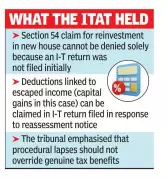
Mumbai ITAT rules taxpayers can claim Section 54 capital gains exemption in reassessment proceedings even if no original return was filed, protecting substantive rights over procedural lapses.

Mumbai ITAT rules that being a co-owner in property doesn't automatically make one liable for unexplained investment if funds came from family. Case involves Rs 60 lakh addition overturned.

The Mumbai ITAT has ruled that capital gains tax cannot be levied if a property is sold for the same amount as its purchase cost, overturning a tax officer's assessment in a case involving a Rs 85 lakh transaction.
Shared lists with real-time sync. No signup needed — just open and shop together.
Recommended
The Income Tax Appellate Tribunal in Hyderabad has upheld the denial of tax exemption to Hyderabad Golf Association, ruling that its restaurant and bar operations exceeded the statutory commercial threshold.
