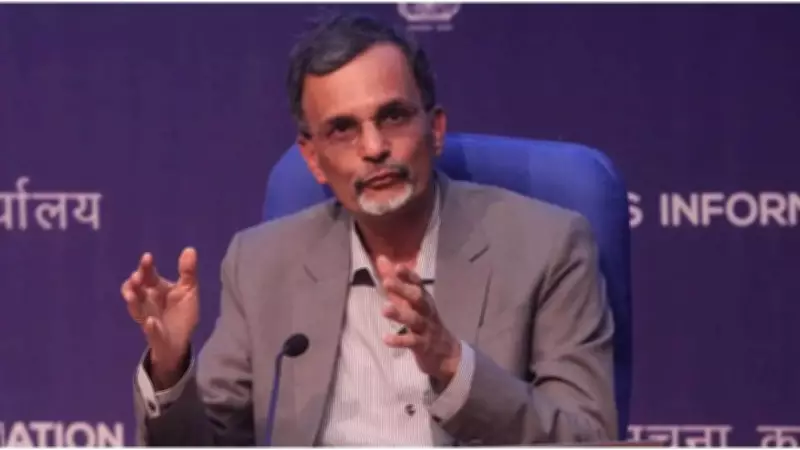
NEW DELHI: The ongoing West Asian crisis is a "live balance of payments stress test" for India, directly impacting inflation, the exchange rate, and the current account, according to Chief Economic Advisor V Anantha Nageswaran. Speaking at the CII Annual Business Summit on Tuesday, Nageswaran emphasized that managing the current account credibly, financing it, and preventing further currency depreciation are the central macroeconomic imperatives for FY27.
Structural Exposure to the Crisis
Nageswaran described India's exposure to the West Asian crisis as structural, cautioning that the current economic readings are not indicative of a temporary shock that will self-correct once the situation stabilizes. "They are the early-stage consequences of a sustained disruption to one of the world's most critical energy and commodity corridors," he added.
Four Structural Shifts Reshaping the Global Economy
The Chief Economic Advisor highlighted four key structural shifts that are reshaping the global economy:

- Geo-economic fragmentation: The breakdown of global economic integration.
- Technology bifurcation: The split in technology standards and systems.
- Energy transition used as industrial policy: Countries leveraging green energy for competitive advantage.
- Permanent repricing of geopolitical risk: Markets adjusting to ongoing geopolitical uncertainties.
Nageswaran stressed that the global economic architecture, which has shaped trade and capital flows for decades, is undergoing a "structural challenge" rather than a temporary disruption. "What we are experiencing is not a crisis within the system. It is a structural challenge to the organising principles of the system itself," he said.
Call for Larger Firms to Support MSMEs
In a separate session, Nageswaran urged large firms to play a greater role in easing the working capital burden of micro and small enterprises (MSMEs). He advocated for timely payments and stronger integration of smaller firms into formal credit systems. "India's fiscal consolidation path, infrastructure investment, and the reform record of recent years provide the foundation for navigating these challenges," he concluded.