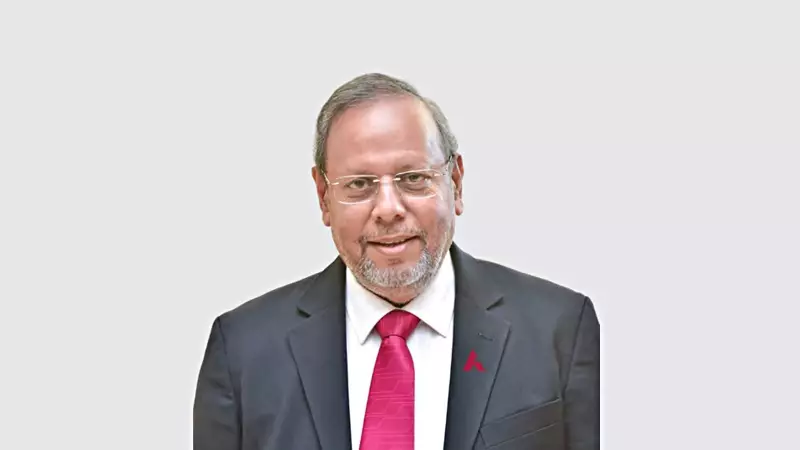
Professor S Mahendra Dev, Chairman of the Economic Advisory Council to the Prime Minister (EAC-PM), has articulated a comprehensive vision for 'Viksit Bharat' (Developed India), emphasizing that it must be built on the twin pillars of sustainable and inclusive growth, not just economic expansion. He stressed that achieving this goal requires a balanced focus on both manufacturing and services sectors.
Defining the Vision: Beyond Mere GDP Growth
Speaking at the 7th Annual Economics Conference hosted by Ahmedabad University, Prof Dev clarified that the ambition of a developed India transcends simple GDP metrics. The core, he stated, is 'quality employment' as the most critical element of inclusive growth. He connected this to pressing issues such as the status of gig workers, low female labour force participation, youth employment, and the impact of technologies like Artificial Intelligence on jobs.
He also highlighted that improving foundational social sectors like education, health, and nutrition is integral to reducing inequalities. On the concept of 'Swadeshi', Prof Dev reframed it not as a return to old import-substitution policies but as a drive to enhance global competitiveness.

Tackling Two Long-Term Structural Challenges
While acknowledging India's resilience—fueled by political stability, macroeconomic stability, and a large domestic economy—Prof Dev pointed to significant work ahead. He identified two primary structural hurdles.
The first is the essential structural transformation from agriculture to labour-intensive manufacturing. This shift is seen as vital for absorbing labour and boosting exports. However, he noted a 'missing middle' in India's manufacturing landscape, with too many small firms employing fewer than 10 workers and a scarcity of mid-sized units with 200-500 employees.
The second major challenge lies in health, education, and skills. Prof Dev pointed out the well-known dichotomy between India's elite higher education institutes and poor learning outcomes at the primary level, with similar gaps in healthcare. Addressing these, he argued, is crucial for long-term growth.
Drivers of Growth: Investment, Exports, and Domestic Tailwinds
Prof Dev outlined investment and exports as the two key growth drivers. To raise the investment rate from 31-32% to 34-35%, he called for decisive action from the private sector to deploy cash reserves into new projects and from state governments to attract more Foreign Direct Investment (FDI) and domestic private investment.
On exports, which currently constitute only 20% of GDP, he noted that the economy remains largely driven by domestic demand. This domestic focus, however, provides 'tailwinds' like controlled inflation and potential monetary easing by the Reserve Bank of India (RBI), which could stimulate rural and urban demand, consumption, and give a push to exports.
The Global Context: Industrial Policy and Complementary Sectors
Addressing global trends, Prof Dev observed that industrial policy has re-emerged worldwide as a central economic strategy. In the face of debates on prioritizing manufacturing versus services, he advocated for a complementary approach. "I feel that we need both manufacturing and services as complementary," he stated, explaining that manufacturing has strong backward and forward linkages and actually propels growth in the services sector.
He listed key reforms undertaken to boost manufacturing, including the abolition of 40,000 unnecessary compliances, the scrapping of over 1,500 obsolete laws, and the establishment of deregulation committees.
Prof Dev concluded by reaffirming that despite global macroeconomic and geopolitical uncertainties, India's reform trajectory—marked by a shift to capital expenditure, significant tax reforms, ease of doing business measures, and opening sectors like insurance to 100% FDI—positions it as a global bright spot with a resilient economic foundation.