

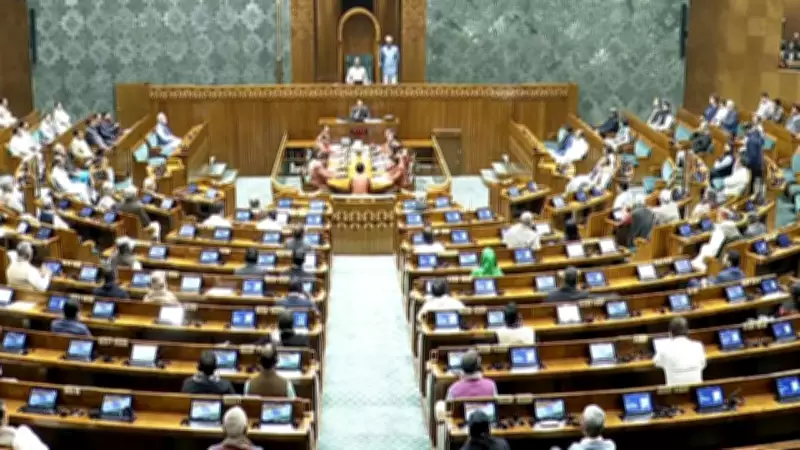
Finance Minister Nirmala Sitharaman is set to present the Union Budget for the financial year 2026-27 on February 1, marking her ninth consecutive budget presentation before Parliament. This annual financial statement goes far beyond being a mere accounting of income and expenditure—it serves as a comprehensive blueprint for the nation's economic trajectory in the coming year.
More Than Just Numbers: The Budget's Strategic Role
The Union Budget represents the government's fiscal strategy and policy direction, signaling where public funds will be allocated and which sectors might receive enhanced support. It provides crucial insights into spending priorities and potential areas where fiscal discipline might be tightened. As the government's primary economic roadmap, the budget outlines resource distribution across critical domains including infrastructure development, social welfare programs, defense capabilities, healthcare initiatives, educational reforms, and industrial growth.
Impact on Economy and Citizens
From tax policy adjustments to capital investment decisions, the budget document directly influences financial markets, corporate strategies, and household finances. It shapes economic growth patterns and significantly affects business sentiment across various sectors of the Indian economy.

Understanding Budget Terminology
To better comprehend the budget's implications, here are key financial terms explained:

Budget Fundamentals
- Union Budget: The government's annual statement of estimated receipts and expenditure for the financial year
- Fiscal Year: India's 12-month accounting period running from April 1 to March 31
- Revenue Budget: Covers routine government income (tax and non-tax) and everyday operational spending
- Capital Budget: Deals with long-term receipts and expenditure on asset creation like infrastructure and loans
Financial Components
- Revenue Receipts: Income generated from taxes, dividends, fees, interest, and other non-debt sources
- Revenue Expenditure: Spending on salaries, subsidies, pensions, and services that don't create physical assets
- Capital Receipts: Funds raised through borrowing, loan recoveries, and disinvestment activities
- Capital Expenditure: Money invested in creating long-term assets such as roads, railways, hospitals, and equipment
Deficit Measurements
- Fiscal Deficit: The gap between total government expenditure and non-borrowed receipts
- Revenue Deficit: Occurs when revenue expenditure exceeds revenue receipts
- Primary Deficit: Fiscal deficit minus interest payments on previous borrowings
Taxation Framework
- Direct Taxes: Taxes paid directly to the government, including income tax and corporate tax
- Indirect Taxes: Taxes on goods and services, paid by consumers but collected by businesses
- GST (Goods and Services Tax): India's unified indirect tax system covering most goods and services
- Customs Duty: Tax imposed on goods imported into or exported from the country
- Excise Duty: Tax levied on goods manufactured within India for domestic consumption
Budgetary Processes
- Finance Bill: Legislation that gives legal effect to tax proposals presented in the Budget
- Vote on Account: Temporary parliamentary approval allowing government spending before the full Budget is passed
- Budget Estimates (BE): Planned expenditure allocations for ministries and schemes in the upcoming year
- Revised Estimates (RE): Mid-year adjustments of expected spending based on actual performance trends
Parliamentary Procedures
- Re-appropriation: Transfer of funds from one budget head to another within the same grant
- Outcome Budget: A report measuring ministries' achievements using previously allocated funds
- Guillotine: Parliamentary process where pending demands for grants are put to vote without further debate
- Cut Motions: Parliamentary proposals to reduce the amount sought in demand for grants
Government Funds
- Consolidated Fund of India: The government's main account from which most expenditure is authorized
- Contingency Fund of India: Emergency reserve used for urgent and unforeseen expenditure requirements
- Public Account: Funds where the government acts as a banker, including provident funds and small savings
Economic Concepts
- Disinvestment: Sale of government shares in public sector companies to raise capital
- Fiscal Policy: Government strategy on taxation and spending to influence economic conditions
- Monetary Policy: Reserve Bank of India actions to control money supply and interest rates
- Inflation: Sustained increase in general price levels that reduces purchasing power
- GDP (Gross Domestic Product): Total value of goods and services produced within the country
The upcoming budget presentation by Finance Minister Nirmala Sitharaman will be closely watched by economists, businesses, and citizens alike, as it will set the tone for India's economic policies and growth trajectory in the 2026-27 financial year.





