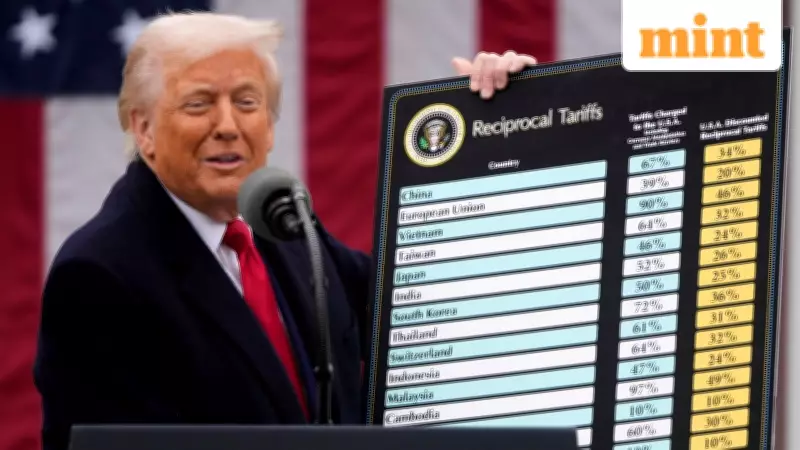
Trump Tariffs Impose $1,000 Burden on Average American Household in 2025, Tax Foundation Finds
President Donald Trump's tariffs have cost the average American household $1,000 in 2025, according to new research from the non-profit Tax Foundation. The financial strain is projected to escalate to $1,300 per household in 2026 if the existing tariffs remain unchanged. This analysis highlights the growing economic pressure on families already contending with high prices in the current market.
Scope and Impact of Tariff Policies
Trump has implemented multiple tariffs on key US trading partners, including China, Canada, Mexico, and the European Union, utilizing the International Emergency Economic Powers Act (IEEPA). Additionally, he has threatened or applied Section 232 tariffs on a broad array of products such as autos, heavy trucks, steel, aluminum, lumber, furniture, semiconductors, pharmaceuticals, and copper. The Tax Foundation described these tariffs as "the largest U.S. tax increase as a percent of GDP since 1993," underscoring their significant economic repercussions.
"The tariffs are exacerbating cost-of-living pressures at a time when many households are grappling with persistently high prices," the Tax Foundation stated. The report further notes that historical evidence and recent studies demonstrate tariffs function as taxes that elevate prices and diminish the availability of goods and services for US businesses and consumers. This leads to lower income, reduced employment, and decreased economic output, creating a ripple effect throughout the economy.

Revenue and Economic Consequences
In 2025, the federal government collected $264 billion in tariff revenues, a figure substantially lower than the trillions claimed by the White House. Analysts indicate that these tariffs are likely to offset much of the economic benefits derived from the new tax cuts enacted under Trump's signature tax law. "While tariffs raise revenue, they also increase costs for consumers and reduce the net gains from tax cuts," the research emphasized.
The Tax Foundation's analysis breaks down the impacts into specific categories:
- Section 232 tariffs: Expected to reduce long-run US GDP by 0.2%.
- IEEPA tariffs: Could reduce GDP by an additional 0.4% if upheld in courts.
- Retaliatory tariffs by other countries: Could reduce GDP by 0.2%.
- Combined effect: Long-run GDP may fall by 0.7%, indicating a substantial economic downturn.
Legal Challenges and Future Outlook
The legal validity of these tariffs is under scrutiny, with the US Supreme Court poised to decide whether the president's emergency powers under IEEPA include the authority to impose tariffs. Previously, a panel of judges at the US International Court of Trade ruled on May 28 that the IEEPA tariffs were illegal, a decision subsequently upheld by the US Court of Appeals. This legal context adds uncertainty to the future of these policies and their ongoing impact on American households and the broader economy.