

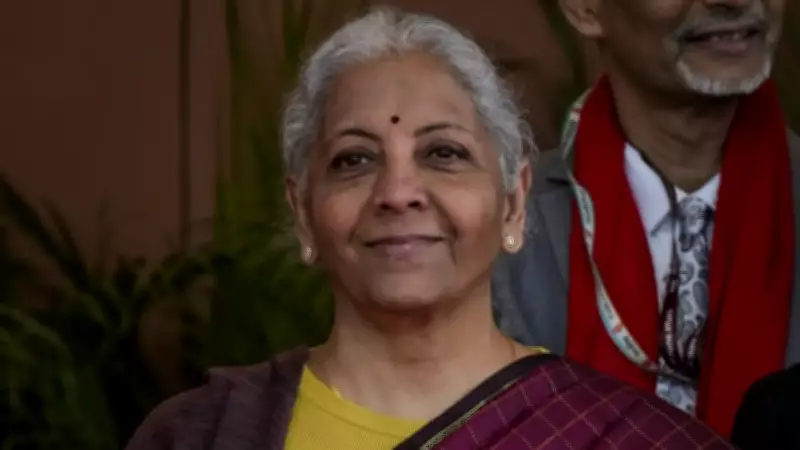
Nirmala Sitharaman's Historic Ninth Union Budget: A Sunday Session for FY27
Finance Minister Nirmala Sitharaman is poised to present her ninth consecutive Union Budget on February 1, marking a rare Sunday sitting of Parliament and a first in independent India’s history. The Union Budget for FY27, covering April 2026 to March 2027, is anticipated to outline comprehensive measures to sustain India's growth momentum, maintain strict fiscal discipline, and push forward with structural reforms. These initiatives are designed to shield the domestic economy from escalating global trade frictions, including potential tariffs from the United States and other international pressures.
Industry Expectations and Paperless Format
Following the Economic Survey tabled in Parliament on January 29, industry leaders and businesses have laid out clear expectations for Budget 2026. Key focus areas include:
- Investments in artificial intelligence and digital infrastructure
- Enhanced infrastructure spending and capital expenditure (capex) push
- Comprehensive telecom reforms to boost connectivity
- Robust manufacturing support under schemes like Make in India
The upcoming Budget will continue the paperless format that has been successfully implemented for the past four years, promoting environmental sustainability and digital governance.

A Journey Through Nine Budgets: Milestones and Evolution
As Sitharaman prepares for this historic presentation, her journey since 2019 reflects several significant milestones that mirror India’s evolving economic priorities and political landscape.
2019: A Historic Beginning with the Red 'Bahi-Khata'
In 2019, Nirmala Sitharaman became only the second woman in independent India’s history to present the Union Budget and the country’s first full-time woman finance minister to do so. Presenting the Modi 2.0 government’s maiden Budget, she delivered a speech lasting two hours and 17 minutes, then the longest on record. Her address featured Urdu, Hindi, and Tamil couplets and marked a symbolic shift as she replaced the traditional leather briefcase with a red cloth ‘bahi-khata’. She also announced that PAN and Aadhaar cards would be interchangeable, a move praised by Prime Minister Narendra Modi as “citizen friendly, development friendly, and future oriented.”
2020: Delivering India’s Longest Budget Speech
In 2020, Sitharaman delivered the longest Budget speech in independent India’s history, continuing for nearly two hours and 40 minutes before cutting it short due to feeling unwell. She quoted Kashmiri poet Pandit Dinanath Kaul Nadim, maintaining her tradition of incorporating poetry. The Budget highlighted the National Infrastructure Pipeline and introduced a fundamental restructuring of the personal income tax regime, described as the most consequential institutional reform of that year.
2021: Focusing on Health and Infrastructure
Presented in Parliament on a Monday, the Union Budget 2021 announced a major push for healthcare and infrastructure, though it left income tax slabs unchanged. Sitharaman outlined proposals built on six pillars: health and well-being; physical, financial capital and infrastructure; inclusive development for aspirational India; reinvigorating human capital; innovation and R&D; and minimum government and maximum governance. For the presentation, she wore a red and off-white silk Pochampally saree from Telangana, reflecting regional craftsmanship.
2022: Blueprint for Amrit Kaal
In 2022, Sitharaman presented her fourth Union Budget, framing it as a long-term roadmap for the country. She stated, “This Union Budget seeks to lay the foundation and give a blueprint of the economy over Amrit Kal of next 25 years – from India at 75 to India at 100.” Emphasizing India’s resilience, she focused on boosting public investment to modernize infrastructure, with a Budget worth Rs 39.45 lakh crore. She wore a brown Bomkai saree from Odisha, blending tradition and elegance.

2023: The Saptarishi Vision
The 2023 Budget marked another historic moment as Sitharaman called on President Droupadi Murmu, making it the first time a woman finance minister presented the Budget to a woman president. Outlining seven priorities as the ‘Saptarishi’—Inclusive Development, Reaching the Last Mile, Infrastructure and Investment, Unleashing the Potential, Green Growth, Youth Power, and the Financial Sector—she guided the country through the Amrit Kaal. Her attire was a traditional temple-border red saree with intricate golden work.
2024: Surpassing Morarji Desai's Record
In 2024, Sitharaman delivered her shortest Budget speech yet at 56 minutes, as an Interim Budget ahead of general elections. Focusing on women, the poor, youth, and farmers, she later created history by presenting her seventh Union Budget, surpassing former finance minister Morarji Desai’s record of six Budgets. She opted for a white silk saree with a magenta border and golden motifs, paired with the 'bahi khata'.
2025: Focus on Garib, Yuva, Annadata, Nari
Presenting the Union Budget 2025–26, Sitharaman underlined the government’s commitment to Garib (poor), Yuva (youth), Annadata (farmers), and Nari (women). She announced transformative reforms across six sectors—taxation, urban development, mining, the financial sector, power, and regulatory reforms. Her speech lasted one hour and 14 minutes, the shortest full Budget to date, and she wore a white saree with Madhubani artwork and golden borders, continuing to carry the traditional ‘bahi-khata’.
As India awaits Budget 2026, all eyes are on Sitharaman’s ninth presentation, which promises to balance growth, fiscal prudence, and innovation in a challenging global environment.





