

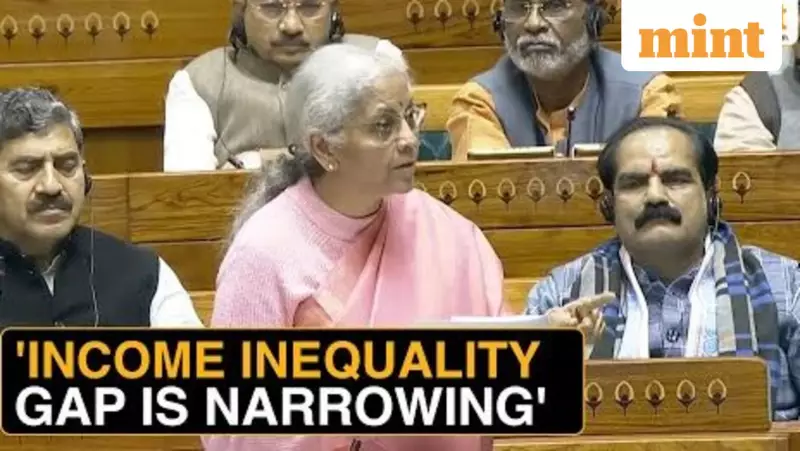
Finance Minister Nirmala Sitharaman presented a robust defence of India's economic trajectory in the Lok Sabha on December 16, 2025, directly countering narratives of a widening wealth chasm. Responding to an opposition MP's assertion that income inequality is growing, Sitharaman cited concrete data to argue that the asset ownership gap has, in fact, been narrowing over the past decade.
Countering the 'Dead Economy' Jibe with Sovereign Upgrades
In her reply, the Finance Minister also addressed recent criticism, including a 'dead economy' remark attributed to former US President Donald Trump. She highlighted a significant achievement: India received sovereign rating upgrades from three global agencies, including S&P, in 2025. This, she emphasized, is a powerful external validation of the country's economic resilience and positive outlook, countering negative perceptions.
Data Points to Broad-Based Growth, Says FM
Sitharaman's core argument rested on internal economic indicators. She stressed that India's growth story is not confined to a select few but is broad-based. Crucially, she pointed to consumption data and trends in asset ownership to challenge the premise of increasing disparity. "The asset ownership gap between the rich and the others has been narrowing over the past decade despite the pandemic blues," she stated in Parliament. This suggests that economic progress has permeated various sections of society.

The Underlying Debate on Inequality
The minister's detailed rebuttal brings to the forefront the ongoing debate around wealth distribution in one of the world's fastest-growing major economies. While the opposition's concerns highlight the need for inclusive policies, the government's presentation of sovereign rating upgrades and consumption data aims to build a narrative of widespread and sustainable development. The exchange underscores the complexity of measuring economic well-being beyond headline GDP figures.
The Lok Sabha discussion on December 16th has firmly placed the focus on empirical evidence in assessing India's economic health. As the government points to ratings and narrowing gaps, the political discourse will likely continue to scrutinize the depth and quality of growth reaching all citizens.






