

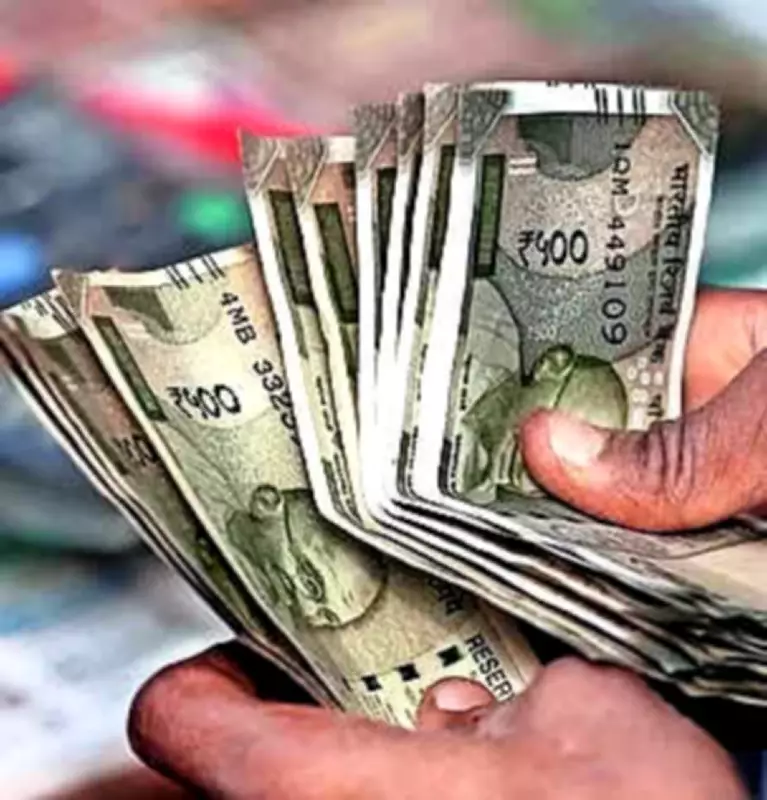
Economic Survey Highlights Rupee's Underperformance and Investor Reluctance
The Indian rupee is currently punching below its weight, according to the latest Economic Survey, a significant weakness that has made foreign investors increasingly hesitant to commit fresh capital to the country. This assessment comes amid a period of strong macroeconomic performance, creating a paradoxical situation where domestic strength is not translating into currency stability or robust capital inflows.
Currency Depreciation and Its Consequences
Between April 2025 and January 2026, the rupee experienced a notable decline of approximately 5.4% against the US dollar. While this depreciation has provided some adjustment mechanism against US tariffs, it has simultaneously triggered portfolio outflows and fostered a more cautious stance among international investors. The Survey emphasizes that this currency weakness is not primarily a reflection of India's domestic economic fundamentals but rather stems from broader geopolitical dynamics and what it terms a strategic power gap.
The Paradox of Strong Performance and Weak Currency
The Economic Survey describes a central paradox characterizing 2025: India has delivered its strongest macroeconomic performance in decades, yet finds itself in a global environment that no longer rewards such economic vigor with predictable currency stability, consistent capital inflows, or strategic insulation. This disconnect highlights how external factors are increasingly overshadowing domestic achievements in shaping investor perceptions and currency valuations.

Analyzing India's Strategic Power Gap
Taking a broader perspective on exchange rates, the Survey references the Lowy Institute's Power Gap Index, which measures how effectively Asian countries convert their resources into regional influence and clout. India's score of 4.0 on this index represents Asia's weakest performance outside of Russia and North Korea, signaling substantial underutilization of strategic capacity. This perceived gap directly impacts investor confidence, creating a drag that compounds currency vulnerabilities.
The structural imbalance in India's external accounts further exacerbates this situation. The country's deficit in goods trade is not sufficiently offset by surpluses from services exports and remittances, leaving the rupee particularly exposed when foreign capital flows diminish or become volatile.
Factors Driving Foreign Outflows
The economic health report identifies several interconnected factors contributing to foreign capital outflows:
- Tighter financial conditions in FY26 that prompted flight-to-safety movements into advanced markets
- Persistent trade and geopolitical uncertainties, intensified by steep US tariffs, which have eroded global confidence
- Domestic factors including rich equity valuations and weaker-than-anticipated Q1 FY26 corporate earnings that have cooled investor risk appetite
Pathway to Currency Strength and Strategic Indispensability
To reverse this trend, the Economic Survey advocates for a fundamental strategic shift from strategic resilience to strategic indispensability. This approach involves embedding India as an irreplaceable node within global value chains, allowing currency strength to naturally follow enhanced international influence rather than relying on isolated policy adjustments.
The report specifically recommends:
- Developing diversified payment systems and trade routes to better withstand external economic shocks
- Maintaining focus on credible and predictable policy frameworks even as digital assets like stablecoins gain prominence
- Creating institutional mechanisms that anchor a strong and stable rupee through strategic positioning rather than reactive measures
This comprehensive analysis suggests that addressing the rupee's challenges requires moving beyond conventional economic policy to encompass broader strategic positioning in the global arena, where currency strength becomes a natural byproduct of enhanced geopolitical and economic relevance.






