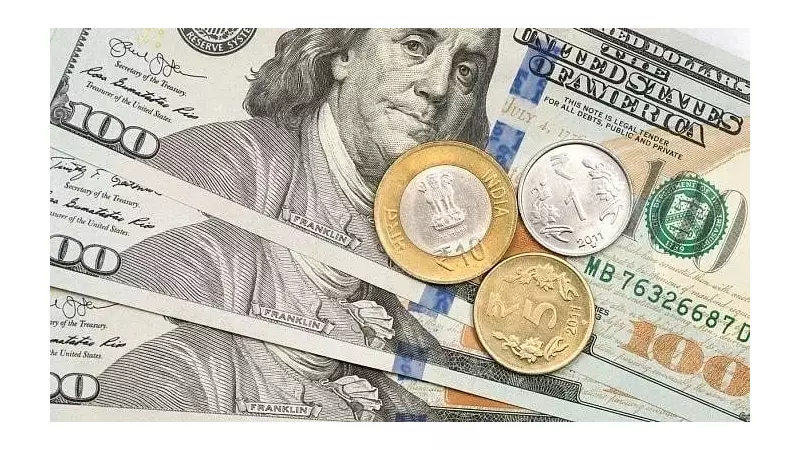
The Indian rupee is likely to face continued and significant fluctuations throughout the year 2026, according to prevailing financial assessments. While the Reserve Bank of India (RBI) views a strategic depreciation of the currency as a potential buffer against external trade shocks, it anticipates that lasting stability will be a gradual process.
RBI's Strategy and the Trade Deal Hope
The central bank's perspective links the rupee's long-term steadiness to a formal trade agreement with the United States, which is India's largest trading partner. The RBI believes that such a pact could provide a more predictable framework for economic engagement, thereby reducing uncertainty in the forex markets. However, officials caution that this deal should not be seen as a miraculous or instantaneous solution to the inherent volatility.
The expectation is that the currency will eventually find a stable trajectory once a comprehensive trade deal with the US is successfully negotiated and implemented. This process, however, is complex and time-consuming, meaning the calming effects on the rupee will not be felt immediately in 2026.

Navigating a Year of Uncertainty
The forecast for persistent volatility in 2026 underscores the challenging global economic environment. Factors such as divergent global interest rate paths, geopolitical tensions, and fluctuating commodity prices are expected to keep pressure on emerging market currencies, including the Indian rupee.
In this context, the RBI's approach of allowing the rupee to depreciate in a measured manner is seen as a tool to maintain export competitiveness. This tactic aims to soften the impact of any adverse tariff changes or other trade-related disruptions. The bank is expected to continue its vigilant monitoring of the forex market, intervening strategically to prevent disorderly movements.
Outlook for Businesses and Investors
For importers, exporters, and investors, the prediction of incessant volatility signals a year requiring careful risk management. Companies with significant foreign exchange exposure will need to hedge their positions actively. The financial markets are likely to remain sensitive to any news regarding India-US trade negotiations, with headlines potentially triggering short-term swings in the rupee's value against the US dollar.
The core takeaway is that while a US trade agreement is a crucial long-term objective for structural stability, it is not a silver bullet for the currency market challenges expected in the near term. Stakeholders must prepare for a year where the rupee's path will be shaped by both domestic policy and unpredictable global winds.