

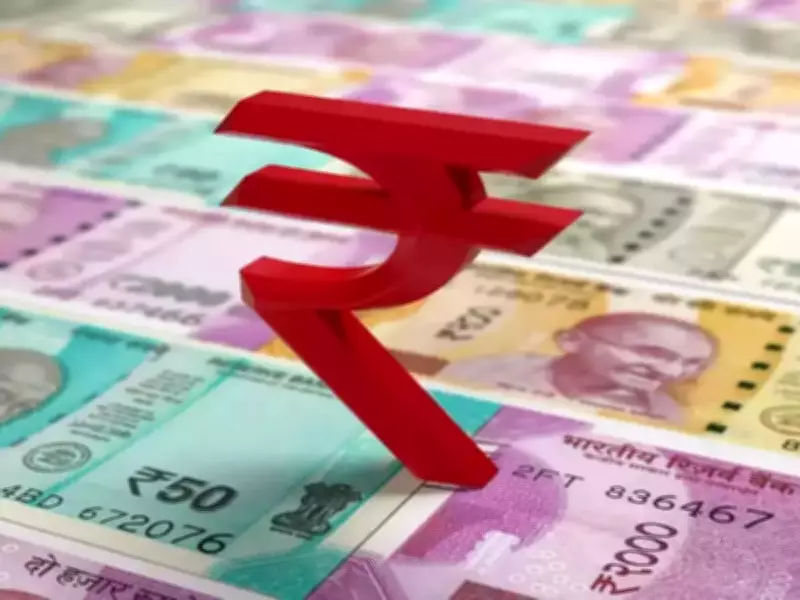
Indian Rupee Under Severe Pressure as Geopolitical Tensions Escalate
The Indian rupee experienced sharp downward pressure during early trading on Monday, slipping dangerously close to its historic intra-day low. This significant decline was primarily driven by a combination of surging global crude oil prices and a strengthening US dollar, both exacerbated by escalating military tensions in the Middle East region.
Oil Price Spike and Dollar Strength Weigh Heavily
The rupee's slide followed an extraordinary spike in international oil benchmarks. Brent crude futures, the global pricing standard, skyrocketed by over 25 percent to trade at $118 per barrel. This dramatic increase came as hostilities intensified between the United States, Israel, and Iran, creating severe supply concerns in energy markets worldwide.
Forex market analysts reported that the domestic currency faced additional headwinds from substantial foreign institutional investor outflows and a steep decline in domestic equity indices during morning trading sessions. The rupee had already concluded the previous trading session on a weaker note, declining by 18 paise to settle at 91.82 against the US dollar on Friday.

Expert Analysis Points to Continued Vulnerability
Anil Kumar Bhansali, Head of Treasury and Executive Director at Finrex Treasury Advisors LLP, provided critical insight into the situation. "The rupee will remain vulnerable to the rising oil prices which have risen by more than 28% since the last closure on Friday," he stated. "Asian currencies were also lower on Monday, reflecting broader regional pressures."
Bhansali further cautioned that the currency could experience additional weakening if elevated oil prices persist in the coming trading sessions. He specifically noted that the rupee might potentially touch the 93.00 level against the US dollar if crude oil remains above the $100 per barrel threshold.
Broader Financial Market Impact
Meanwhile, the US dollar index, which measures the greenback's performance against a basket of six major global currencies, strengthened significantly by 0.66 percent to reach 99.64. This dollar appreciation created further challenges for emerging market currencies like the rupee.
On the domestic equity front, benchmark indices witnessed a substantial sell-off during early trading hours. The Sensex plunged dramatically by over 2,400 points, while the Nifty dropped 708.75 points to trade below the psychologically important 24,000 level.
Exchange data revealed that foreign institutional investors turned net sellers during the previous trading session, offloading Indian equities worth Rs 6,030.38 crore on Friday alone. This capital outflow contributed significantly to the rupee's depreciation pressure.
Reserve Bank Data Provides Contrasting Perspective
In a separate development, the Reserve Bank of India reported that India's foreign exchange reserves increased by $4.885 billion to reach a record high of $728.494 billion during the week ended February 27. This substantial reserve accumulation provides the central bank with significant ammunition to potentially intervene in currency markets if volatility becomes excessive.
The current market scenario highlights the complex interplay between geopolitical developments, global commodity prices, and domestic financial market dynamics. As tensions continue to simmer in the Middle East, market participants remain vigilant about potential further impacts on currency valuations and broader economic stability.






