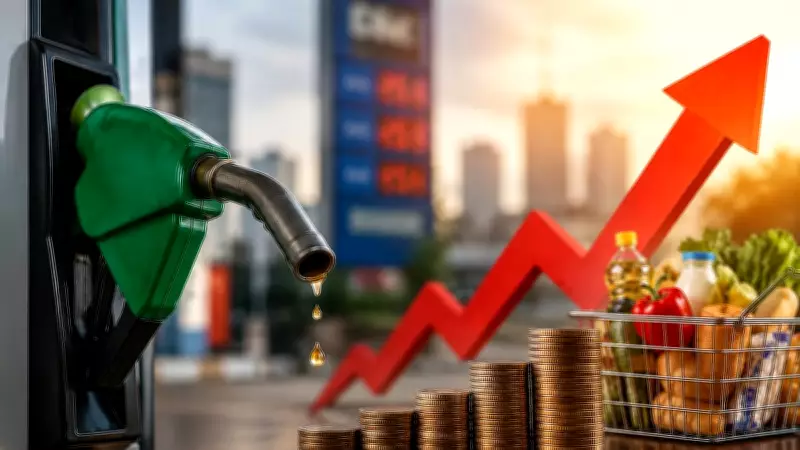
The recent surge in petrol and diesel prices is threatening to rekindle inflationary pressures in the Indian economy. Since May 15, the cost of petrol and diesel has increased by approximately Rs 7.5 per litre. Analysts warn that further increases are likely if global crude oil prices remain elevated.
Price Hike Details
According to data from the Ministry of Petroleum and Natural Gas, the average retail price of petrol in Delhi has risen from Rs 96.50 per litre on May 15 to Rs 104.00 per litre as of June 2. Similarly, diesel prices have climbed from Rs 87.60 to Rs 95.10 per litre during the same period. This marks a sharp reversal from the relative stability seen in the first quarter of 2026.
Impact on Inflation
Economists are concerned that sustained high fuel prices could feed into broader inflation. India's retail inflation, measured by the Consumer Price Index (CPI), has been hovering around 5.5% in recent months, within the Reserve Bank of India's tolerance band but above the 4% target. Fuel and light account for a significant weight in the CPI basket, and any prolonged increase could push inflation above the 6% upper limit.

"The pass-through of higher fuel costs to transportation and manufacturing sectors will inevitably raise input costs," said Dr. Anjali Sharma, chief economist at the National Institute of Public Finance and Policy. "If these costs are passed on to consumers, we could see a broad-based uptick in inflation."
Global Crude Oil Trends
The price hikes are directly linked to the rally in global crude oil markets. Brent crude has risen from $75 per barrel in early May to over $85 per barrel in late May, driven by supply constraints from OPEC+ and geopolitical tensions in the Middle East. India imports about 85% of its crude oil requirements, making domestic fuel prices highly sensitive to international movements.
Government Response
The government has so far refrained from intervening to cap prices or reduce excise duties. Officials have indicated that they are monitoring the situation closely but believe the current price levels are manageable. However, opposition parties have criticized the government for not providing relief to consumers, especially ahead of key state elections.
"The Centre must cut excise duty on petrol and diesel to ease the burden on common citizens," said Rahul Gandhi, leader of the Indian National Congress, in a statement. "Instead, they are allowing oil marketing companies to profiteer at the expense of the poor."
Outlook
Market participants expect crude oil prices to remain elevated in the near term due to robust demand and supply tightness. This suggests that further increases in domestic fuel prices are likely. The Reserve Bank of India, which is scheduled to announce its next monetary policy decision on June 8, may factor in the rising fuel prices when assessing the inflation trajectory.
For now, consumers are bracing for higher transportation costs and potential price hikes in essential commodities. The coming months will be critical in determining whether the fuel price surge translates into a broader inflationary spiral.