

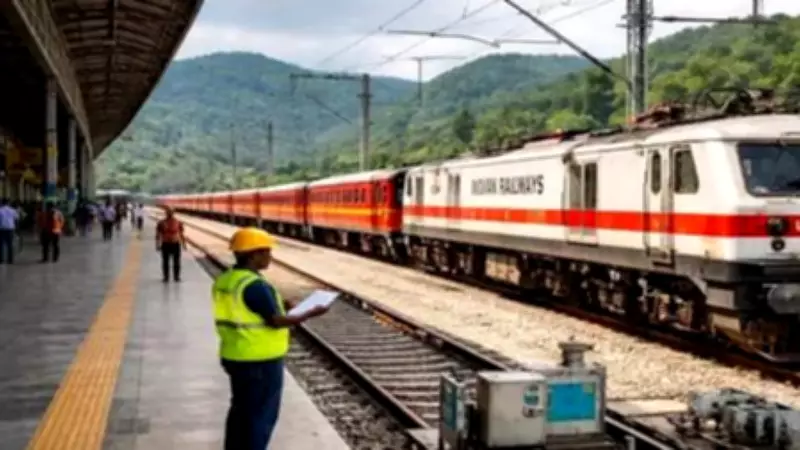
The Economic Survey 2025-26 has brought to light a critical issue affecting India's transportation and economic landscape: high railway freight rates, driven by cross-subsidization, are significantly distorting competition with road transport. This distortion is not merely a logistical concern but has broader implications, pushing up commodity prices, contributing to consumer inflation, and elevating overall logistics costs across the nation.
The Core Issue: Cross-Subsidization in Railways
At the heart of the problem lies the practice of cross-subsidization, where lower electricity tariffs for domestic and agricultural consumers are subsidized through higher charges imposed on industrial and commercial users, including the railways. Despite the Electricity Act of 2003 mandating state electricity regulatory commissions to progressively reduce such cross-subsidies, the survey reveals a persistent gap. The average billing rate for manufacturing enterprises and railways continues to exceed the average cost of power supply, perpetuating an inefficient system.
Proposed Reforms and Recommendations
Reiterating a proposal from the Electricity Amendment Bill, 2026, the survey strongly recommends the complete elimination of cross-subsidies for railways and the manufacturing sector within the next five years. It argues that rationalizing freight rates could enhance revenue buoyancy and encourage a strategic shift of freight movement from roads to rail, which is often more environmentally sustainable and efficient for bulk goods.

The survey emphasizes that the Electricity Amendment Bill, expected to be tabled in Parliament during the Budget session, aims to introduce much-needed reforms. These reforms focus on promoting cost-reflective tariffs and rationalizing cross-subsidies to create a more balanced and competitive market. "Going forward, a balanced approach could include phased tariff increases and quotas for subsidized categories, along with voluntary and category-based exclusions," the survey suggests, highlighting the need for a nuanced strategy to transition away from current practices.
Impact on Logistics and Economy
The distortion caused by high railway freight rates has a cascading effect on the economy. By making rail transport less competitive compared to road alternatives, it leads to increased reliance on trucks, which can be more costly and less efficient for long-distance haulage. This, in turn, drives up logistics costs, which are often passed on to consumers through higher prices for goods and services, thereby fueling inflation. The survey underscores that addressing this issue is crucial for improving India's trade competitiveness and controlling price rises.
Government Measures and Financial Health of Power Sector
Alongside these recommendations, the survey highlights several government initiatives that have strengthened the financial health of power distribution companies (discoms). These measures have resulted in a cumulative profit after tax of Rs 2,701 crore—marking the first profit since their corporatization. This positive development was accompanied by a reduction in overall losses, from Rs 6.9 lakh crore in 2023–24 to Rs 6.5 lakh crore in FY25.
Key reforms contributing to this turnaround include:
- Stricter payment discipline through revised late payment surcharge rules.
- Formula-based monthly tariff adjustments to avoid cash-flow gaps.
- Pass-through of prudent power procurement and network costs.
- Timely release of state subsidies.
- Reduction in aggregate technical and commercial losses.
Additionally, power quality and reliability have seen improvements following fund releases under the revamped distribution sector scheme, indicating progress in infrastructure and service delivery.

Future Directions and Regulatory Role
The survey further advocates for state regulatory commissions to play a proactive role in sustaining these gains. It recommends that commissions should allow a reasonable return on equity to boost investor confidence, ensure cost-reflective tariffs aligned with approved revenue requirements, and facilitate the liquidation of accumulated revenue gaps. These steps are essential for creating a stable and attractive investment environment in the power sector, which indirectly supports broader economic reforms like those in railway freight.
In summary, the Economic Survey 2025-26 presents a comprehensive analysis of how cross-subsidization in railway freight rates is undermining economic efficiency. By calling for the elimination of these subsidies and highlighting successful reforms in the power sector, it charts a path toward a more competitive, cost-effective, and inflation-resistant logistics framework for India.





