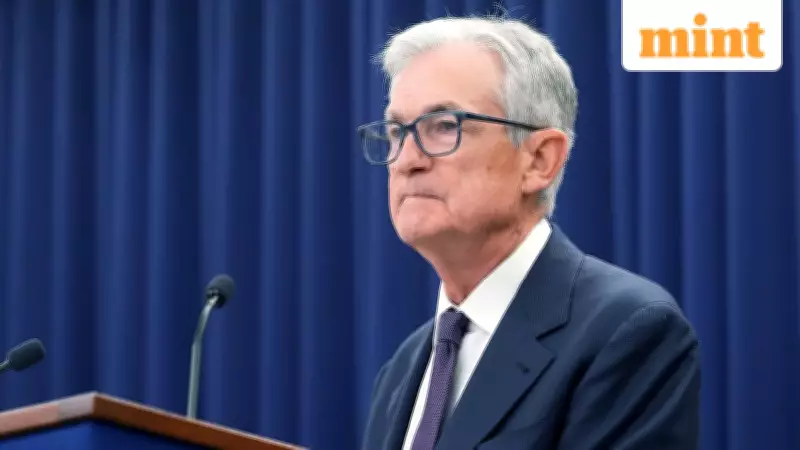
Federal Reserve Chair Powell Projects Economic Confidence, Advocates Patience on Rate Cuts
Federal Reserve Chair Jerome Powell presented an optimistic assessment of the United States economy during his latest press conference, indicating that the central bank can afford to maintain a patient approach regarding interest rate reductions. With his term concluding in May, Powell emphasized that monetary policy is currently positioned close to neutral, with balanced risks diminishing the immediate need for adjustments.
FOMC Maintains Steady Rates Amid Dissenting Votes
The Federal Open Market Committee, following its January 27-28 meeting, decided to keep the benchmark interest rate unchanged within the range of 3.5% to 3.75%. This decision was reached through a 10-2 vote, reflecting a consensus for stability after implementing three-quarters of a percentage point reduction during the latter half of the previous year.
Notably, Fed Governors Christopher Waller and Stephen Miran dissented, advocating for an additional quarter-point cut. Waller's dissent was particularly significant due to the absence of prior signaling, according to analysts, potentially influencing future policy discussions as he is considered a contender for the next Fed chair nomination.

Upgraded Economic Outlook and Inflation Assessment
The FOMC's policy statement upgraded its description of economic growth from "moderate pace" in December to "solid," highlighting resilient consumer spending, sustained business investment, and rising productivity. While job gains remain modest, the unemployment rate shows signs of stabilization, and language indicating rising downside risks in the labor market was removed.
Inflation remains somewhat elevated, with Powell estimating it around 3%, above the Fed's 2% target. He attributed this primarily to tariff impacts on goods prices, noting that disinflation continues in the services sector. Powell suggested that the worst effects of tariffs might subside by year-end, reinforcing a cautious stance on rate adjustments.
Powell's Emphasis on Central Bank Independence and Successor Advice
Powell addressed questions regarding central bank independence, stressing its role in shielding monetary policy from short-term political influences. He affirmed that the Fed has maintained this independence and expressed confidence in its preservation. When asked about his attendance at Supreme Court oral arguments involving a case related to Fed Governor Lisa Cook, Powell described it as potentially the most significant legal case in the Fed's 113-year history, justifying his presence based on precedent.
Looking ahead, Powell outlined three key recommendations for his successor: avoid electoral politics, engage constructively with Congress, and rely on the Fed's dedicated professional staff. These insights come as President Donald Trump is anticipated to announce his nominee for the next Fed chair in the coming weeks.
Analyst Perspectives and Economic Implications
Economists like Vincent Reinhart of BNY Investments interpreted the Fed's previous rate cuts as "insurance" against potential economic downturns, which now supports maintaining current rates given stable labor market conditions and persistent inflation. Analysts from Morgan Stanley and Macquarie view Powell's statements as reinforcing an extended pause in rate adjustments, even though some anticipate modest easing later in the year.
Powell acknowledged challenges faced by lower-income households but overall adopted a more positive tone, highlighting diminishing stagflation risks and balanced economic indicators. He explicitly stated that a rate hike is not currently under consideration, aligning with the committee's comfort in holding policy steady as his tenure approaches its conclusion.