

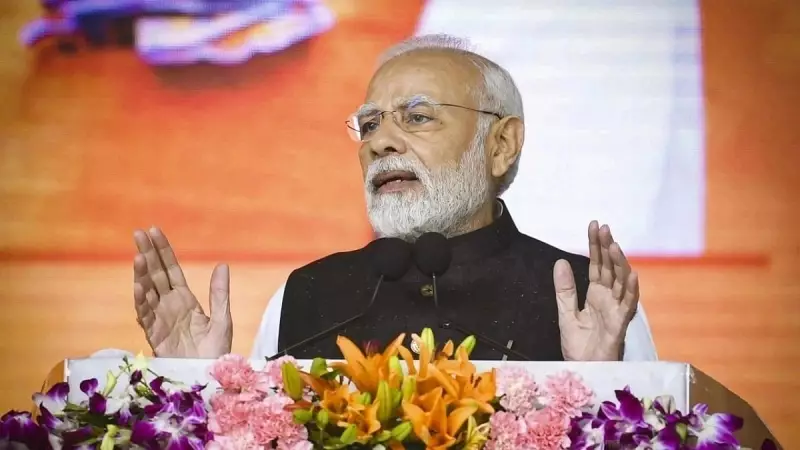
Prime Minister Narendra Modi has positioned India as a unique global model for achieving robust economic growth while maintaining control over inflation. He made these remarks during a recent address, underscoring the nation's resilience and the effectiveness of its policy framework.
India's Economic Resilience on the Global Stage
Addressing a gathering, Prime Minister Modi highlighted the stark contrast between India's economic trajectory and that of many developed nations. While several major economies are grappling with the twin challenges of slowing growth and rising prices, India has managed to chart a different course. The Prime Minister emphasized that India's economy is currently experiencing high growth alongside relatively low inflation, a combination that is attracting international attention and praise.
He pointed out that this achievement is not accidental but the result of strategic and prudent management. The government's focus on maintaining macroeconomic stability, implementing reforms, and ensuring targeted welfare delivery has created a strong foundation. This stability, Modi asserted, has shielded the common citizen from the worst effects of global economic volatility and supply chain disruptions witnessed in recent years.

Policy Framework and Vision for a Developed India
The Prime Minister credited the government's multi-pronged approach for this success. He mentioned initiatives aimed at boosting manufacturing through schemes like Production Linked Incentive (PLI), significant investments in infrastructure, and a digital revolution that has enhanced transparency and efficiency. The successful conduct of the G20 Summit under India's presidency was also cited as evidence of the world's growing trust in the country's capabilities and leadership.
Looking ahead, PM Modi outlined an ambitious vision for the nation's future. He reiterated the goal of transforming India into a developed country by the time it celebrates the centenary of its independence in 2047. This vision, he explained, encompasses not just economic metrics but holistic development that improves the quality of life for every Indian. The focus will remain on sustainable growth, innovation, and creating opportunities for the youth, who are seen as the primary drivers of this transformative journey.
Contrast with Global Trends and Future Outlook
PM Modi's statement draws a clear line between India's current economic management and the challenges faced elsewhere. Many economies, still recovering from the pandemic and impacted by geopolitical conflicts, are struggling with persistent inflation that has forced their central banks to aggressively raise interest rates, often at the cost of growth. India's ability to navigate these turbulent global waters with a steadier hand has bolstered its image as a reliable and promising investment destination.
The government's approach, as highlighted by the Prime Minister, involves:
- Maintaining fiscal discipline to avoid overheating the economy.
- Ensuring adequate food grain stocks and managing supply chains to curb food inflation.
- Promoting energy independence to shield against volatile global oil prices.
- Encouraging private investment to sustain growth momentum.
While acknowledging the challenges posed by global uncertainties, the Prime Minister expressed strong confidence in India's continued economic outperformance. He called upon all sectors of society to contribute to the national goal, emphasizing that the collective effort of 1.4 billion Indians is the nation's greatest strength. The narrative presented positions India not just as a success story in the making, but as a potential blueprint for other developing nations seeking growth without compromising on stability.






