

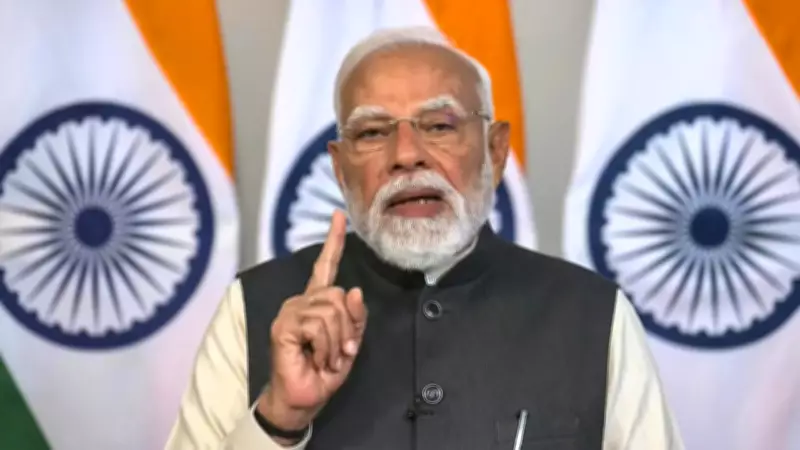
Prime Minister Narendra Modi on Sunday described the Union Budget 2026 as a "historic" document that lays out a clear pathway for India to achieve its goal of becoming a developed nation, or Viksit Bharat, by the year 2047. In his address, he emphasized that this budget injects fresh momentum into the country's ongoing reform journey, reinforcing India's position as a global economic powerhouse.
Women's Empowerment and Record-Breaking Presentation
PM Modi specifically commended Finance Minister Nirmala Sitharaman for her role in presenting the budget, noting that it symbolizes the strong empowerment of women in India. He pointed out that Sitharaman has set a new record by delivering the Union Budget for the ninth consecutive time, a milestone that underscores the government's commitment to gender equality and leadership.
"Today's budget is historic. It reflects the strong empowerment of the nation's women power. As a woman Finance Minister, Nirmala ji has created a new record by presenting the country's budget for the ninth consecutive time. This budget is a highway of immense opportunities. It turns today's aspirations into reality and strengthens the foundation of India's bright future," the Prime Minister stated.

Long-Term Vision and Economic Ambitions
Modi elaborated that the budget serves as a robust foundation for India's ambitious flight toward becoming a developed economy by 2047. He described it as a key step that will energize the "reform express" on which India is currently riding, providing new energy and momentum for sustained growth.
"This budget is a strong foundation for our high flight toward a developed India by 2047. Friends, the reform express on which India is riding today will gain new energy and new momentum from this budget," he added.
Highlighting India's broader economic aspirations, Modi asserted that the nation's 140 crore citizens are not content with merely being the world's fastest-growing economy. Instead, they aim to rapidly ascend to the position of the world's third-largest economy, showcasing a collective drive for greater global influence and prosperity.
Global Engagement and Strategic Initiatives
In his speech, the Prime Minister also referenced significant international engagements, particularly the "mother of all deals" recently signed between India and the European Union. He explained that this agreement is designed to maximize benefits for the country's youth and small and medium-sized industries, aligning with the budget's ambitious roadmap to accelerate the Make in India and Atmanirbhar Bharat initiatives.
Key Proposals and Future-Oriented Steps
PM Modi outlined several critical proposals included in the budget that address both immediate and long-term needs. These measures are future-oriented and aim to bolster various sectors of the economy:
- Bio-Pharma Shakti Mission to enhance pharmaceutical capabilities.
- Semiconductor Mission 2.0 to boost electronics manufacturing.
- Electronics Component Manufacturing Scheme for self-reliance.
- Creation of a Rare Earth Corridor to secure critical minerals.
- Emphasis on critical minerals for strategic industries.
- New schemes for the textile sector to promote growth.
- Promotion of high-tech toy manufacturing to diversify production.
- Development of champion MSMEs to support small businesses.
"I believe the support our budget provides to MSMEs and small industries will give them the strength to grow from local to global," Modi remarked, underscoring the government's focus on empowering grassroots enterprises.
Infrastructure Strengthening and Urban Development
The Prime Minister also highlighted major steps taken to strengthen India's infrastructure, which are crucial for sustained economic growth. These initiatives include:

- Expanding dedicated freight corridors to improve logistics.
- Developing high-speed rail networks for better connectivity.
- Focusing on Tier-2 and Tier-3 cities to promote balanced regional development.
- Promoting municipal bonds to provide cities with a stronger economic base.
Earlier in the day, Finance Minister Nirmala Sitharaman presented the Union Budget for the 2026–27 financial year in the Lok Sabha, marking her ninth consecutive budget presentation. This event underscores the continuity and stability in India's economic policymaking, as the government works towards transformative goals.
The budget's comprehensive approach, combining fiscal prudence with strategic investments, is poised to drive India's growth trajectory forward, making it a pivotal moment in the nation's journey toward becoming a global leader.





