

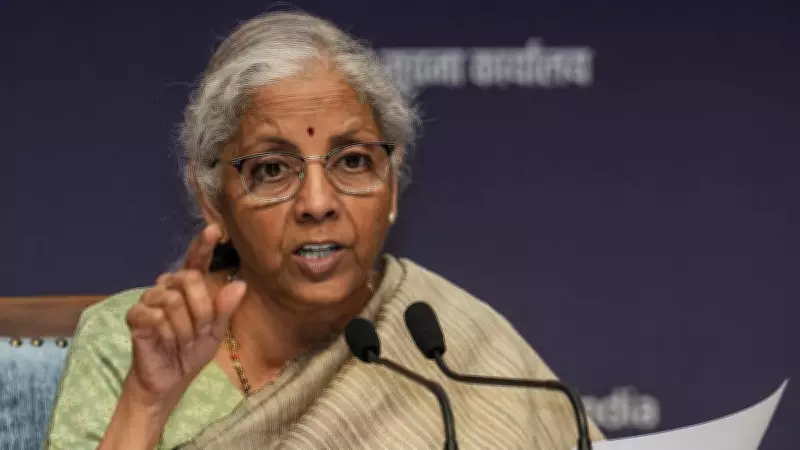
Union Budget 2026: Nirmala Sitharaman's Historic Finance Minister Tenure
As Finance Minister Nirmala Sitharaman prepares to present the Union Budget 2026, attention is turning to her remarkable tenure and its place in Indian political history. With this budget presentation, she is poised to achieve a significant milestone that places her among the most enduring finance ministers the country has ever seen.
A Record Approaching Historic Proportions
Nirmala Sitharaman's continued service as finance minister has sparked discussions about whether she might become the longest-serving individual in this crucial position. The current benchmark for budget presentations is held by Morarji Desai, the veteran politician who served under multiple prime ministers and presented the national budget an impressive ten times throughout his career.
Morarji Desai's record stands as a formidable achievement in Indian parliamentary history. His ten budget presentations, though not consecutive, demonstrate remarkable longevity and influence over the country's economic direction during different political eras. Desai served as finance minister under various administrations, transitioning from the Congress party to the Janata Party while maintaining his position as the nation's chief economic architect.

The Significance of Consecutive Service
What makes Nirmala Sitharaman's potential achievement particularly noteworthy is the consecutive nature of her service. While Morarji Desai presented budgets across different political terms and under various prime ministers, Sitharaman has maintained her position continuously, providing consistent economic leadership through multiple budget cycles.
This continuity in economic policy-making represents a significant development in India's governance structure. Having the same finance minister present multiple consecutive budgets allows for greater policy coherence and long-term economic planning, which can be particularly valuable during periods of global economic uncertainty.
Budget Presentation as a Measure of Tenure
The presentation of the Union Budget serves as a tangible marker of a finance minister's tenure and influence. Each budget represents not just an annual financial statement but a comprehensive economic vision for the country. The ability to present multiple budgets indicates sustained confidence from the ruling administration and Parliament in the minister's economic stewardship.
- Budget presentations serve as milestones in economic policy evolution
- Multiple budgets allow for implementation of long-term economic strategies
- Consistent leadership provides stability in economic decision-making
- Historical comparisons highlight changing patterns in economic governance
The Political Context of Finance Minister Tenures
The discussion around finance minister tenures reflects broader patterns in Indian political appointments. Historically, finance ministers have served varying lengths of time depending on political circumstances, economic challenges, and administrative priorities. The potential matching of Morarji Desai's record by Nirmala Sitharaman would represent a significant moment in this historical continuum.
As India approaches Union Budget 2026, the focus extends beyond immediate fiscal measures to consider the institutional memory and experience that long-serving finance ministers bring to economic governance. Whether Sitharaman will equal or potentially surpass Desai's record remains to be seen, but her tenure already represents one of the most sustained periods of economic leadership in recent Indian history.






