

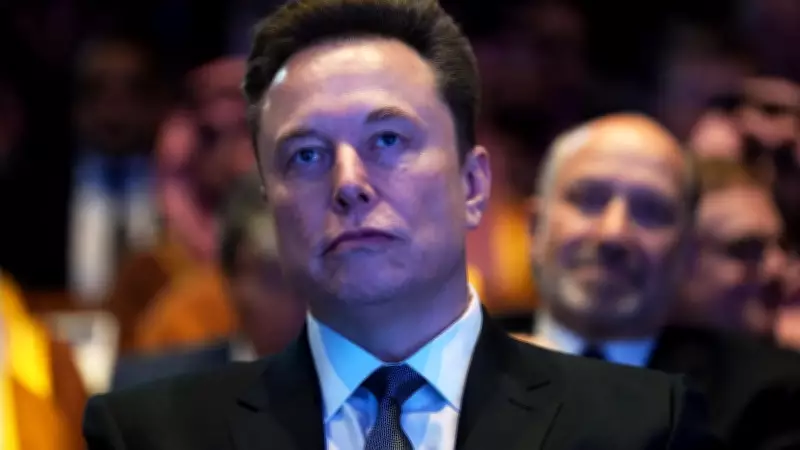
Elon Musk recently made a brief but powerful statement that encapsulates a significant transformation unfolding in the global economic landscape. "The balance of power is changing," he declared, while sharing International Monetary Fund data that positions India ahead of the United States in contributions to worldwide economic expansion for the year 2026.
The Numbers Behind the Shift
The statistics present a clear and compelling narrative. According to the IMF projections, India accounts for an impressive 17% of projected global economic growth. In comparison, the United States contributes 9.9%, while China leads with 26.6%. This means that together, India and China are driving a substantial 43.6% of global GDP growth, highlighting the increasing economic dominance of Asian economies.
Strategic Timing and Business Implications
Musk's commentary was far from coincidental. The Tesla and SpaceX CEO has been closely monitoring India's economic trajectory, having met with Prime Minister Narendra Modi on two separate occasions in recent months. He has been actively exploring factory locations and observing how his successful strategies in China might be replicated within India's vast market of 1.4 billion people.

This observation extends beyond mere business considerations. Musk emphasized how India and China are emerging as primary engines of global economic growth precisely as his own enterprises face challenges in traditional Western markets. With Tesla experiencing cooling momentum in China and regulatory complexities in Europe, India's upwardly revised 6.3% growth rate presents a compelling opportunity.
The Broader Global Economic Pattern
The contrast between emerging and advanced economies is becoming increasingly pronounced. Germany contributes merely 0.9% to global growth projections for 2026, while the entire eurozone adds just 2%. Advanced economies collectively are projected to expand by 1.8%, whereas emerging markets are expected to grow at a robust 4.2% rate. This widening gap continues to compound year after year.
India's Domestic Economic Strengths
India's economic resilience stems from multiple factors beyond its demographic advantage. The country has witnessed a significant increase in infrastructure spending during 2025, while manufacturing output has accelerated despite global trade slowdowns. Consumer demand has remained strong even with inflation hovering near target levels. The IMF specifically highlighted India's domestic economic strength rather than export dependency as its primary growth engine.
Other emerging Asian economies are also making substantial contributions to global growth. Indonesia contributes 3.8%, Turkey adds 2.2%, and Vietnam accounts for 1.6%, completing a top-10 list dominated by emerging Asian nations. Notably, Nigeria's 1.5% share exceeds the combined contributions of most European countries.
The Future of Global Economic Leadership
Musk's observation reflects what economists have been documenting for years: the momentum of global economic growth is increasingly originating outside Western nations, even as financial centers like Wall Street and technological hubs like Silicon Valley continue to set innovation standards. Whether this shifting balance becomes more pronounced depends largely on execution—specifically, India's ability to sustain economic reforms, manage fiscal pressures, and transform high growth rates into lasting industrial capacity.
The changing economic landscape represents more than statistical adjustments; it signifies a fundamental realignment of global economic influence that will shape international relations, business strategies, and development priorities for decades to come.






