

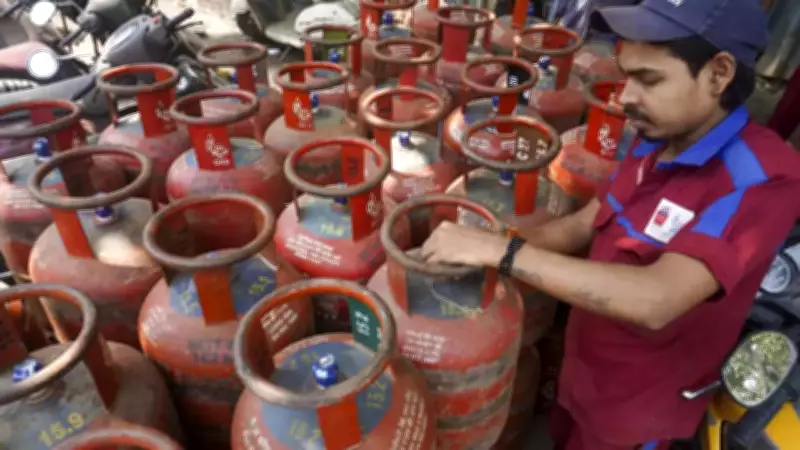
Domestic and Commercial LPG Prices Surge Amid Global Energy Market Pressures
In a significant development affecting households and businesses across India, the price of domestic cooking gas cylinders has been increased by Rs 60, while commercial LPG cylinders see a hike of Rs 114.5, effective from Saturday. This adjustment comes as global energy markets face intense pressure, largely driven by rising costs and supply constraints stemming from the ongoing conflict in West Asia.
Revised Pricing Details and Impact on Consumers
The 14.2-kg domestic LPG cylinder will now cost Rs 913 in New Delhi, up from the previous rate. For commercial users, such as hotels and restaurants, the 19-kg cylinder price has been set at Rs 1,883. This marks a substantial increase, with commercial cylinder prices having risen by Rs 302.5 over the last three months, starting from Rs 1,580.5 in December 2025.
Beneficiaries of the Pradhan Mantri Ujjwala Yojana, who receive a direct subsidy of Rs 300 per cylinder in their bank accounts, will now pay Rs 613 per bottle. This subsidy aims to cushion the blow for over 10.5 crore households under the scheme, part of India's total 33.3 crore LPG consumers.

Global Factors Driving the Price Hike
The price revision is closely linked to international benchmarks, particularly the Saudi Contract Price (CP), which has surged by 16% between November 2025 and February 2026. Despite this spike, domestic LPG prices had remained unchanged until now, as the government and oil marketing companies (OMCs) absorbed losses to shield consumers.
India's heavy reliance on imports exacerbates the situation, with over 60% of LPG requirements sourced from abroad. Nearly 85-90% of these shipments pass through the Strait of Hormuz, a critical chokepoint currently disrupted by the West Asia conflict, leading to curtailed energy flows and higher global prices.
Government Measures and Compensation Efforts
In response to supply constraints, the government has invoked emergency powers under the Emergency Commodities Act of 1955, directing refiners to boost LPG production for domestic customers. This move underscores efforts to mitigate shortages and stabilize the market.
Officials highlight that the three state-owned OMCs—Indian Oil, Bharat Petroleum, and Hindustan Petroleum—incurred losses of approximately Rs 39,000 crore in the 2024-25 fiscal year to protect domestic LPG consumers. The government compensated Rs 30,000 crore of these losses, demonstrating a commitment to affordability.
Comparative Analysis and Broader Context
Despite the hike, domestic LPG prices in India remain below market-determined levels, with the current rate of Rs 913 compared to Rs 987 for a 14.2-kg cylinder in Delhi as of March 2026. Officials note that the impact translates to about 80 paise per day for a family of four, assuming average consumption of 4-5 cylinders annually.
In a global context, LPG in India is cheaper than in neighboring countries: a cylinder costs Rs 1,207 in Kathmandu, Rs 1,241 in Sri Lanka, and Rs 1,046 in Pakistan. Meanwhile, retail prices for petrol and diesel have remained unchanged since April 2022, with OMCs absorbing fluctuations in crude oil prices to maintain stability.
This price adjustment reflects the complex interplay of global events and domestic policies, aiming to balance consumer protection with economic realities in a volatile energy landscape.






